
Monacha
Monacha
Description
How to identify
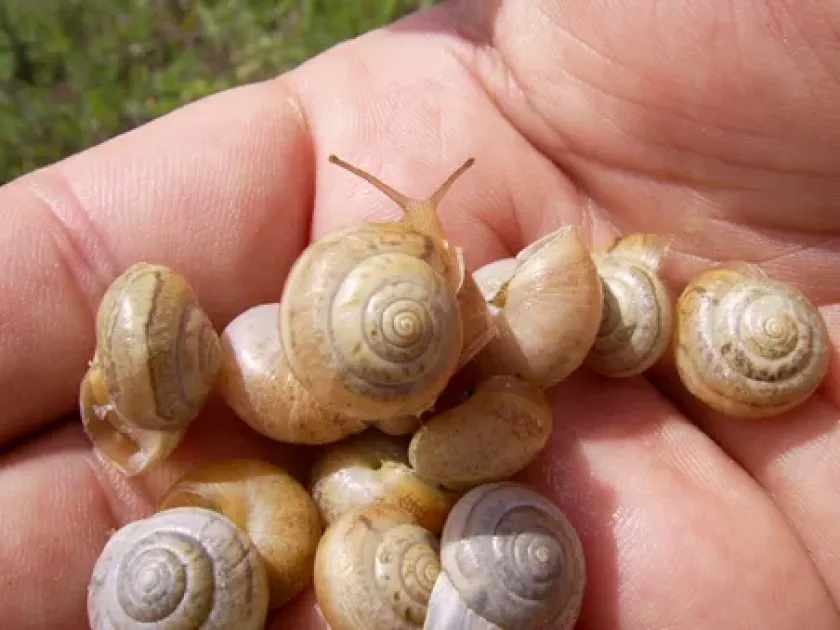
Monacha is a genus of land snails belonging to the family Hygromiidae within the order Stylommatophora. These small gastropods are characterized by a globular or slightly flattened shell.
The shell typically exhibits a horn-colored or brownish appearance, often featuring a subtle light-colored peripheral band. The surface displays fine growth lines, giving the shell a matte texture.
The soft body of the snail is generally light gray or brownish. Adult individuals usually measure between 8 and 12 millimeters in diameter, allowing them to remain hidden among organic debris or soil clumps.
Their biological cycle is heavily dependent on environmental moisture. As hermaphrodites, they exhibit high reproductive potential, enabling populations to surge rapidly under favorable conditions.
These snails thrive in habitats with dense vegetation, shaded areas, and damp lowlands, where they seek refuge from direct sunlight and desiccation during the day.
What it damages
Monacha species are polyphagous pests capable of damaging a wide array of agricultural crops. Vegetables, berries, and ornamental plants are particularly vulnerable during early growth stages.
Commonly affected crops include lettuce, cabbage, strawberries, cucumbers, and various ornamental flowers. Snails feed on tender leaf tissues, stems, and fruits.
They cause significant damage in greenhouses and high tunnels, where stable humidity and temperature provide ideal conditions for their feeding and breeding throughout the season.
Young seedlings can be decimated overnight, often resulting in sparse stands that necessitate replanting or supplementary seeding.
Beyond direct tissue consumption, snails act as vectors for phytopathogenic spores and bacteria that induce soft rots, severely compromising the aesthetic and marketable quality of the produce.
When it appears
Activity begins in the spring when soil temperatures rise to optimal levels and humidity remains high. They emerge from winter dormancy to feed on young green shoots.
Peak damage occurs during prolonged rainy or overcast periods. During such weather, snails can be observed feeding even during daylight hours.
During hot and dry summer months, Monacha snails often enter a state of aestivation, burrowing deep into the soil or hiding beneath dense ground cover to conserve moisture.
The autumn season often brings a second wave of activity as humidity levels rise, prompting intense feeding in preparation for the upcoming winter.
They overwinter as adults or juveniles in the upper soil layers, under debris, or within soil crevices, where they are shielded from freezing temperatures and dehydration.
Signs of infestation
The most prominent sign of a Monacha infestation is the presence of irregular, notched holes on plant leaves, often resulting in a skeletonized appearance on tender plants.
Silvery, dried mucus trails are clearly visible on leaves, stems, and the surrounding soil, marking the path taken by the snails during their nocturnal foraging.
Frequent sightings of small snail clusters beneath lower leaves or in the root zone provide direct evidence of their presence within the garden ecosystem.
Damage to fruits, especially strawberries or tomatoes in contact with the ground, leads to decay and secondary infections, easily observed during routine crop inspections.
- Visible slimy trails on soil and foliage.
- Irregular feeding notches on leaf margins.
- Aggregations of small shells in shaded, damp corners.
Control measures
Effective management of Monacha requires an integrated approach that combines cultural, mechanical, and chemical control tactics.
Maintaining a clean garden is essential: prioritize regular weeding, mowing long grass around beds, and clearing away all decaying plant material that provides shelter.
Manual collection during evening hours or the use of simple traps—such as beer-baited containers or damp boards—can significantly reduce population numbers on smaller plots.
Chemical control involves the application of molluscicides, typically containing metaldehyde or iron phosphate, placed in granular form around susceptible plants according to product labels.
Creating physical barriers using gravel, sand, wood ash, or lime around garden beds can deter snail movement and help protect crops from infestation.
Taxonomy
- Latin name
- Monacha
- Order
- Molluscs
- Family
- Hygromiidae
- EPPO code
- MNACSP
Discussion
No discussions yet — be the first.