
Mogannia
Mogannia hebes
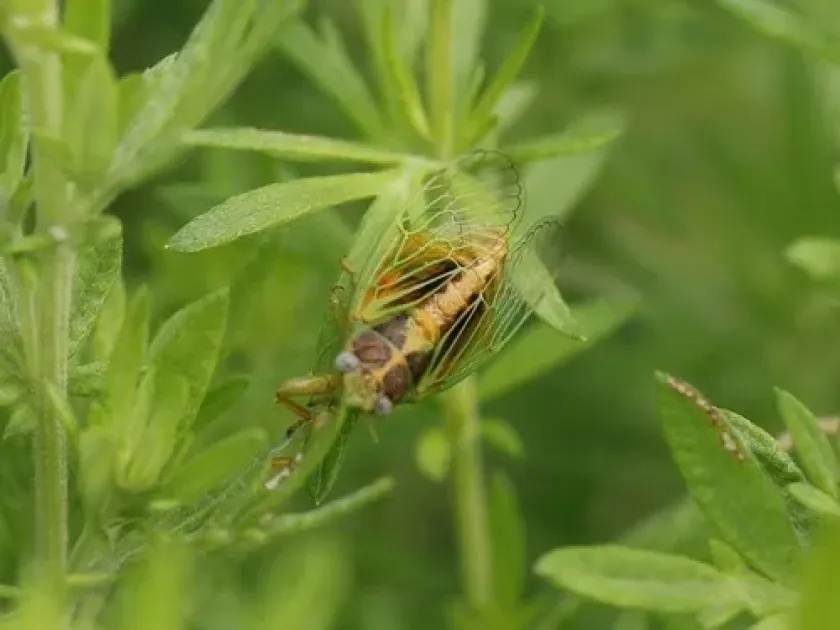
Description
How to identify
Mogannia (Mogannia hebes) is a member of the order Hemiptera and the family Cicadidae. These insects are well-known for their unique acoustic signaling, which serves as their primary method of finding mates in dense agricultural habitats.
The adults are characterized by fully developed wings, granting them strong flight capabilities, which enables rapid movement across large plantations.
The immature stages, or nymphs, spend their development underground, feeding on the root systems of host plants. Their anatomy is highly specialized for subterranean life, featuring robust fossorial legs.
Adult appearance typically blends with host plant textures, making them difficult to detect during daylight hours despite their size.
Taxonomically, this species represents a persistent challenge due to its dual-stage impact on crops, affecting both root health and overall plant vigor.
What it damages
Sugar cane is the primary host for Mogannia hebes, where it creates economic instability by lowering crop quality and yields through persistent feeding.
Beyond sugar cane, the pest is known to inhabit wild grasses that serve as reservoirs for future infestations on cultivated land.
Nymphs cause severe damage by draining nutrients from root systems, which significantly stresses the plant, especially during critical growth phases.
Adults contribute to the problem by piercing stems to extract sap, which leads to metabolic stress and a measurable decrease in sugar content within the stalks.
Wounds caused by adult feeding and oviposition often become entry points for secondary pathogens, leading to stem breakage and overall plantation decline.
Signs of infestation
The most prominent sign of a Mogannia presence is the rhythmic, loud calling sound produced by males, which intensifies during peak breeding periods.
Careful inspection of stalks often reveals small, slit-like incisions caused by female oviposition, which can weaken the structural integrity of the plant.
Stunted growth or chlorosis in specific patches of the field is often a primary indicator of heavy nymphal infestation damaging the root zone below.
Finding cast-off nymphal skins on lower stalks or near the base of the plant indicates that a new generation of adults has recently emerged.
Wilted foliage that does not recover after standard irrigation usually points to compromised root systems caused by underground pests.
Control measures
Integrated Pest Management (IPM) for Mogannia focuses on cultural practices that disrupt the life cycle of the cicada within the field environment.
Mechanical tillage prior to the planting season is highly effective in destroying the soil-dwelling nymphs and reducing the next generation's population density.
The judicious application of systemic insecticides may be necessary during the peak flight season to minimize egg-laying activities by adult cicadas.
Biological control efforts, including the encouragement of natural predators such as birds and parasitic wasps, play a significant role in long-term suppression.
Deploying light traps allows for precise monitoring of adult activity, ensuring that intervention measures are timely and economically efficient for large-scale operations.
Taxonomy
- Latin name
- Mogannia hebes
- Order
- Hemiptera (bugs, aphids, leafhoppers)
- Family
- Cicadidae
- EPPO code
- MOGAHE
Discussion
No discussions yet — be the first.