
Frontal cricket
Modicogryllus frontalis
Description
How to identify
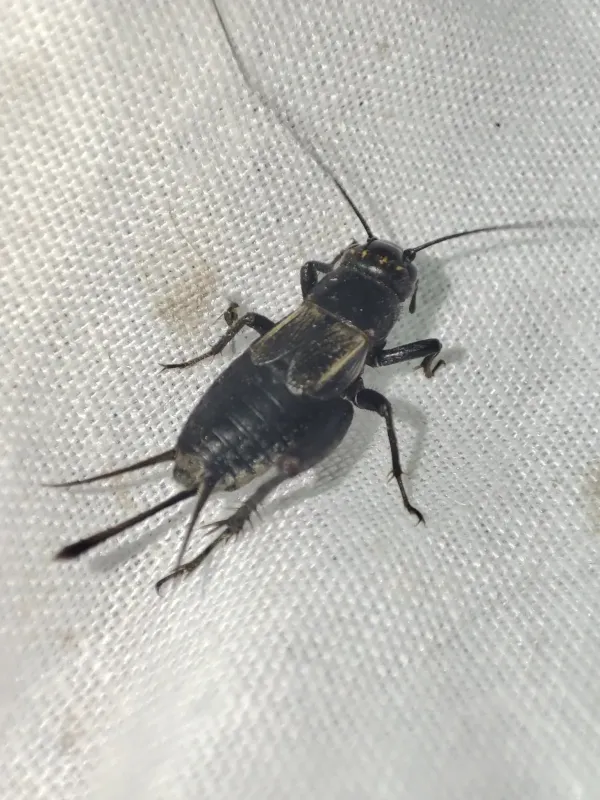
The frontal cricket (scientific name: Modicogryllus frontalis) belongs to the order Orthoptera and the family Gryllidae. It is a medium-sized insect recognizable by a distinct pattern on its forehead, from which its common name is derived.
Adults are generally dark brown or black, providing effective camouflage within soil litter. They possess a robust body and powerful hind legs adapted for jumping, which helps them move across fields.
Equipped with well-developed wings, adults are capable of dispersal in search of favorable feeding grounds. Males produce a distinctive chirping sound during the night, which serves as a primary method for detection in the field.
Nymphs resemble the adults in body shape but are smaller and lack fully formed wings. They lead a secretive lifestyle, preferring the humid microclimate found in the upper layers of soil.
The life cycle involves incomplete metamorphosis, with nymphs passing through several instars. Each stage becomes progressively more similar to the adult form while maintaining similar dietary habits.
What it damages
This pest is a polyphagous insect, meaning it feeds on a wide variety of plant species. It poses a significant threat to young seedlings and growing crops in agricultural environments.
The damage is most severe during the early growth stages, where crickets cut through stems at the soil level or consume tender foliage, leading to plant death or stunted growth.
In cases of high population density, these insects can cause significant gaps in crop rows, often necessitating replanting efforts to restore the plant population.
Beyond direct mechanical damage, the wounds created by feeding provide entry points for secondary infections, such as fungal pathogens, which can exacerbate crop loss.
Continued feeding on vegetative parts reduces the photosynthetic capacity of the plants, ultimately resulting in reduced yields and overall poor crop vigor.
When it appears
The seasonal activity of the frontal cricket is primarily regulated by ambient temperature. Emergence typically begins in late spring once the soil has warmed up sufficiently.
The peak period of activity and reproduction occurs during the summer months. During this time, nymphs reach higher instars and become particularly ravenous, causing visible damage to vegetation.
Reproduction takes place in the soil, where females deposit eggs in moist areas. Favorable humidity levels and the presence of organic debris are critical for the successful development of the next generation.
As autumn approaches, activity levels decline as the insects prepare for hibernation. They usually overwinter in the larval stage or as adults, seeking refuge deep within the soil or under debris.
Monitoring throughout the growing season is essential, as localized weather patterns can cause variations in the timing and severity of infestation cycles.
Signs of infestation
A primary sign of infestation is the presence of irregular holes or chewed leaf margins on young plants, which appear overnight. Stems may appear to be partially cut or severed at the ground level.
The discovery of small, circular burrow openings in the soil around the base of plants is a strong indicator of cricket activity. These are most visible in the early morning hours.
Persistent nocturnal chirping is a clear auditory sign that a population of frontal crickets is present in or near the crop area.
Finding dead or withered seedlings lying on the soil surface is a common symptom of nocturnal feeding activity by these insects.
Direct visual inspection under clumps of soil or decaying plant matter in the morning often reveals the presence of crickets hiding from the daylight.
Control measures
Effective management requires a multi-faceted approach aimed at disrupting the cricket's life cycle and reducing their population within the agricultural landscape.
- Implementing deep autumn tillage to destroy burrows and eliminate overwintering nymphs.
- Regular weeding to remove alternative food sources and refuges for the insects.
- Applying crop rotation practices to prevent the build-up of resident populations.
- Using insecticidal baits strategically to target active populations when feeding levels exceed economic thresholds.
- Encouraging biological control agents to keep cricket populations in balance.
Taxonomy
- Latin name
- Modicogryllus frontalis
- Order
- Orthoptera (locusts)
- Family
- Gryllidae
- EPPO code
- GRYLFR
Discussion
No discussions yet — be the first.