
Autumn Gum Moth
Mnesampela
Description
How to identify
The genus Mnesampela belongs to the family Geometridae. The most significant species is Mnesampela privata, commonly known as the Autumn Gum Moth. Adult moths are relatively small with cryptic coloration that aids camouflage against bark.
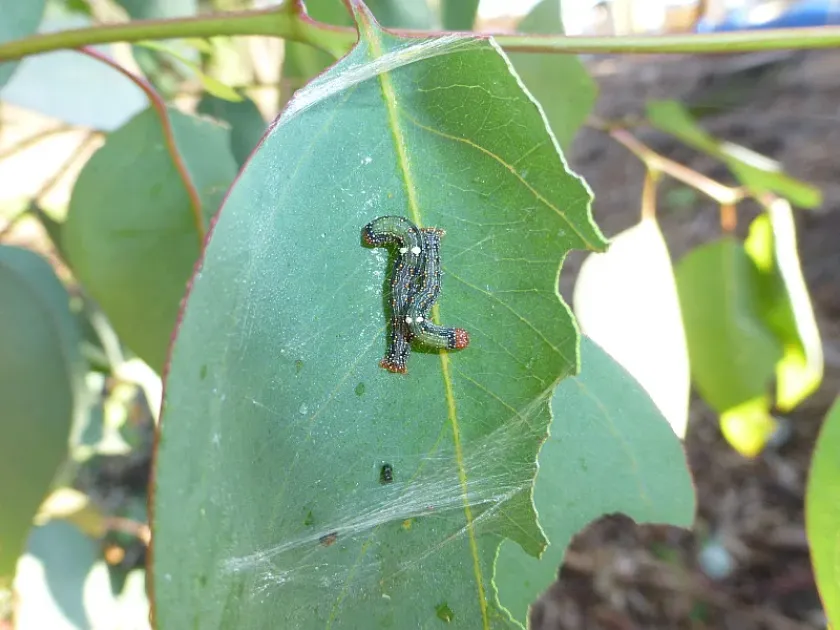
Larvae pass through several instars, with their color shifting from greenish to brownish or grey as they mature. They move using the characteristic looping gait typical of looper caterpillars.
The life cycle is closely synchronized with regional climate patterns. In favorable seasons, the pest can produce multiple generations, leading to rapid population spikes that threaten forest health.
Adult moths are primarily nocturnal, making them difficult to detect during daylight hours. The larval stage is the most prolonged and is responsible for the severe defoliation observed in host stands.
For accurate identification, foresters and entomologists utilize pheromone traps and systematic counting of larvae on branch samples during the active growth phases of eucalypt trees.
What it damages
Larvae feed exclusively on species within the Eucalyptus genus. The primary damage involves intense consumption of the leaf lamina, leading to significant defoliation of the canopy.
Under outbreak conditions, this moth can strip a young eucalypt tree of its foliage in a very short period. This drastic loss of photosynthetic tissue severely inhibits the tree's growth and vigor.
Damage to young shoots places the trees under extreme physiological stress, making them susceptible to secondary pathogens and borers that target compromised wooden tissues.
In nurseries and young plantations, the economic impact is substantial, often leading to seedling mortality or a significant reduction in the merchantable timber volume.
Damage symptoms include skeletonized leaves or complete defoliation including the petiole, leaving only the structural branch frame exposed.
When it appears
Seasonal activity is heavily dictated by ambient temperatures and the phenology of the host trees. In the southern hemisphere, peak larval activity typically occurs during spring and summer months.
Overwintering usually takes place in the pupal stage, with pupae buried in the soil or hidden in crevices under the tree bark. This provides protection against extreme weather conditions.
Adult emergence occurs during stable, warm nights, which serves as a critical trigger for managers to begin monitoring programs and assess potential egg-laying activity.
Population dynamics fluctuate based on the pressure from natural enemies, including parasitoid wasps and various predatory insects that keep larval numbers in check.
Climatic anomalies such as heavy, unseasonal rainfall or frost can significantly disrupt larval development and result in a natural decline of the pest population.
Signs of infestation
Early signs of infestation include the presence of frass (droppings) on the leaves of lower canopy branches, signaling that larvae are feeding in the upper crown layers.
Jagged, uneven leaf margins and partial removal of the leaf epidermis are classic indicators of looper caterpillar presence in eucalypt plantations.
Careful inspection of branches may reveal the larvae themselves, which utilize a "stick-mimicry" posture during the day to avoid detection by avian predators.
Visible silken threads used by larvae to bind leaves together are another clear indicator that a colony has established itself on the tree.
During significant outbreaks, the sound of thousands of caterpillars feeding creates a distinct rustling noise, often accompanied by a carpet of debris and frass under the infested trees.
Control measures
Biological control strategies include the application of Bacillus thuringiensis-based products, which are highly effective against younger larval instars and maintain safety for beneficial insects.
Chemical intervention is reserved for extreme outbreaks where young plantations are at risk of mortality, and it must be applied in accordance with strict environmental management guidelines.
A vital aspect of long-term control is the preservation of natural predators, such as insectivorous birds and parasitic insects, which serve as the first line of defense in forest ecosystems.
Silvicultural practices, including proper site selection and optimal planting density, help maintain vigorous stands that are naturally more resilient to pest outbreaks.
Integrated Pest Management (IPM) involving the use of light traps allows for precise monitoring of adult flight times, enabling timely preventative interventions before a population explosion occurs.
Taxonomy
- Latin name
- Mnesampela
- Order
- Lepidoptera (butterflies)
- Family
- Geometridae
- EPPO code
- MNESSP
Discussion
No discussions yet — be the first.