
Dryad butterfly
Minois dryas
Description
How to identify
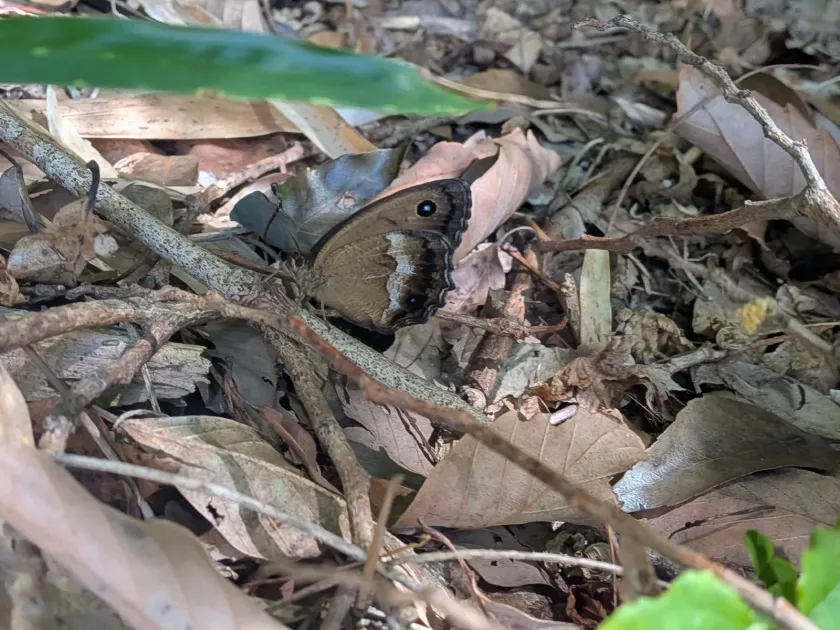
The Dryad butterfly (Minois dryas) belongs to the Nymphalidae family, specifically the Satyrinae subfamily. It is a large butterfly with a wingspan ranging from 60 to 70 mm.
The wings are typically dark brown or nearly black. Females are characterized by two large, prominent eyespots on the forewings, which feature blue centers and a light border, making them easily distinguishable.
Larvae (caterpillars) are spindle-shaped and possess a light grey or yellowish color with longitudinal stripes. They lead a secretive, nocturnal lifestyle, making them difficult to spot during the day.
The pupa is green or brownish and typically found near the base of the host plants, often attached to the stems or lower leaves. The butterfly undergoes a complete metamorphosis.
This species prefers meadow habitats, woodland edges, and forest clearings, but it can occasionally migrate into agricultural environments where its host plants are present.
What it damages
The primary host plants for the Dryad butterfly larvae are various species within the Poaceae (grass) family. This includes both wild and cultivated grasses commonly found in meadows.
Caterpillars feed on the leaf blades of host plants, which can lead to localized defoliation. In severe cases, this grazing reduces the biomass and nutritional value of forage crops.
The damage is usually manifested as irregular notches or complete consumption of the leaf edges, often leading to a reduction in the photosynthetic efficiency of the plant.
While the Dryad butterfly is not typically considered a high-priority agricultural pest, its feeding activity can contribute to the decline of pasture quality in areas near its natural habitats.
Monitoring is important because sustained pressure from these larvae in high-density areas may impact the growth and yield of managed grasslands and hay meadows.
When it appears
The Dryad butterfly typically has one generation per year (univoltine). Adult butterflies are active during the mid-summer months, usually from July to August.
The species overwinters as young larvae. During the cold months, they remain in a state of diapause near the base of the grass, protected by leaf litter and soil cover.
Larval activity resumes in the spring, as temperatures rise. The caterpillars feed aggressively throughout the late spring and early summer before reaching their final larval stage.
Pupation occurs in early summer, and the adult butterflies emerge shortly after, beginning the cycle of mating and oviposition on the host plants.
A good understanding of this seasonal cycle is crucial for farmers to plan their scouting activities and implement control measures before the larvae reach maturity.
Signs of infestation
The most common sign of infestation is the presence of eaten or notched leaf margins on grasses, which often appear as irregular patterns along the blades.
The presence of larval frass (droppings) on the ground or on the lower parts of the plants indicates active feeding, even if the caterpillars themselves are hidden.
Some yellowing or premature drying of grass clumps can indicate significant larval feeding damage at the base of the plants, affecting nutrient transport.
Observers can identify potential infestation by inspecting the lower canopy of the grass in the early morning or late evening when the larvae are more likely to be active.
The presence of large, dark-colored butterflies in the vicinity of a field during mid-summer is a clear indicator that the next generation of larvae will likely be present in the coming spring.
Control measures
Mechanical control, such as regular mowing of field borders and adjacent non-crop areas, is an effective way to destroy larval habitats and reduce population numbers.
Improving general field management, including the use of balanced fertilization, helps the grasses recover faster from any grazing damage caused by the larvae.
In cases of economic significance, the application of biological agents based on Bacillus thuringiensis can effectively manage the larval populations while sparing non-target insects.
Maintaining a clean field environment by removing excessive debris near susceptible crops can make the area less hospitable to overwintering larvae.
Strategic spatial planning, avoiding long-term cultivation of highly susceptible grass varieties directly next to wooded areas, can also mitigate the risk of Dryad butterfly damage.
Taxonomy
- Latin name
- Minois dryas
- Order
- Lepidoptera (butterflies)
- Family
- Nymphalidae
- EPPO code
- MINODR
Discussion
No discussions yet — be the first.