

Pest · Diptera (flies) · affects Winter wheat, Fodder beet, Tomato
Especially harmful
Leaf miners
Agromyzidae
Description
How to identify
Leaf miners are members of the Agromyzidae family within the order Diptera. These are tiny flies, typically measuring between 1 to 3 mm in length.
The life cycle consists of the egg, larva, pupa, and adult stages. Adult females pierce the leaf epidermis to feed on sap and deposit eggs directly into the leaf tissue.
Larvae are the primary damaging stage. They are legless, maggot-like organisms that feed on the interior parenchyma cells of the leaf.
Pupation occurs either within the leaf mine at the end of the tunnel or in the soil, depending on the specific species of the miner.
Under optimal temperature conditions, the life cycle is rapid, allowing multiple generations to occur within a single growing season.
What it damages
These pests are polyphagous and attack numerous important crops, including fodder beet, winter rape, sunflower, winter barley, hops, apple trees, alfalfa, and tobacco.
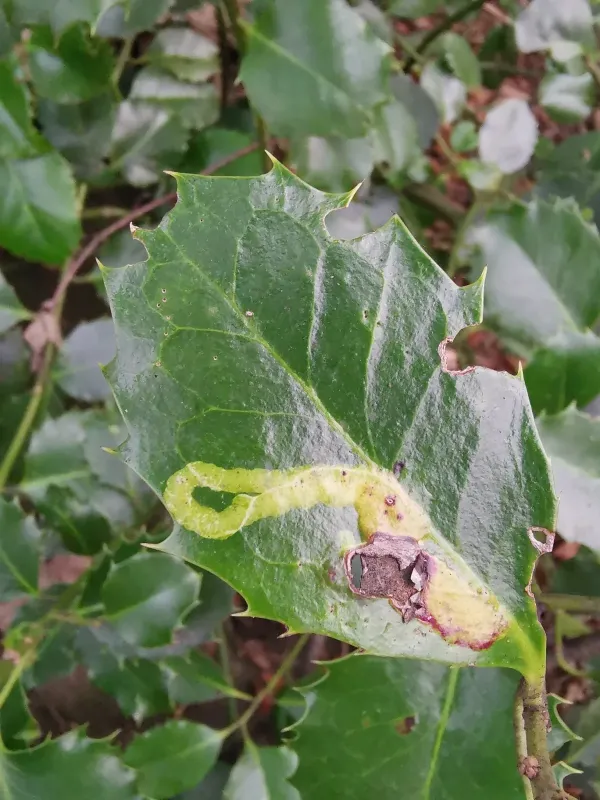
Larval feeding destroys the photosynthetic layer of the leaf, creating tunnels known as mines that disrupt the plant's ability to process sunlight.
Severe infestations lead to premature leaf drop, reduced plant vigor, and significant yield losses in both quantity and quality.
The damage caused by these insects frequently results in stunted plant growth, which is particularly detrimental during the early development stages.
Furthermore, the damaged leaf tissue often becomes susceptible to secondary infections caused by various fungal and bacterial pathogens.
Signs of infestation
The most distinctive sign of infestation is the presence of winding, white or light-colored trails on the leaves known as mines.
Initially, small puncture marks may be visible on the leaf surface, created by the female fly's ovipositor during feeding and egg-laying.
Inside the mines, one can often see the larva itself or a trail of dark fecal matter left behind as it consumes the leaf tissue.
As the damage progresses, leaves may become discolored, curl, or wither, eventually leading to tissue necrosis.
Monitoring for these symptoms is essential in early stages to prevent the spread of the pest across the field.
Control measures
Integrated pest management starts with cultural practices, such as removing host weeds that provide a refuge for adult flies.
Deep plowing in the autumn helps to destroy pupae overwintering in the soil, significantly reducing the next season's initial population.
Biological control involves encouraging the presence of natural enemies, such as parasitic wasps that predate on the larvae.
Chemical control necessitates the use of systemic insecticides, as contact pesticides are generally ineffective against larvae protected inside the leaf.
- Implement strict crop rotation patterns.
- Monitor adult flight using yellow sticky traps.
- Use selective insecticides targeting eggs and young larvae.
- Maintain crop health through balanced fertilization and irrigation.
In brief
17
Damages crops
Content graph
Damages crops · 17
Content graph
Connections · Leaf miners
Most often together:
Marketplace
Products · 24


SPINTOR 240 SC
Доу АгроСайенсіс, Кінг’з-Лінн, Великобританія
Insecticides
0
0
·
82
2 offers
186.53 €per 1 l
Buy

Exirel
«Дюпон Інтернешнл Оперейшнз Сарл», Швейцарія
Insecticides
0
0
·
60
4 offers
121.36 €per 1 l
Buy

BENEVIA
«Дюпон Інтернешнл Оперейшнз Сарл», Швейцарія
Insecticides
0
0
·
57
1 offer
303.78 €per 1 l
Buy


VERIMARK
«Дюпон Інтернешнл Оперейшнз Сарл», Швейцарія
Insecticides
0
0
·
53
11 offers
231.71 €per 1 l
Buy


Super Bison
Ф.Меатон Лімітед, Лондон, Великобританія.
Insecticides
0
0
·
42
3 offers
6.45 €per 1 l
Buy


Biology
Taxonomy
- Latin name
- Agromyzidae
- Order
- Diptera (flies)
- Family
- Agromyzidae
- EPPO code
- 1AGROF
Community
Discussion
No discussions yet — be the first.