
Yellow-headed agromyzid
Agromyza flaviceps
Description
How to identify
The yellow-headed agromyzid (Agromyza flaviceps) belongs to the order Diptera, family Agromyzidae. These are small insects, with adults typically measuring between 2 and 3 millimeters in length.
The body of the adult is dark, but the most distinctive feature is its yellow-colored head, which gives the species its common name. The wings are clear with specific venation typical for the family.
The larvae are legless, maggot-like, and usually whitish or yellowish, perfectly adapted to live inside leaf tissues. They possess specialized mouthparts designed for mining within the leaf structure.
The life cycle includes four stages: egg, larva, pupa, and adult. The development occurs entirely within the host plant tissue, making this pest a hidden dweller that is difficult to target with surface contact insecticides.
This species is a typical representative of the leaf-miner complex, adapted to a wide range of herbaceous plants, primarily in the Asteraceae and Fabaceae families.
What it damages
The pest affects a wide range of crops, including various vegetables, ornamental plants, and wild herbaceous species. Significant economic damage occurs when it infests fodder legumes and certain leafy green crops.
Mining of the leaves leads to the destruction of the photosynthetic apparatus, which directly impacts plant vigor. Damaged leaves lose their aesthetic value, turn yellow prematurely, and wither, reducing the overall biomass.
The pest poses a particular threat during the intensive growth phase of seedlings and young plants. Excessive leaf damage at this stage can lead to stunted growth and reduced crop yields.
In greenhouse conditions, the reproduction of the agromyzid can occur continuously, leading to a high pest population buildup in a very short time. This requires constant monitoring of foliage health.
In addition to direct mechanical damage, the puncture marks left by adults during feeding and egg-laying can serve as entry points for phytopathogenic bacteria and fungi, causing secondary plant diseases.
When it appears
Adult activity begins with the arrival of stable warm temperatures in the spring. Fly flight continues throughout the growing season, allowing the pest to produce multiple generations.
In open-field conditions, activity peaks usually occur in mid-summer when weather conditions are most favorable for the rapid development of larvae.
The pest overwinters primarily in the puparium (pupa) stage in the upper soil layer or within plant debris remaining in the field after harvest.
Temperature plays a crucial role in the development speed of each generation. Hot summers accelerate the metabolism of the insects, leading to the emergence of new generations every few weeks.
Toward the end of the season, the population often reaches its maximum, so pest control measures in August and September are critical to reducing the inoculum for the following year.
Signs of infestation
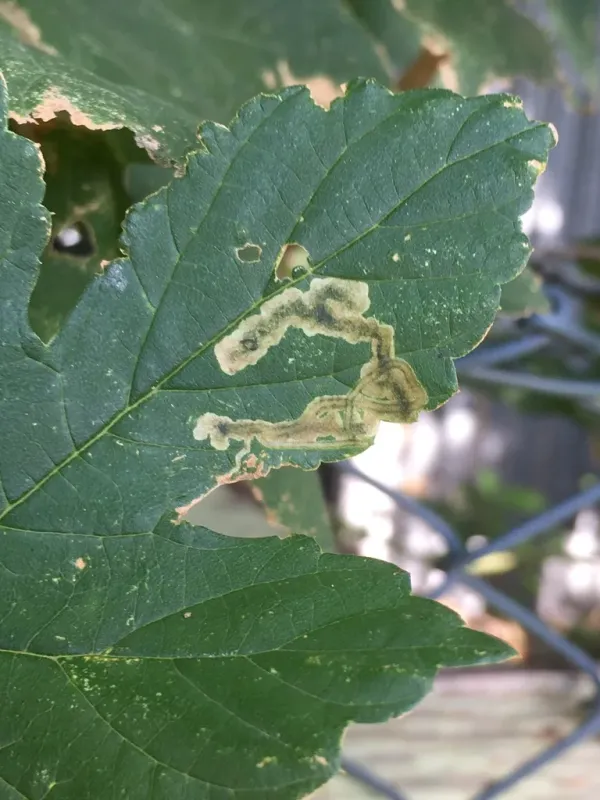
The primary indicator of the pest's presence is the characteristic mines. They appear as winding, pale lines or blotches visible on the leaf surface.
As the larva moves inside the leaf, it consumes the parenchyma, leaving the epidermal layers intact, which gives the mine the appearance of a thin, light-colored labyrinth.
- Appearance of whitish winding trails on leaves.
- Presence of dark frass (excrement) inside the tunnels.
- Premature wilting and deformation of the leaf blade.
- Puncture marks on leaves caused by adult feeding.
- Yellowing and gradual drying of infested foliage.
In early stages, mines may be subtle, but when viewed against the light, the contours of the larva or its dark granular waste are clearly visible.
Control measures
The foundation of protection is the implementation of cultural practices. Thorough destruction of crop residues and deep autumn plowing are recommended to eliminate overwintering puparia.
The use of yellow sticky traps allows for effective monitoring of adult populations, enabling timely insecticide applications when thresholds are exceeded.
Chemical control involves the use of systemic insecticides, which translocate through the plant tissues and reach the larvae feeding inside the leaf.
Biological control includes the use of natural enemies, particularly parasitic wasps from the Braconidae or Eulophidae families, which effectively infect and kill the larvae.
Strict adherence to crop rotation and maintaining spatial isolation between plantings of different years is essential to prevent mass migration of the pest from infested fields to healthy young plants.
Taxonomy
- Latin name
- Agromyza flaviceps
- Order
- Diptera (flies)
- Family
- Agromyzidae
- EPPO code
- AGMYFL
Discussion
No discussions yet — be the first.