
Celery leaf miner
Agromyza apii
Description
How to identify
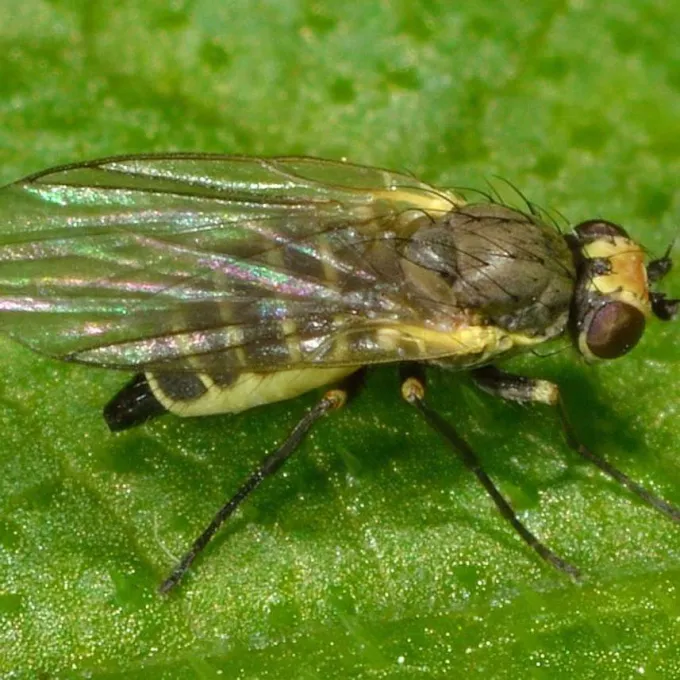
The celery leaf miner (Agromyza apii) belongs to the order Diptera and the family Agromyzidae. It is a small fly, measuring approximately 2–3 mm in length, often dark in color with a subtle sheen, which can be difficult to spot in the field.
The larval stage is the primary cause of damage. The larvae are legless, yellowish-white, and reach about 3–4 mm in length. They live inside the leaf tissue, which protects them from many external environmental factors.
The life cycle includes the egg, three larval stages, the pupa (puparium), and the adult fly. In favorable conditions, multiple generations can emerge during a single growing season, leading to exponential population growth if not controlled.
Pupation typically occurs in the soil or within plant debris. The puparium is small, dark, and resilient, allowing the pest to survive winter conditions until environmental temperatures become suitable for emergence.
Monitoring the adult population is often performed using yellow sticky traps. These traps are effective for determining the onset of the flight period and for assessing the overall population density of the pest in the crop.
What it damages
The pest specifically targets plants within the Apiaceae (Umbelliferae) family. Key host crops include celery, parsley, parsnips, and celeriac, which are frequently damaged in both commercial fields and home gardens.
Adult flies cause minor injury by piercing leaves to feed on sap or to lay eggs, which creates small stippling. However, the larvae are responsible for the severe internal damage by excavating mines between the upper and lower leaf surfaces.
This mining activity destroys the mesophyll tissue, significantly reducing the plant's photosynthetic capacity. As a result, the growth of the plant is stunted, and the quality of the harvested produce is severely compromised.
In severe cases, the infested leaves turn yellow, wilt, and die prematurely. For leafy crops like parsley, heavy infestation renders the product unsalable due to the unsightly trails and decayed tissue.
In addition to physical damage, the mines create entry points for various bacterial and fungal pathogens, potentially leading to secondary infections that further stress and weaken the plant.
When it appears
Adult flies typically begin to emerge in late spring or early summer, following the rise in ambient temperatures. The timing is closely linked to the stage of development of host crops.
The most active period for egg-laying and larval feeding is during mid-summer. Given optimal moisture and warmth, the life cycle of one generation can be completed in a few weeks, leading to overlapping generations.
Late summer and early autumn may see continued activity, though the frequency usually declines as temperatures drop. However, protected cultivation or greenhouse environments can sustain activity throughout the year.
Populations are often higher near areas where wild Apiaceae species grow, as these act as secondary hosts for the pest before it moves to cultivated fields.
Early-season monitoring is critical because the damage caused to young seedlings can significantly impact the final yield, as the plants struggle to recover from early structural damage to their foliage.
Signs of infestation
The most distinctive sign of infestation is the appearance of white, serpentine, or blotchy mines on the leaves. These patterns are created as the larva consumes the leaf tissue while moving forward.
Dark fecal pellets, or frass, can often be seen inside the mines. This specific arrangement of frass is a key diagnostic feature used by agronomists to distinguish this pest from various foliar diseases.
Small white puncture marks may appear on the leaf surface where the female fly has inserted her ovipositor to deposit eggs. These marks indicate early activity before the mines become fully visible.
As the larvae continue to feed, the affected areas of the leaf may show patches of chlorosis (yellowing) and eventual necrosis (browning), giving the crop a patchy, unhealthy appearance.
In advanced stages of infestation, the leaf may curl and wither. If the leaf is inspected, the small, pale larvae may be found within the tunnels, particularly towards the end of a mine.
Control measures
Integrated pest management starts with cultural practices. Removing and destroying infested plant material immediately after harvest reduces the overwintering population of pupae.
Crop rotation is essential; avoid planting Apiaceae crops in the same plot for at least 3–4 years to ensure that surviving pupae in the soil do not find suitable host plants upon emergence.
Physical exclusion using fine-mesh netting or row covers can effectively prevent adult flies from accessing the foliage to lay eggs, which is highly recommended for organic gardeners.
- Utilizing yellow sticky traps for monitoring and reducing adult fly populations.
- Maintaining a weed-free field margin to remove alternative host plants.
- Applying specific biological controls or entomopathogenic treatments when necessary.
Chemical control should be used with caution, prioritizing systemic insecticides when economic thresholds are exceeded, while always observing the mandatory pre-harvest interval for edible crops.
Taxonomy
- Latin name
- Agromyza apii
- Order
- Diptera (flies)
- Family
- Agromyzidae
- EPPO code
- MEAGAP
Discussion
No discussions yet — be the first.