
Mining moth
Metriotes lutarea
Description
How to identify
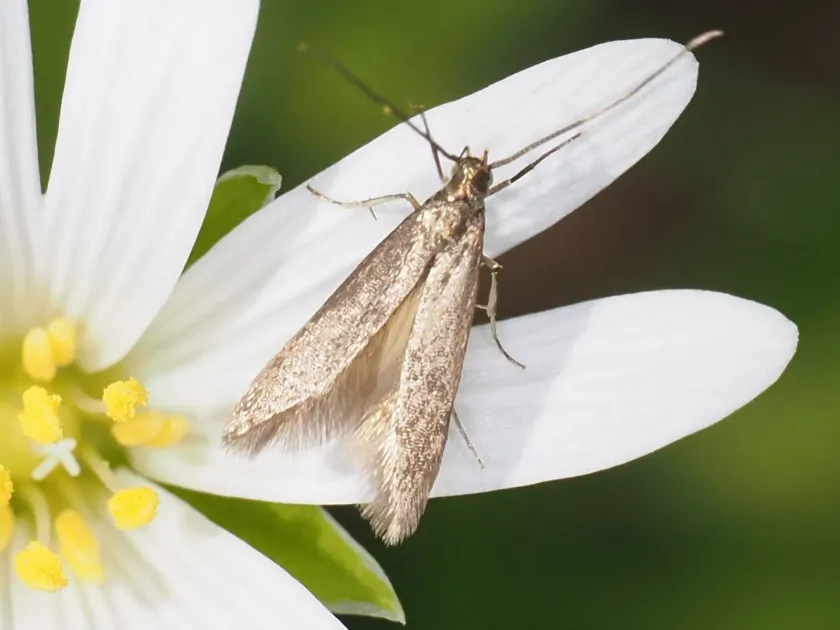
The mining moth (lat. Metriotes lutarea) is a small insect belonging to the order Lepidoptera and the family Gelechiidae. These moths are nocturnal or crepuscular, making them difficult to spot during routine garden inspections.
The adult moth possesses cryptic coloration, allowing it to blend seamlessly into tree bark or leaf litter. The wings are narrow and characterized by fringed edges, typical for this family of moths.
The larval stage, the caterpillar, is the primary source of damage to plants. It has a specialized chewing mouthpart designed to feed on leaf tissues while remaining hidden inside the leaf structure.
Its life cycle involves complete metamorphosis: egg, larva, pupa, and adult. The insect typically overwinters in the pupal stage, hidden within the topsoil or among organic debris under the host plants.
The emergence of the first generation of adults is closely synchronized with the onset of the spring growth season, ensuring that larvae have immediate access to fresh foliage.
What it damages
This pest targets a wide variety of deciduous trees, shrubs, and occasional herbaceous plants. Members of the Rosaceae family are particularly susceptible to infestations.
The damage is caused by larvae mining the internal layers of the leaf (parenchyma) while leaving the epidermis intact. This results in the characteristic pale spots or tunnels visible on the leaf surface.
Extensive mining significantly reduces the photosynthetic capacity of the foliage. This causes stress to the plant, potentially leading to premature leaf drop and decreased vigor.
For fruit-bearing trees, such infestations can negatively impact fruit yield and sugar content. Repeated annual damage weakens the overall structure and health of the plant.
In ornamental settings, the aesthetic damage caused by tunnels, leaf curling, and necrosis can be severe, making the plants unsuitable for commercial or decorative use.
Signs of infestation
The earliest symptom is the appearance of light-colored, irregular patterns on the leaves. These "mines" may appear as serpentine lines or blotches, depending on the host plant.
Careful observation reveals small, dark granular deposits inside the mines, which are the excrement (frass) of the larvae. This distinguishes mining moth damage from various leaf spot diseases.
As the larvae grow, the mines expand, often causing the leaf tissue to twist and distort. In severe cases, the entire leaf may dry out and turn brown before falling prematurely.
Detection can be aided by installing pheromone traps in orchards. These traps help agronomists monitor the presence and population density of the adult moths during the flight season.
Under a magnifying lens, one may see small exit holes on the surface of the mine, indicating that the caterpillar has completed its feeding cycle and moved on to pupation.
Control measures
Cultural control is the first line of defense. Thoroughly raking and disposing of fallen leaves in autumn is crucial, as this removes the overwintering pupae from the environment.
Cultivating the soil beneath the canopy of susceptible trees during early spring or late autumn can physically destroy pupating larvae and disrupt their development cycle.
Biological control using microbial insecticides based on specialized bacteria is effective against young larvae. These treatments are generally safer for pollinators and beneficial predators.
If population levels exceed economic thresholds, chemical insecticides with systemic properties may be necessary to penetrate the leaf tissue and target the protected larvae.
Encouraging natural enemies, such as parasitic wasps (braconids) and predatory beetles, can provide long-term population suppression and reduce the need for synthetic chemical interventions.
Taxonomy
- Latin name
- Metriotes lutarea
- Order
- Lepidoptera (butterflies)
- Family
- Coleophoridae
- EPPO code
- MTRTLU
Discussion
No discussions yet — be the first.