
Cherry casebearer
Coleophora cerasivorella
Description
How to identify
The cherry casebearer (Coleophora cerasivorella) is a small moth belonging to the Coleophoridae family. Adults are typically characterized by narrow, fringe-edged wings and a small wingspan, often making them difficult to spot in the foliage.
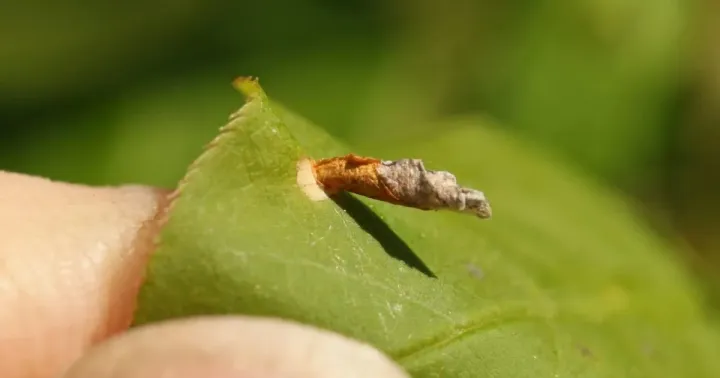
The primary identifying feature of this pest is the protective case carried by the larvae. These cases are constructed by the larvae themselves using pieces of host plant leaves and silk, serving as a portable shelter throughout their development.
The larvae progress through several stages, changing their cases as they grow larger. The case color typically ranges from yellowish to brown, allowing the larvae to blend seamlessly with the bark and leaf stems.
This species generally completes one generation per year. The lifecycle is perfectly synchronized with the spring phenology of host trees, ensuring that the larvae emerge exactly when food resources become available.
Overwintering occurs as mature or semi-mature larvae inside their sturdy cases. They attach themselves firmly to small branches, fruit spurs, or within bark crevices to survive the harsh winter conditions.
What it damages
The cherry casebearer primarily affects stone fruits, with a strong preference for cherry and sweet cherry trees. In some regions, they may also be observed on plum or apricot trees if infestation levels are high.
Initial damage occurs in early spring as larvae emerge from hibernation. They feed by boring into developing buds, which prevents the buds from opening correctly and often causes them to die completely.
Once foliage appears, the larvae transition to feeding on leaves. They attach their cases to the leaf surface, chew a small hole, and consume the internal tissues (parenchyma) while remaining protected inside their portable case.
This feeding behavior results in distinct, translucent spots known as leaf mines. As the damage progresses, these areas become dry and brown, leading to premature leaf senescence and potential leaf drop.
Severe infestations weaken the tree significantly. By reducing the overall photosynthetically active leaf area, the pest disrupts the tree's energy reserves, which can lead to poor fruit set and reduced vigor in subsequent years.
Signs of infestation
The most reliable early sign of an infestation is the presence of tiny, cigar-shaped cases attached to the buds or twigs in early spring. These cases can be mistaken for bits of dry debris.
Observing buds that fail to bloom despite favorable weather is a strong indicator. Upon close inspection, one can find entry holes where the larvae have penetrated the bud and hollowed it out.
On fully developed leaves, the presence of circular or oval-shaped translucent patches confirms an active infestation. These patches are a direct result of the larva feeding while safely anchored by its case.
The accumulation of frass (larval excrement) near the entry points or on the surfaces of leaves is another common indicator that the moth is actively feeding in the canopy.
In cases of heavy infestation, the crown of the tree may appear thin and scorched. The cumulative effect of numerous small feeding sites gives the foliage a ragged, unhealthy appearance throughout the season.
Control measures
Sanitation is a critical preventive measure. Regular pruning of infested branches and thinning the canopy helps reduce the sites where larvae can overwinter and improves air circulation, creating a less hospitable environment.
For smaller gardens, manual removal of infested buds and leaves is highly effective. Collecting and destroying these materials before the larvae transition to new feeding sites can significantly lower the pest population.
Chemical control should be timed to match the critical stages of bud development. Applying insecticides during the early spring, just as the buds begin to swell or break, targets the larvae when they are most vulnerable.
Biological control using entomopathogenic bacteria is a viable option for eco-friendly management. These products specifically target the larvae and help maintain the ecological balance by preserving beneficial predators.
Encouraging natural predators, such as insectivorous birds and parasitic wasps, plays a vital role in long-term control. Maintaining a healthy orchard ecosystem is the most sustainable way to keep casebearer populations below damaging levels.
Taxonomy
- Latin name
- Coleophora cerasivorella
- Order
- Lepidoptera (butterflies)
- Family
- Coleophoridae
- EPPO code
- COLEFL
Discussion
No discussions yet — be the first.