
Coleophora albitarsella
Coleophora albitarsella
Description
How to identify
Coleophora albitarsella is a species of moth belonging to the family Coleophoridae. The adult moth is characterized by its small size, usually with a wingspan of 10 to 12 mm, and often features light, whitish, or ochre-colored forewings typical for the genus.
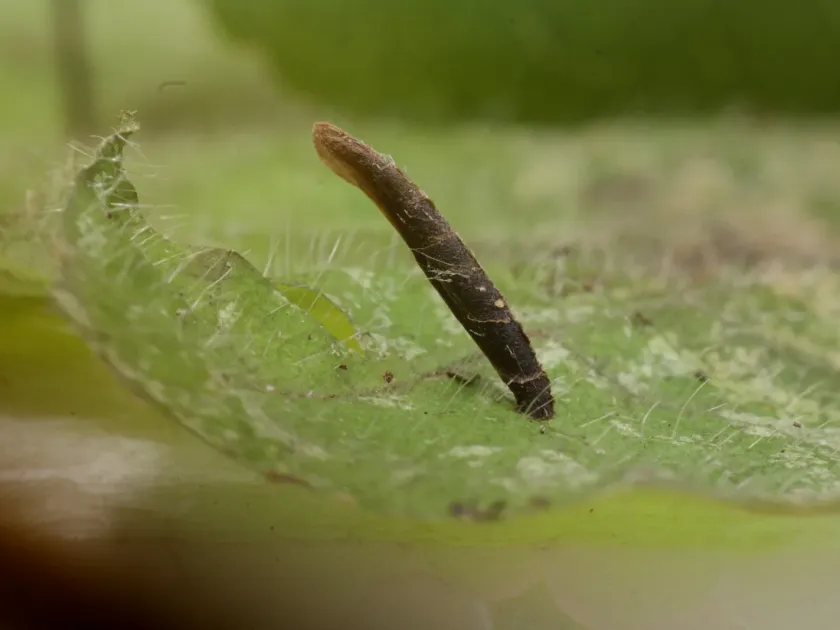
The most distinctive feature of this species is its larval stage, during which the caterpillar lives inside a portable case constructed from plant material and silk. This case serves as a mobile shelter and camouflage against predators.
The larvae are typically yellowish or brownish in color with a darker, sclerotized head capsule. They spend their entire larval life within the case, extending only their heads and thoracic segments to feed on the host plant leaves.
The life cycle encompasses four main stages: egg, larva, pupa, and adult. The species typically overwinters as a larva, attached to stems or within plant debris, which allows it to resume feeding as soon as the weather warms up in the spring.
The development time and number of generations per year vary depending on the local climate and environmental factors. Adults are nocturnal, active mostly during the night and twilight hours.
What it damages
This pest affects various host plants, primarily within the Lamiaceae family, such as sage (Salvia), mint, and oregano. It can also be found on several wild plants, which act as secondary hosts for the population.
The damage is caused by larvae mining the leaves. They feed on the internal parenchyma tissue, leaving the upper and lower epidermis intact, which creates characteristic transparent or blotchy spots on the leaves.
In cases of high infestation, these mines can merge, causing the leaves to turn yellow, wither, and eventually fall off. This significantly impairs the plant's ability to photosynthesize and store energy.
The resulting damage reduces the overall vigor of the host plant, making it more susceptible to secondary infections, fungal pathogens, and environmental stresses. For ornamental or medicinal herbs, this leads to a direct loss of aesthetic and commercial quality.
Heavy feeding can also result in the stunting of young shoots and the deformation of growing points, which is particularly detrimental to young seedlings or plants in their early stages of growth.
Signs of infestation
The earliest sign of Coleophora albitarsella presence is the appearance of small, irregular, pale patches on the leaves. These "windows" indicate that the larva has consumed the leaf interior while sparing the outer skin.
The presence of the larval cases is the definitive diagnostic feature. These small, cone-shaped or tubular structures can be spotted on the undersides of leaves or along the stems of the host plants.
Frass (larval excrement) appearing as tiny dark dots inside the leaf mines is another clear indicator of active feeding. As the larva grows, it leaves behind larger and more prominent feeding scars on the foliage.
Deformation, curling, or brown necrotic patches on leaves are common consequences of prolonged larval activity, especially when multiple larvae feed on a single leaf.
Although adults are difficult to spot due to their size and nocturnal habits, light traps during the peak flying season can confirm their presence in the area.
Control measures
Cultural practices are essential for managing this pest. Removing and destroying infested plant material, as well as clearing away plant debris at the end of the season, helps reduce the overwintering population.
Hand-picking the larvae along with their cases is effective in small gardens or on a limited number of ornamental plants. This mechanical control prevents the spread of the moth to unaffected areas.
Biological control using microbial insecticides, such as Bacillus thuringiensis, can be highly effective against young, actively feeding larvae while remaining environmentally friendly and safe for beneficial insects.
In large-scale or severe infestations, targeted chemical insecticides may be necessary. These should be applied according to local regulations, focusing on the period when young larvae are most active and vulnerable.
- Monitor adult flight activity using pheromone or light traps.
- Maintain good weed control to eliminate alternative host plants.
- Rotate crops to disrupt the pest's life cycle.
Taxonomy
- Latin name
- Coleophora albitarsella
- Order
- Lepidoptera (butterflies)
- Family
- Coleophoridae
- EPPO code
- COLEAT
Discussion
No discussions yet — be the first.