
Apple casebearer moth
Coleophora anatipennella
Description
How to identify
The apple casebearer moth (Coleophora anatipennella) is a member of the Coleophoridae family. The adult moths are small, with a wingspan of approximately 12–15 mm and varying shades of brownish or grayish coloration.
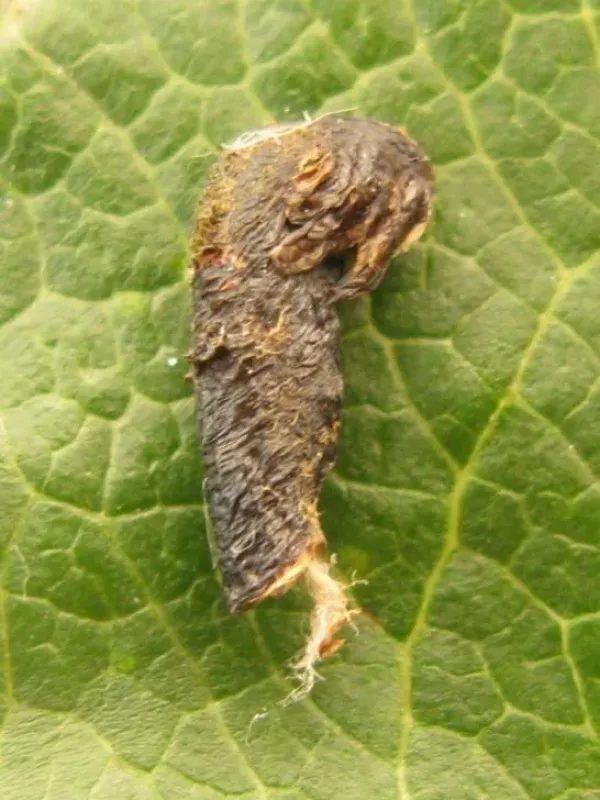
The name "casebearer" comes from the unique behavior of the larvae, which construct a portable protective case out of leaf fragments and silk. This case serves as a shelter throughout their development.
The lifecycle begins with eggs laid on leaves, followed by larval development. The larvae hibernate in their cases, usually secured in bark crevices or twig forks, ensuring their survival during winter months.
In spring, larvae emerge from hibernation as temperatures rise. They move towards the opening buds, which serve as their primary food source before they transition to leaves.
Reproduction occurs in summer. Once the larvae mature, they pupate, and the cycle continues as the next generation emerges to lay eggs for the following year.
What it damages
The primary damage is caused by larvae feeding on fruit buds. They bore into the buds, effectively hollowing them out and preventing the development of fruit and foliage.
Later in the season, the caterpillars mine the leaves. By feeding on the internal tissues (parenchyma) while hiding inside their cases, they leave distinct, irregular blotch mines on the foliage.
Severe infestations can lead to significant defoliation and weakened tree health, making the orchard more susceptible to secondary diseases and environmental stress.
Although named "apple" casebearer, this species is a polyphagous pest. It can damage various fruit trees, including pears, plums, and cherries, spreading across different orchard sectors.
- Destruction of flower and leaf buds
- Reduction of photosynthetic leaf area
- Stunted growth of new shoots
- Loss of overall tree vigor
- Potential decrease in fruit yield and quality
Signs of infestation
Spring observations often reveal buds that fail to open or appear stunted. Small, stationary cases attached to twigs near these buds are a clear indicator of a pest presence.
During the summer, the presence of light-colored, irregular holes or "mines" on the leaves is a classic sign. The casebearer larva is typically found attached to the underside of the leaf.
Trees affected by a high population density may show signs of yellowing or scorched foliage long before autumn, as the internal tissue damage compromises the leaf structure.
Examine the bark and limb junctions during winter pruning. Finding the small, hardened cases is the most reliable way to assess the threat level for the upcoming season.
Neglecting these initial signs leads to an exponential increase in the caterpillar population, which can eventually cause significant canopy damage if not managed early.
Control measures
Physical removal through winter pruning is a highly effective control measure. By collecting and destroying infested twigs, gardeners can significantly reduce the overwintering population.
Chemical control should be timed to the early spring "green tip" stage of the buds. Applying contact insecticides at this stage is most effective as the larvae begin their move.
Biological treatments, such as sprays containing Bacillus thuringiensis, provide an environmentally friendly option to manage larvae populations during their active feeding period on leaves.
Cleaning the tree trunks of loose, old bark can remove potential hibernation sites for the larvae, reducing the number of survivors that emerge in the spring.
Using pheromone traps for monitoring is recommended to track adult moth activity, allowing for precise and efficient timing of protective interventions within the orchard.
Taxonomy
- Latin name
- Coleophora anatipennella
- Order
- Lepidoptera (butterflies)
- Family
- Coleophoridae
- EPPO code
- COLEAN
Discussion
No discussions yet — be the first.