
Metriotes
Metriotes
Description
How to identify
The genus Metriotes belongs to the order Lepidoptera and the family Stathmopodidae. These insects are typically small, often going unnoticed due to their secretive lifestyle and effective camouflage in the field.
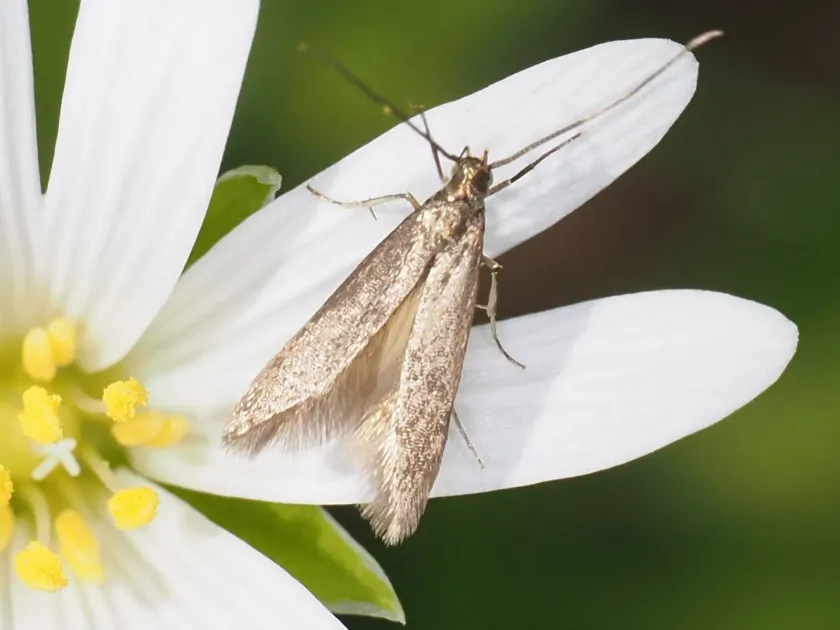
Adult moths are characterized by narrow wings and specific resting postures on leaf surfaces. Their coloration is usually cryptic, blending in perfectly with the plant parts they inhabit, making visual identification challenging for farmers.
The larvae, or caterpillars, possess the typical morphology of the family, with a chewing mouthpart designed for internal tissue feeding. Throughout their developmental stages, they move through different molts, significantly increasing their consumption rate.
Accurate species identification within this genus often requires laboratory examination of genital structures. Field identification is primarily based on the combination of host plant symptoms and observed activity patterns.
The biology of the pest is highly dependent on environmental conditions, particularly humidity and temperature. Optimal conditions during the growing season can trigger rapid population growth, leading to significant outbreaks.
What it damages
The pest primarily targets vegetative shoots and generative organs. Depending on the species, it can cause severe damage to various agricultural and ornamental crops, leading to economic losses.
Larvae consume internal plant tissues, which disrupts the vascular system and interferes with the transport of nutrients and water. This weakens the plant's structural integrity and overall vigor.
Mass infestations result in a substantial reduction in yield. Damaged blossoms often fail to set fruit, or if they do, the resulting produce is of poor quality, leading to commercial downgrading.
Wounds created by the larvae provide entry points for secondary pathogens, such as fungi and bacteria. These infections often spread faster than the primary pest damage, further compromising the plant's health.
The pest's host range can be broad, and it may adapt to different crop species present in the agroecosystem. This adaptability makes it a persistent threat that requires consistent monitoring and management.
When it appears
The life cycle commences in early spring as temperatures rise, signaling the emergence of adults from overwintering sites. Monitoring the first flight of adults is crucial for determining the timing of early-season control.
Caterpillar activity usually peaks during periods of vigorous plant growth. This is when the larvae feed most aggressively, causing widespread damage to succulent shoots and developing buds.
The number of generations per year depends on the geographic location and climatic conditions. Multiple overlapping generations can occur, necessitating prolonged protective measures throughout the season.
Winter is typically spent in a dormant state, with pupae hiding under bark, in leaf litter, or within the soil surface. These overwintering habitats are primary targets for sanitation practices.
Detection methods include the use of pheromone traps, which are highly specific and efficient for monitoring population density. These tools allow for precise application timing of control measures.
Signs of infestation
Initial signs of infestation include the presence of frass (excrement) on leaves or near shoot tips. Larvae often use silken webs to bind plant parts together, creating protective shelters for themselves.
Visual inspection often reveals perforated leaves or wilted shoot tips. Upon closer examination, one can identify entry holes made by the larvae when they burrow into the plant tissues.
- Wilted or distorted young shoot tips.
- Premature abscission of buds, flowers, and developing fruit.
- Presence of fine silk webbing between leaves or around buds.
- Darkened or necrotic tissue surrounding larva entry points.
Confirming an infestation often requires dissecting affected stems or buds to locate the larvae. Identifying the pest at this stage is essential for preventing further spread.
A sudden decline in the growth rate or vigor of otherwise healthy plants should prompt an immediate investigation to determine if the pest is active in the area.
Control measures
Integrated Pest Management (IPM) is the most effective approach. Cultural practices, such as the removal and destruction of crop residues post-harvest, are essential for reducing overwintering populations.
Biological control agents, specifically products based on Bacillus thuringiensis, offer an environmentally friendly option. These target the younger larval stages while preserving beneficial insect populations.
Chemical control should be employed only when monitoring data indicates that the economic injury level has been exceeded. Systemic insecticides are generally preferred as they effectively reach the internal feeding larvae.
Crop rotation serves as a critical preventive measure, breaking the lifecycle of the pest by ensuring that host crops are not planted in the same location in successive seasons.
For small-scale cultivation, manual removal of infested parts is highly effective. Regular scouting allows for the quick identification and removal of localized outbreaks before they spread throughout the field.
Taxonomy
- Latin name
- Metriotes
- Order
- Lepidoptera (butterflies)
- Family
- Coleophoridae
- EPPO code
- MTRTSP
Discussion
No discussions yet — be the first.