
Indian red scorpion
Mesobuthus tamulus
Description
How to identify
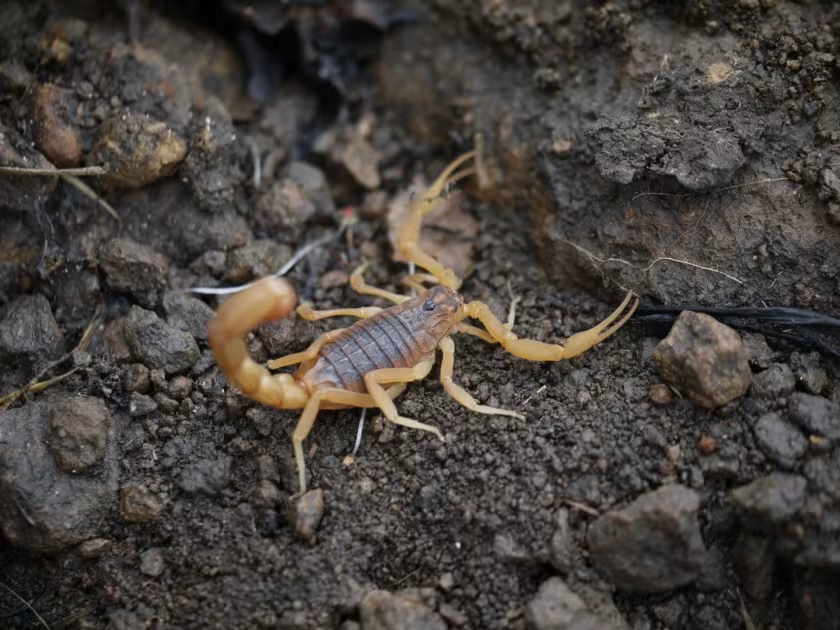
The Indian red scorpion, scientifically known as Mesobuthus tamulus, is a member of the Buthidae family. It is widely recognized as one of the most venomous scorpions in the world.
Typically measuring between 50 to 90 mm, these scorpions exhibit a distinct reddish-brown color, which provides camouflage in various soil types and agricultural environments.
They are primarily nocturnal, preferring to dwell in crevices, under rocks, or beneath agricultural debris. This secretive behavior allows them to thrive in human-modified landscapes.
Biological reproduction involves live birth, with mothers carrying their offspring until their first molt. This maternal care ensures high survival rates in harsh conditions.
The species is highly resilient and thrives in diverse habitats, often found in proximity to farming areas where insect prey is abundant and the soil provides adequate shelter.
What it damages
It is important to clarify that Mesobuthus tamulus is not a phytophagous pest; it does not consume plants, roots, or fruits, and therefore does not cause direct crop loss.
As a predatory species, it helps control populations of various insects that may otherwise act as agricultural pests, playing a minor role in natural biocontrol.
The primary concern regarding this species in an agricultural context is human safety. Farm laborers and field workers are at high risk of stings during harvesting or maintenance tasks.
Stings from the Indian red scorpion are considered medically significant and potentially fatal, requiring immediate medical intervention and the administration of antivenom.
The presence of large populations of these scorpions can disrupt field operations, necessitating rigorous safety protocols and increasing labor costs due to required protection measures.
Control measures
As Mesobuthus tamulus is not an agricultural pest, direct extermination efforts are generally unnecessary unless there is a significant risk to the workforce.
The most effective strategy for safety is the consistent use of personal protective equipment, specifically heavy-duty boots and gloves, during all field activities.
Maintaining a clean field environment by removing piles of debris, stones, and organic waste significantly reduces the number of suitable shelters available for the scorpions.
Mechanical tillage is an effective method for destroying scorpion nesting sites and reducing their local population density on cultivated farmland.
Implementing basic field hygiene and ensuring that storage facilities are sealed helps minimize the likelihood of scorpions entering areas where people work or store products.
Taxonomy
- Latin name
- Mesobuthus tamulus
- Family
- Buthidae
- EPPO code
- MESBTA
Discussion
No discussions yet — be the first.