
Slender brown scorpion
Centruroides gracilis
Description
How to identify
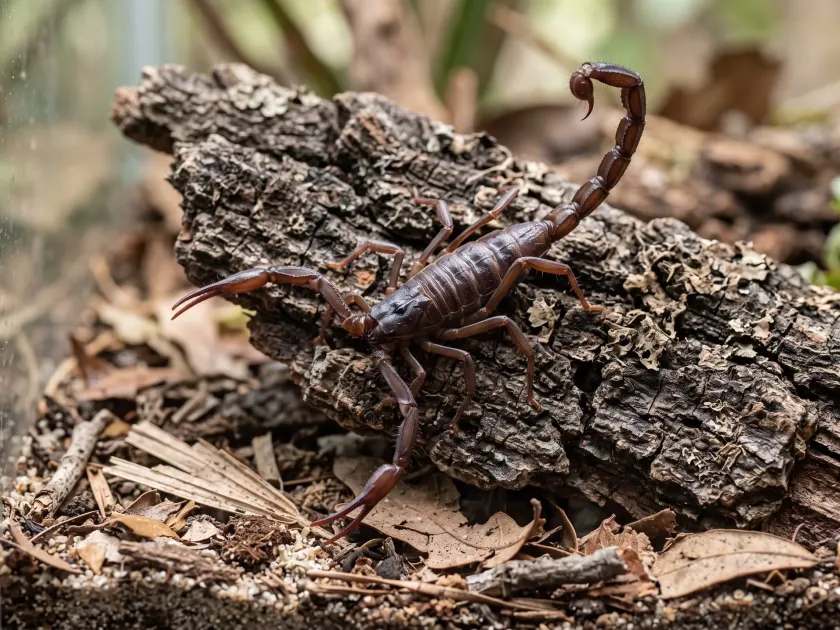
Centruroides gracilis is a member of the Buthidae family, known for its significant size, often reaching 10 to 15 centimeters in length.
The coloration of adults ranges from reddish-brown to almost black, which acts as excellent camouflage on tree bark and dark, moist crevices.
A defining characteristic of this species is its exceptionally long and slender pedipalps (claws), as well as a thin metasoma compared to its overall body width.
These scorpions are strictly nocturnal, spending their days hidden under logs, bark, or decaying organic matter within gardens and orchards.
Originating from tropical regions, they thrive in humid environments and are frequently found in sheltered areas of agricultural landscapes.
What it damages
It is crucial to note that Centruroides gracilis is not a phytophagous insect and does not consume plant tissues; thus, it causes no direct damage to crops.
The primary concern is the potential hazard to field workers and farmers, as they can inflict painful stings when disturbed during routine agricultural activities.
Stings can cause allergic reactions, leading to workplace safety concerns and potential medical costs for the agricultural labor force.
The presence of these scorpions within harvests or packaging materials can complicate exports, as they may be subject to strict phytosanitary regulations.
While they act as predators of other insects, their nuisance factor often outweighs any benefits as natural controllers of smaller pests.
When it appears
The activity of the slender brown scorpion is highly dependent on ambient temperature, with peaks occurring during warmer, humid months.
They are most active during the spring and summer, when higher temperatures facilitate foraging and reproductive cycles.
As nocturnal creatures, they emerge from their hiding spots after dark, making them a potential hazard during late-night harvesting or irrigation tasks.
The lifecycle involves live birth, with nymphs remaining on the mother’s back until their first molt, which can lead to clusters of individuals in single areas.
Migration often occurs after heavy rainfall, as individuals seek drier shelters, frequently moving into storage sheds, packing houses, or human-made structures.
Signs of infestation
The most effective way to identify the presence of these scorpions is by using an ultraviolet (UV) light at night, as they fluoresce bright green.
Finding exuviae (cast-off skins) near piles of wood, garden debris, or around the base of trees confirms the presence of an established population.
Frequent reports of stings by workers during weeding or fruit picking indicate a high density of the population within the agricultural area.
Regular inspections of equipment, stored lumber, and packing crates can reveal scorpions seeking shelter during the day.
Disturbed soil and garden waste piles often reveal scorpions hiding beneath, confirming their habitat preference in the immediate environment.
Control measures
The primary control method is sanitation: removing woodpiles, garden debris, and excess organic matter reduces available daytime hiding spots.
Chemical control is generally ineffective and discouraged; physical exclusion and environmental management are the preferred strategies.
- Wear protective gloves and boots when working in the field.
- Ensure packing areas and storage sheds are properly sealed.
- Keep the area around tree bases clear of tall weeds and debris.
Reducing the population of insects that serve as the scorpion's food source will naturally make the environment less attractive to them.
Consistent vigilance and the use of protective clothing are the best defense against accidental stings while performing manual labor in the fields.
Taxonomy
- Latin name
- Centruroides gracilis
- Family
- Buthidae
- EPPO code
- CENUGR
Discussion
No discussions yet — be the first.