
Common yellow scorpion
Buthus occitanus
Description
How to identify
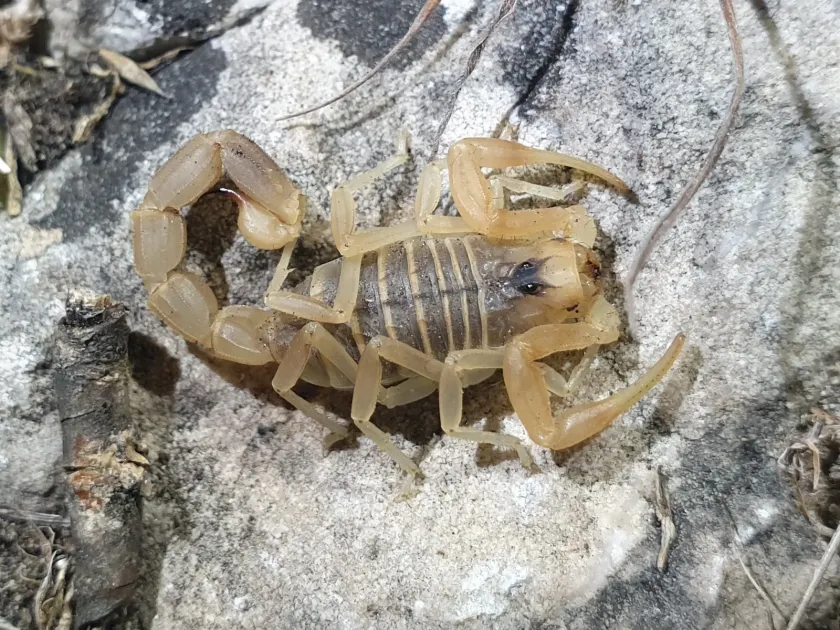
The common yellow scorpion (Buthus occitanus) is a member of the Buthidae family. It is typically found in arid environments with sandy or stony soils.
Adult individuals usually reach lengths of 6 to 8 centimeters and exhibit a distinct yellowish-brown coloration for camouflage.
The anatomy includes well-developed pedipalps for prey capture and a telson containing potent venom glands used for defense and hunting.
This species is nocturnal, spending most of the daylight hours hidden under rocks, debris, or within deep burrows in the soil.
Their life cycle is relatively slow, and they demonstrate high resilience to extreme heat, making them a permanent resident in their habitat.
What it damages
Buthus occitanus is not a direct threat to plant health as it feeds exclusively on small insects, arachnids, and other invertebrates.
The primary concern in agricultural settings is the risk posed to human labor during harvesting, weeding, or maintenance of irrigation systems.
Scorpions can infiltrate storage facilities and hide within produce or packaging materials, representing a health hazard for workers.
Mechanical disturbance of the soil by burrowing is generally negligible and does not cause significant agricultural or economic damage.
They should be considered biological components of the field ecosystem, often keeping populations of harmful crop pests in check.
Control measures
Sanitation is the most effective management strategy; removing debris, wood piles, and rocks from the field edges reduces harborages.
Tilling and regular soil cultivation disrupt the burrowing environment, forcing the scorpions to leave the cultivated areas.
Field workers should be provided with protective gear, such as heavy-duty gloves and sturdy boots, especially when working in high-risk zones.
Integrated pest management (IPM) practices that reduce prey populations will naturally limit the presence of these scorpions in the area.
Sealing gaps in farm storage buildings and warehouses is essential to prevent these arthropods from seeking shelter inside during the heat.
Taxonomy
- Latin name
- Buthus occitanus
- Family
- Buthidae
- EPPO code
- BUTHOC
Discussion
No discussions yet — be the first.