
Fat-tailed scorpion
Androctonus australis
Description
How to identify
The Fat-tailed scorpion (Androctonus australis) belongs to the Buthidae family and is considered one of the most dangerous scorpions in the world.
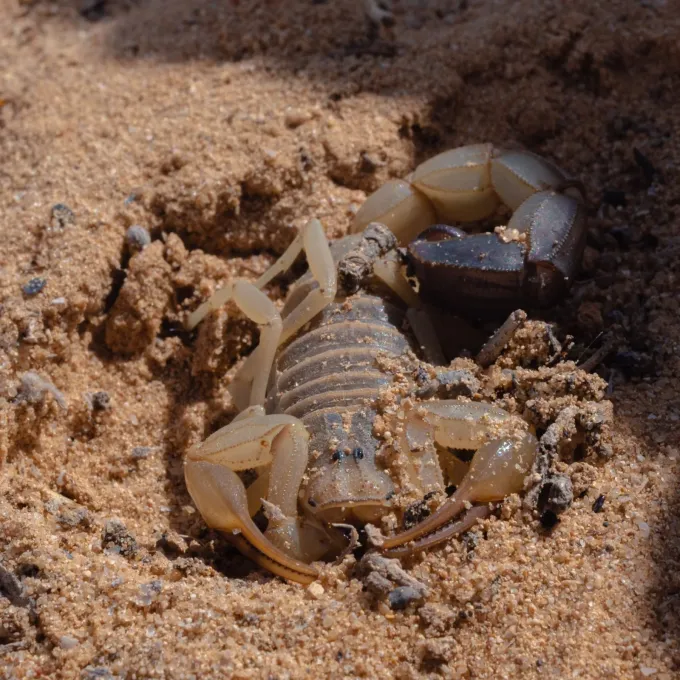
Adult specimens typically measure between 8 and 10 cm in length. They are characterized by their yellowish or brownish color, which mimics desert soil textures.
The most distinct feature of this species is its extremely robust tail (metasoma) with a large, bulbous telson that houses highly potent neurotoxic venom.
These scorpions are nocturnal creatures, spending their daylight hours hidden under rocks, inside soil crevices, or in underground burrows to avoid heat.
Biologically, the species is highly adapted to extreme arid environments, exhibiting low metabolic rates that allow them to survive in harsh agricultural regions.
What it damages
The Fat-tailed scorpion is not a crop pest in the botanical sense, as it does not consume plants, fruits, or agricultural yields directly.
Its primary impact on agriculture is the severe risk it poses to the safety of agricultural workers and field staff during routine farming operations.
The presence of this species often necessitates the suspension of manual labor, as the risk of a dangerous sting is high, particularly during harvest time.
They are frequently encountered in plantations or fields where vegetation provides cool, dark shelter, creating a dangerous conflict between workers and wildlife.
Economic losses are often indirect, resulting from reduced labor efficiency, increased health insurance costs, and the need for specialized safety training.
When it appears
The activity of Androctonus australis increases significantly during the warmer months when temperatures allow for optimal mobility and metabolism.
Summer is the peak period for these scorpions, with the highest levels of surface activity observed during the night hours or at dawn.
The reproductive cycle is synchronized with the warmer, more humid periods of the year, which ensures the survival of the offspring in the harsh environment.
When temperatures drop significantly during winter, these scorpions exhibit reduced activity and may remain in a state of hibernation within their burrows.
Managing farming schedules to avoid high-activity periods or implementing proactive site clearing can help reduce the frequency of worker-scorpion interactions.
Signs of infestation
Clear evidence of their presence includes semicircular burrow openings in the soil, which are typically found near vegetation or field boundaries.
Discarded exoskeletons, which the scorpion leaves behind after molting, are reliable markers of an established population in a specific field area.
The use of UV lighting during nocturnal surveys is the most effective method for identifying the presence and density of these scorpions on a site.
Increased sightings around irrigation systems or near stored organic materials indicate that the scorpions are utilizing the farm environment for shelter.
Frequent observations of scorpions in utility buildings or equipment storage areas suggest a high likelihood of a nearby established colony.
Control measures
The most effective strategy for control is the removal of physical harborages, such as rocks, debris, and excessive crop residue from the field surface.
Deep tillage of the soil is highly recommended as it disrupts the burrow structures, potentially killing the inhabitants or forcing them to migrate elsewhere.
Application of appropriate insecticides in and around storage buildings can reduce the risk of scorpions entering high-traffic work areas.
Worker safety protocols must be strictly enforced, including the use of puncture-resistant gloves and boots while performing manual agricultural tasks.
Maintaining a clean and organized work environment by removing potential moisture sources and clutter reduces the attractiveness of the site to this species.
Taxonomy
- Latin name
- Androctonus australis
- Family
- Buthidae
- EPPO code
- ANDOAU
Discussion
No discussions yet — be the first.