
Mediterranean yellow scorpion
Mesobuthus gibbosus
Description
How to identify
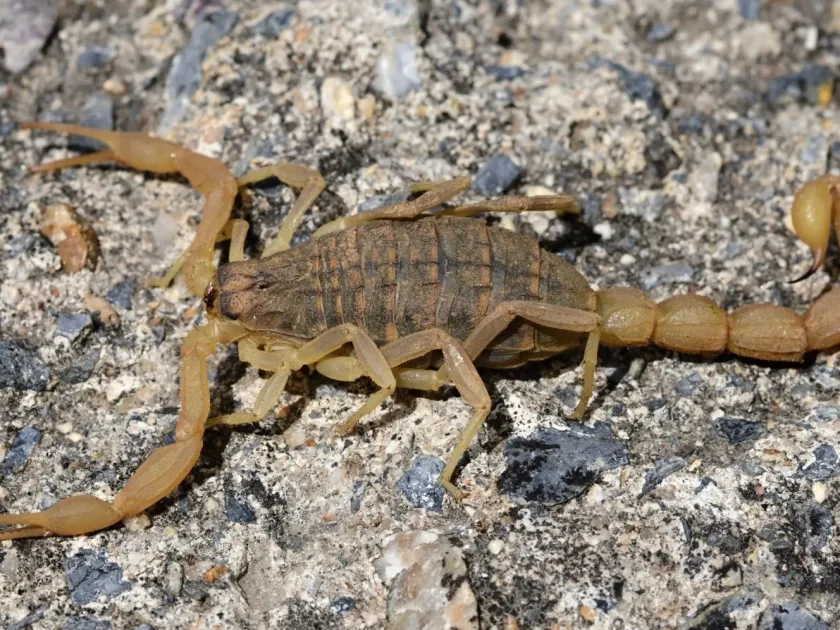
The Mediterranean yellow scorpion Mesobuthus gibbosus is a member of the Buthidae family, known for its potent venom. Adult specimens typically grow between 5 and 8 centimeters in length.
They are characterized by a yellowish-brown coloration, slender pedipalps (claws), and a robust metasoma (tail) featuring a sharp stinger, which is their primary defensive weapon against threats.
This species is nocturnal, spending daylight hours hiding under rocks, debris, or within soil crevices, making them difficult to detect during standard agricultural inspections.
They are highly adapted to human-modified landscapes, often finding sanctuary in irrigation systems, storage piles, and agricultural structures, which frequently puts them in direct contact with workers.
Given their aggressive defensive nature when threatened, they are considered one of the most dangerous scorpion species within their Mediterranean range.
What it damages
Mesobuthus gibbosus is not a plant-feeding pest, meaning it does not cause direct agricultural yield loss via crop consumption. However, its presence poses a significant operational threat.
The primary concern is the danger posed to farm personnel, especially during manual labor tasks such as harvesting, pruning, or moving irrigation equipment, where hand-to-ground contact is frequent.
In regions with high scorpion density, work efficiency drops significantly because workers must proceed with extreme caution, often requiring specialized protective gear to avoid accidental stings.
They often infest stacking areas for pallets, firewood, and harvest containers, creating hazardous zones that can lead to medical emergencies during the peak of the farming season.
While they are predators of other insects, their negative impact on occupational health makes them undesirable occupants of any commercial agricultural site.
When it appears
The activity of the Mediterranean yellow scorpion is strictly temperature-dependent. They are most active from late spring through early autumn, with peak activity during the warmest summer months.
During the heat of the summer, they retreat to cool, shaded microhabitats during the day and emerge to hunt at night, which coincides with the time many farmers may be performing field operations.
In autumn, as soil temperatures drop, their metabolic rate slows, and they seek deeper overwintering sites, reducing the likelihood of accidental encounters.
Winter dormancy is common, but they can still be active during unseasonably warm days or if their hibernation sites (such as greenhouses or stone structures) remain warm.
Understanding these seasonal patterns is crucial for farm managers to schedule high-risk maintenance or cleaning tasks during periods when the scorpions are less active.
Signs of infestation
Evidence of a scorpion population includes the presence of small, shallow burrows beneath stones or boards, as well as disturbed soil around the foundations of farm buildings.
A highly reliable method for field assessment is nocturnal monitoring using a UV light; the exoskeleton of the scorpion exhibits a bright green fluorescence under ultraviolet light.
Workers may report localized stings during routine labor, which is often a direct indicator of high population density in specific areas of the farm or orchard.
Frequent sightings in storage areas, sheds, or around irrigation pumps serve as a clear warning that the species has established a colony in the vicinity of production zones.
Empty exuviae (shed skins) found in debris or near building entries can also signify a thriving population nearby, suggesting the need for immediate site sanitation.
Control measures
The most effective management strategy is habitat modification: cleaning up trash piles, removing stone heaps, and clearing away thick organic mulch near working areas.
Personal protection is essential; employees should always wear thick work gloves and sturdy boots when working in fields, orchards, or warehouses to prevent sting injuries.
Chemical control via standard insecticides is generally ineffective against scorpions because they do not feed on treated plant tissues and often avoid surface-treated areas.
Sealing gaps and cracks in farm buildings, especially at door thresholds, is highly recommended to prevent scorpions from migrating into indoor working environments.
- Regularly clear debris to eliminate daytime hiding spots.
- Perform nightly inspections using UV lights to map high-risk areas.
- Install door seals to prevent entry into storage and packing facilities.
Taxonomy
- Latin name
- Mesobuthus gibbosus
- Family
- Buthidae
- EPPO code
- MESBGI
Discussion
No discussions yet — be the first.