
Dark Green Fritillary
Mesoacidalia aglaia
Description
How to identify
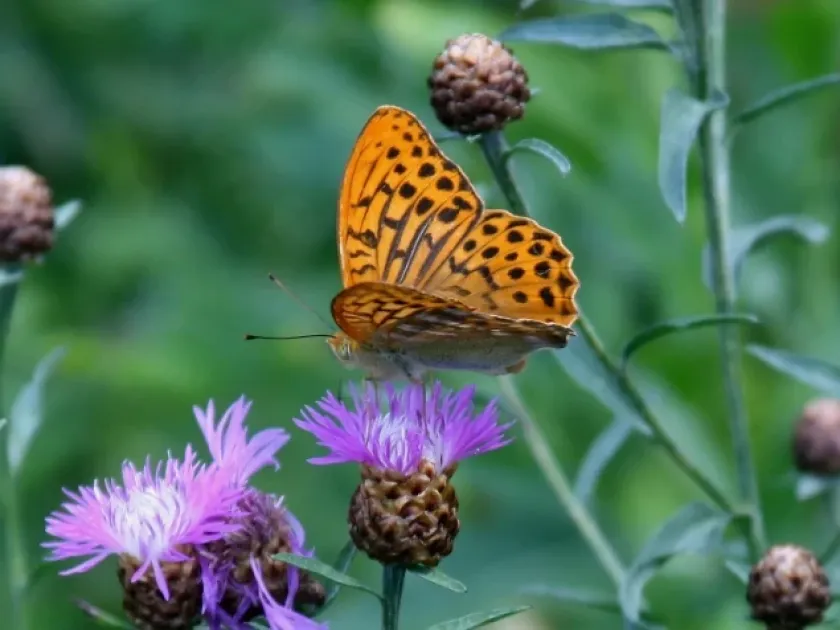
The Dark Green Fritillary (Mesoacidalia aglaia) is a butterfly belonging to the Nymphalidae family. Adults are characterized by orange wings with black markings and distinct silver spots on the underside of their hindwings, which serve as a key identification feature.
The larvae are dark-colored, reaching lengths of up to 40 mm. Their bodies are covered with numerous branched spines, and they exhibit light longitudinal stripes along their sides, which helps them blend into the foliage of their host plants during the day.
What it damages
This species primarily feeds on plants of the genus Viola. While they are a native species, in garden settings, high densities of caterpillars can cause significant aesthetic damage to cultivated violets and pansies by consuming the leaf tissue.
The feeding habit of the larvae is voracious. When infestation occurs, they can strip leaves down to the midribs, leading to reduced photosynthetic capacity and preventing the plants from blooming or reaching their full decorative potential in residential landscapes.
When it appears
The species completes one generation per year. Adult butterflies are typically active during the summer months, specifically from mid-June to early August, when they mate and lay eggs on or near the host plants.
Winter is spent in the larval stage. Young caterpillars hatch in the autumn and immediately enter a dormant state, hiding in the plant debris or the top layer of soil near the roots. They emerge as soon as temperatures rise in the spring to continue their development.
Signs of infestation
The most obvious sign of infestation is the presence of irregular, ragged holes in the leaves of violets. Because the larvae are often nocturnal feeders or remain hidden during the heat of the day, their damage is often noticed before the pest itself.
Careful inspection of the plant base and the undersides of the leaves often reveals the caterpillars. Frass, or larval waste, appearing as small black pellets around the base of the plant, is another reliable indicator of their presence.
Control measures
Manual removal of caterpillars is often sufficient for small-scale garden infestations. Hand-picking in the early morning or evening hours is an effective, non-chemical way to manage their population without impacting beneficial insects.
To prevent future outbreaks, gardeners should keep their planting areas free of excessive leaf litter during late autumn and early spring, as this reduces the availability of overwintering sites for the larvae. In severe cases, microbial pesticides containing Bacillus thuringiensis are effective.
Taxonomy
- Latin name
- Mesoacidalia aglaia
- Order
- Lepidoptera (butterflies)
- Family
- Nymphalidae
- EPPO code
- MSACAG
Discussion
No discussions yet — be the first.