
European hake
Merluccius merluccius
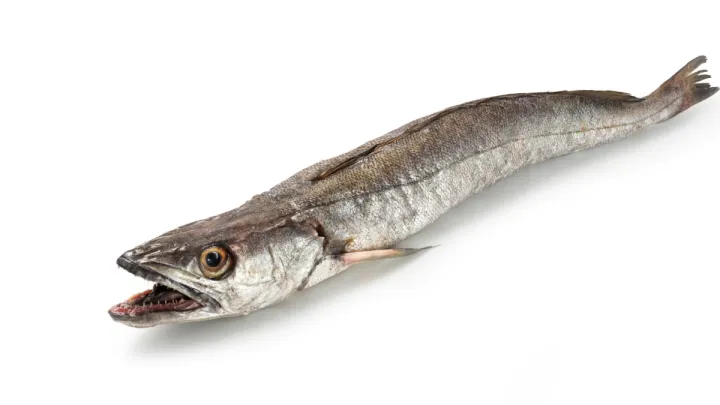
Description
How to identify
The European hake (Merluccius merluccius) is a commercially important marine fish species belonging to the family Merlucciidae, within the order Gadiformes.
As a deep-water marine inhabitant, this species is physiologically adapted to saline environments and preys exclusively on smaller fish, crustaceans, and cephalopods.
The anatomy and biological cycle of this fish are strictly limited to aquatic ecosystems, making any interaction with agricultural crops biologically impossible.
In scientific taxonomy, it is categorized as a vertebrate fish, which stands in complete opposition to the pests that typically affect plants, such as insects or mites.
Labeling this species as a plant pest is a misidentification, likely resulting from errors in automated databases that do not distinguish between ecological niches.
What it damages
The European hake causes no damage to agricultural crops, garden plants, or forest trees. It is not a phytophagous organism and does not consume plant tissues.
There is no mechanism for this fish to infest, infect, or damage plant roots, stems, leaves, or fruits, as it lacks the physiological traits of a plant pest.
The species does not act as a vector for plant diseases, as its life cycle is restricted to the marine environment, separated from terrestrial agricultural settings.
No agricultural studies or pest reports document any incidents of crop loss associated with this fish species, confirming its non-pest status.
Any perceived risk associated with the European hake in agricultural contexts is entirely unfounded and lacks any empirical evidence or biological basis.
Control measures
There are no control measures required for the European hake, as it presents no threat to agricultural productivity or plant health.
Applying any form of pesticide or agricultural management practice against this marine species is unnecessary and counterproductive to sustainable farming.
Agricultural professionals should focus on managing legitimate pests that pose actual risks to crop development and yields, such as aphids, beetles, or fungal pathogens.
Official phytosanitary regulations and quarantine lists exclude such marine organisms, as they are not recognized as agricultural pests under any jurisdiction.
Relying on accurate taxonomic databases and professional agronomic literature will ensure that time and resources are directed toward real pest control challenges.
Taxonomy
- Latin name
- Merluccius merluccius
- Family
- Gadidae
- EPPO code
- MRLUME
Discussion
No discussions yet — be the first.