
Red-breasted merganser
Mergus serrator
Description
How to identify
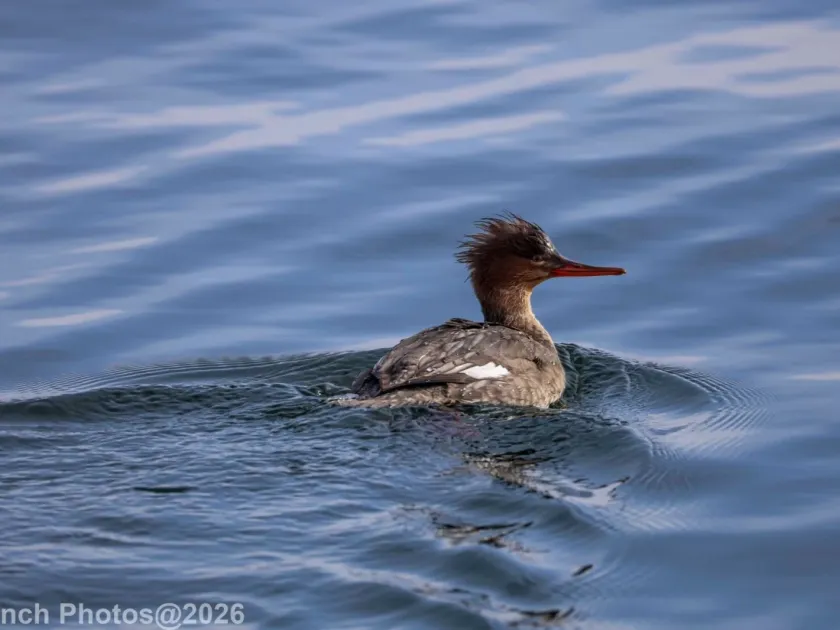
The red-breasted merganser (Mergus serrator) is a diving duck belonging to the Anatidae family. It is easily identified by its slender, serrated bill, which is specifically evolved to capture slippery fish under water.
Males in breeding plumage feature a distinct, wispy crest on their heads, a dark, green-tinged neck, and a white collar. These features make them stand out, particularly during the spring mating season.
These birds are highly specialized predators, relying almost entirely on a diet of fish. Unlike dabbling ducks, they dive deep into the water, using their powerful webbed feet for propulsion.
They are medium-sized birds with a streamlined shape that reduces drag, allowing them to pursue fish with great agility. They inhabit diverse aquatic environments, from marine coasts to inland lakes.
Their flight is rapid and direct, allowing them to commute between different foraging grounds effortlessly, which poses a continuous threat to various commercial fish farm sites.
What it damages
The primary concern for aquaculture is the direct predation on juvenile fish and commercial stock within ponds. Mergansers can significantly reduce the output of a fish farm.
A single bird can consume substantial amounts of fish daily, leading to major economic losses for the operator. High-density nursery ponds are particularly attractive to these predators.
Apart from total consumption, the birds frequently injure fish they do not manage to swallow. These injuries often become necrotic or infected, leading to further losses in the fish population.
The persistent presence of mergansers induces significant stress among the fish population. This stress often leads to reduced feeding activity and slower growth rates for the aquaculture stock.
Without proper mitigation, the presence of these birds can lead to cumulative losses that jeopardize the financial viability of commercial fish rearing operations.
When it appears
The presence of mergansers is highly seasonal, coinciding with their migration patterns and breeding cycles. Spring migrations often lead to temporary influxes of birds into inland ponds.
During the summer, when birds are rearing their young, the hunting pressure on juvenile fish populations in ponds reaches its peak due to increased nutritional demands.
Autumn brings flocks of juvenile birds gathering before moving south, which can lead to localized "hotspots" of predation activity on commercial fish farms during the harvest season.
Water temperature plays a crucial role in foraging success. As waters warm, fish become more active in the upper layers, making them highly accessible to diving mergansers.
In winter, mergansers concentrate in ice-free coastal or deep-water areas. If fish ponds remain open, they can continue to impact the stocks throughout the colder months.
Signs of infestation
Active diving behavior is the most visible sign of a merganser's presence. Watching them emerge from the water after a long dive confirms they are actively foraging.
Scavenging signs, such as fish carcasses found along the pond bank with characteristic parallel lacerations from the bird's serrated bill, are clear indicators of predation.
Vocalizations are common when birds gather in groups. Their presence is often detected by their distinct, hoarse calls before they are even spotted on the water surface.
Droppings left on pond embankments or resting platforms confirm the birds have been utilizing the site for extended periods, suggesting a routine feeding pattern.
Changes in fish behavior, such as schooling at the bottom of the pond or avoiding the surface, can be a behavioral response to the presence of an avian predator.
Control measures
Physical exclusion remains the gold standard for protection. Using bird-proof netting over high-value ponds is the only way to eliminate the risk of predation completely.
Acoustic deterrents that broadcast alarm calls or predator sounds can temporarily deter mergansers, although the systems should be varied to prevent birds from habituating.
Visual deterrents, such as raptor decoys or flashing reflective ribbons, can be used as part of an integrated management strategy to discourage birds from landing.
Active patrolling and disturbing the birds upon arrival can prevent them from establishing a regular feeding routine, making the pond a less attractive target.
An effective control program combines multiple strategies, including site monitoring, physical barriers, and non-lethal deterrents, to minimize the impact on aquaculture yields.
Taxonomy
- Latin name
- Mergus serrator
- Family
- Anatidae
- EPPO code
- MERGSE
Discussion
No discussions yet — be the first.