
Merganser
Mergus
Description
How to identify
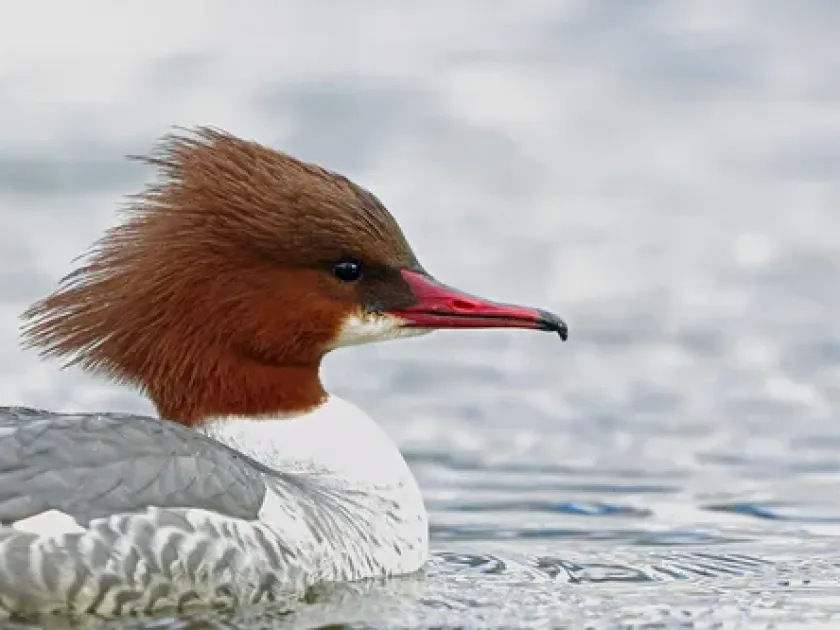
The merganser (genus Mergus) is a medium to large-sized waterfowl species belonging to the Anatidae family. Their most distinctive feature is a narrow, serrated beak with sharp edges, perfectly adapted for gripping slippery prey underwater.
Physically, these birds are characterized by a streamlined body shape and a prominent crest on the back of the head. Males often display vivid, contrasting plumage during the breeding season, while females possess more cryptic, camouflage-colored feathers.
Mergansers are known for their high speed and agility in flight. Unlike many other ducks, they are specialized divers that spend significant amounts of time submerged, making them highly efficient predators in artificial aquatic environments.
Their biology is inextricably linked to water. They typically nest in tree hollows or rocky crevices. Their high reproductive rate allows populations to recover quickly, presenting a persistent management challenge for fishery owners.
The genus includes species like the Common Merganser and Red-breasted Merganser. Despite some behavioral variations, they all share a strictly piscivorous diet, which puts them in direct competition with commercial fish farming operations.
What it damages
The primary damage caused by mergansers occurs in commercial fish farms, hatcheries, and trout ponds. They cause direct financial losses by consuming large quantities of juvenile commercial fish.
A single adult bird can consume a mass of fish equivalent to a significant percentage of its body weight in a single day. In high-density pond systems, this consumption rate represents a major economic loss.
Beyond direct consumption, the birds frequently injure fish with their beaks while hunting. These wounds often lead to secondary fungal or bacterial infections, significantly reducing the market value of the remaining harvest.
The intense feeding requirements during the spring and summer rearing seasons make mergansers the primary avian threat to aquaculture. Losses can aggregate into tons of lost biomass over a single growing season.
The persistent presence of these predators increases stress levels within the fish population. Constant avoidance behavior reduces feed intake and hampers the overall growth rate of the fish stock.
When it appears
Merganser activity in fish farms peaks during spring and autumn migration, when birds stop over to rest and forage. These periods require heightened surveillance and the immediate deployment of deterrents.
In summer, when parents are raising their young, the danger is amplified as the protein demand of the brood is extremely high. They purposefully target shallow ponds that are densely stocked with young fish.
Winter can also be problematic in regions where water bodies do not fully freeze. Mergansers congregate in ice-free sections of rivers and irrigation channels, continuing their predatory pressure throughout the winter months.
The lifecycle of the bird is synchronized with seasonal temperature changes and food availability. In early spring, immediately after the ice thaws, they are often the first to arrive at warming, fish-rich waters.
The seasonality of attacks directly correlates with the fish stocking schedule. The damage is most critical during the initial weeks after fry have been released into nursery ponds.
Signs of infestation
The first sign of a merganser infestation is the regular presence of small flocks on the water surface, especially during dawn and dusk. They often hunt in coordinated groups, effectively herding fish toward the shallows.
Observing fish with distinct puncture wounds or lacerations on their dorsal areas or flanks is a clear indicator of avian predation. These injuries are characteristic of the merganser's specialized hunting technique.
A sharp, unexplained decline in fish density during routine surveys or poor growth performance despite adequate feeding usually points to significant predator activity.
Finding piles of discarded fish scales and bones along the pond banks confirms that the area is being used as a feeding site. This is a definitive sign of established predator territory.
Altered fish behavior, such as sudden retreats to deeper water upon seeing shadows or hearing overhead noises, indicates that the fish are under persistent pressure from airborne predators.
Control measures
The most effective method for total protection is the installation of overhead netting on smaller ponds and hatcheries. This physical barrier completely prevents birds from accessing the water surface.
The use of visual deterrents, such as life-sized predator decoys, reflective holographic tape, and dynamic scarecrows, can provide temporary relief by creating an uncomfortable environment for the birds.
Acoustic deterrent systems that broadcast distress calls or randomized pyrotechnic sounds are effective at disrupting the birds' routine and preventing them from settling in the pond area.
Reducing the attractiveness of the pond by adjusting water levels or removing dense vegetation along the banks makes hunting more difficult. Less cover on the shoreline discourages birds from choosing the site.
A multi-modal management approach is essential, as mergansers can habituate to single methods. It is recommended to rotate deterrent strategies every 7–10 days to maintain efficacy.
Taxonomy
- Latin name
- Mergus
- Family
- Anatidae
- EPPO code
- MERGSP
Discussion
No discussions yet — be the first.