
Mendesia farinella
Mendesia farinella
Description
How to identify
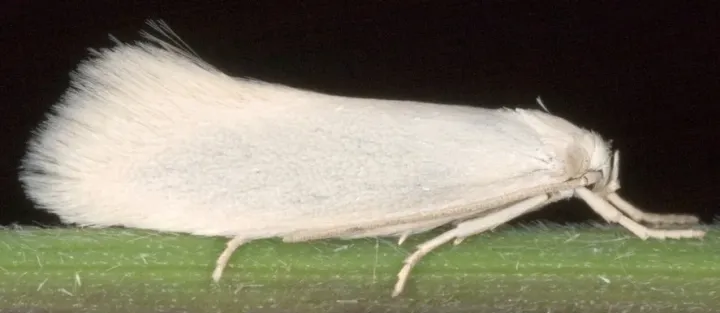
Mendesia farinella is a species of moth belonging to the family Tineidae. It is a small insect characterized by a distinct whitish, mealy-like dusting on its wings, which serves as a primary morphological identifier.
The adult moth is relatively small, with narrow wings covered in specialized scales that provide camouflage when resting on bark or dry plant surfaces.
The larvae are typically creamy-white, featuring a hardened head capsule adapted for feeding on various plant tissues, including decayed bark and fungi associated with plant decomposition.
Systematically, this insect is part of the order Lepidoptera, undergoing complete metamorphosis from egg to larva, pupa, and finally to the adult moth stage.
Proper identification often requires microscopic examination of the genitalia, as the adult moth can look similar to other related species found in the same habitat.
What it damages
The pest primarily targets weakened trees and shrubs, often colonizing areas where the bark has been damaged by environmental factors or secondary fungal infections.
By consuming the bark and underlying tissue, the larvae disrupt the vascular pathways of the plant, potentially leading to the decline of individual branches or even the entire plant.
The damage caused by Mendesia farinella creates entry points for various phytopathogens, including fungi and bacteria, which can cause severe rot and tissue necrosis.
Young nursery stock is particularly vulnerable, as the larvae can feed on succulent tissues of stems and buds, severely hindering normal growth and development.
In cases of high infestation, the cumulative damage can lead to the death of the plant, especially if the root collar area is heavily compromised.
When it appears
Adult moths are typically active during the late spring and summer months, which coincide with the favorable weather conditions required for reproduction and egg-laying.
Overwintering occurs primarily at the larval stage, tucked away in sheltered environments such as deep cracks in the bark or among leaf litter at the base of the plant.
The peak larval activity occurs mid-summer, as the larvae feed intensively to store energy reserves before undergoing pupation.
Multiple generations can occur throughout the growing season depending on the climate, causing continuous pressure on the host plants if not properly managed.
As autumn approaches and temperatures drop, the larvae seek permanent hiding places for hibernation, ceasing their feeding activity until the next spring.
Signs of infestation
The presence of fine silk webbing on the bark surface, intertwined with larval excrement and plant debris, is a clear indicator of a Mendesia farinella infestation.
Affected bark may show a distinct powdery or mealy residue, which is often visible to the naked eye upon close inspection of the trunk or larger branches.
Infested areas often exhibit abnormal tissue coloration, with patches of darkness or decay forming where the larvae have been actively feeding.
Premature wilting of terminal shoots and yellowing of foliage can signify that the plant's nutrient transport system has been impaired by larval feeding.
Visible entry holes or soft, spongy patches under the bark are classic signs of established colonies of these moth larvae.
Control measures
Effective management begins with maintaining high plant vigor through proper fertilization, adequate watering, and protection from physical stressors.
Sanitary pruning is a critical practice; removing and destroying infested branches prevents the spread of the moth to healthier parts of the plantation.
Chemical control should be applied during the most vulnerable larval stages, utilizing systemic or contact insecticides registered for moth management in forestry and landscaping.
Monitoring the adult population with pheromone traps helps agronomists time their interventions correctly, minimizing the need for broad-spectrum insecticide sprays.
- Regular cleaning of loose, dead bark to eliminate overwintering sites.
- Application of biological pesticides containing entomopathogenic fungi.
- Ensuring proper spacing between nursery plants to reduce humidity and larvae spread.
Taxonomy
- Latin name
- Mendesia farinella
- Order
- Lepidoptera (butterflies)
- Family
- Elachistidae
- EPPO code
- MNDSFA
Discussion
No discussions yet — be the first.