
Cereal leaf miner moth
Cosmiotes freyerella
Description
How to identify
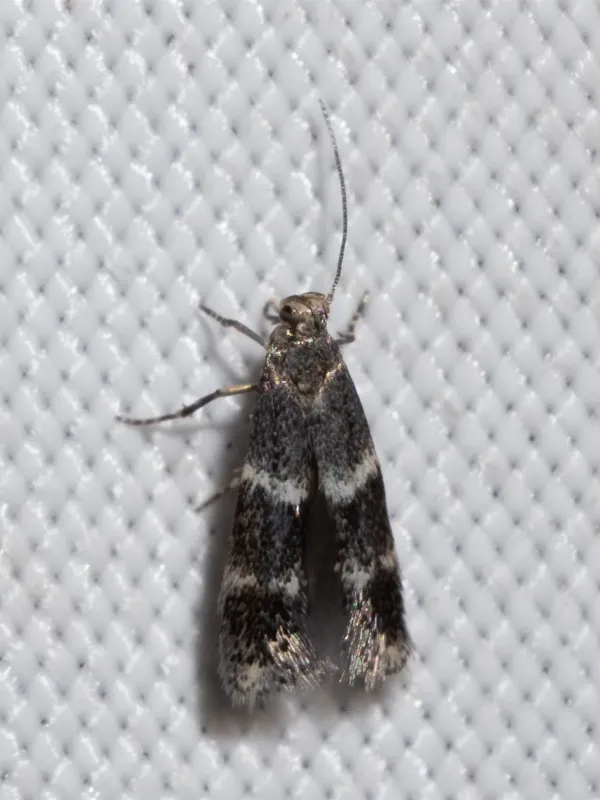
The cereal leaf miner moth (Cosmiotes freyerella) belongs to the Elachistidae family within the order Lepidoptera. It is a tiny insect recognized by its narrow wings fringed with fine hairs.
Adult moths typically have a wingspan of 6–8 millimeters. Their coloration is usually grayish or brownish, which provides effective camouflage against vegetation during the daylight hours.
The larvae (caterpillars) possess a flattened body structure, perfectly adapted for living between the leaf tissues. They lack significant pigmentation, making them difficult to spot during routine crop inspections.
The pupa is often located on the leaf surface or within plant debris, typically anchored by delicate silk threads to form a small cocoon.
To accurately identify the species, specialists analyze the shape of the mine, as the specific pattern of tracks created by the larva within the leaf blade is a diagnostic feature.
What it damages
The primary food source for the cereal leaf miner moth is grasses (Poaceae). While it prefers wild grasses, it can easily infest agricultural cereal crops.
Damage is frequently observed in barley, wheat, and oats. Populations often thrive in fields located near meadows or uncultivated land, which serve as natural reservoirs for the species.
The larvae feed on the leaf parenchyma, which disrupts the plant's photosynthesis. As the infested area expands, the overall vigor of the plant begins to decline.
High population densities lead to a reduction in vegetative biomass. In field conditions, this manifests as premature yellowing of the lower leaves and localized drying of the crop.
The damage causes not only a loss of green biomass but also delays the development of reproductive organs, which ultimately negatively impacts grain yield.
When it appears
The life cycle of Cosmiotes freyerella is closely linked to the temperature of the growing season. Adult flight typically begins once stable, warm spring temperatures arrive.
The peak activity of the pest usually occurs in late spring and early summer. During this time, the moths mate and lay eggs directly on the surface of the grass leaves.
Larval development occurs inside the leaf over several weeks. Ambient temperature directly influences the rate of metamorphosis; in warmer weather, the cycle accelerates significantly.
The moth can produce multiple generations per season, which complicates pest control efforts. They overwinter as pupae or larvae in plant debris or the root zone of grasses.
Monitoring the phenology of the pest allows agronomists to determine the optimal timing for implementing preventive measures and crop protection treatments.
Signs of infestation
The primary sign of infestation is the appearance of "mines"—light-colored, winding tracks inside the leaf blade. These are clearly visible when holding the leaf up to the light.
These mines are narrow tunnels where the larva consumes the inner tissues, leaving only the thin, transparent epidermis intact on both sides of the leaf.
Inside the tunnels, one can often see dark frass (larval excrement) arranged in lines or dots. This is a reliable indicator that the mine is currently active.
Infested leaf sections eventually lose structural integrity, wither, and may fold, creating a characteristic "crinkled" appearance in the crop at early growth stages.
Heavy infestations cause the leaf edges to curl; the overall appearance can mimic thermal or chemical burn, requiring careful diagnostic assessment.
Control measures
Effective management of the cereal leaf miner moth begins with cultural practices. Crop rotation and the systematic removal of weeds are essential preventive steps.
Stubble cultivation and deep plowing after harvest help destroy overwintering stages of the pest, eliminating its habitat during the off-season.
Systemic insecticides are recommended during periods of mass larval hatching. These chemicals are absorbed into the leaf tissue, affecting the pest protected inside the mine.
As part of an integrated pest management (IPM) approach, preserving populations of natural enemies—such as parasitic wasps—is crucial for reducing moth numbers naturally.
Regular field monitoring using pheromone traps enables precise timing of flight, allowing for targeted and cost-effective chemical applications only when necessary.
Taxonomy
- Latin name
- Cosmiotes freyerella
- Order
- Lepidoptera (butterflies)
- Family
- Elachistidae
- EPPO code
- CSMTFR
Discussion
No discussions yet — be the first.