
Grass-miner moth
Elachista bifasciella
Description
How to identify
The grass-miner moth (Elachista bifasciella) belongs to the Elachistidae family of the order Lepidoptera. It is a small moth species primarily known for its larval stage, which feeds on the internal tissues of grass leaves.
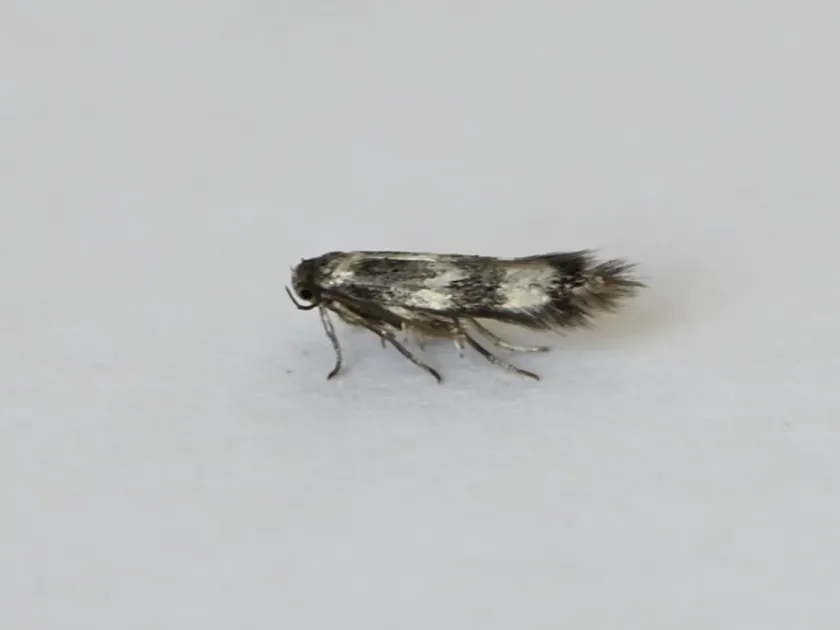
The adult moth is characterized by a small size, with a wingspan ranging from 8 to 10 mm. Its forewings exhibit a distinct pattern with two white transverse bands, a key morphological feature for identification.
Larvae develop within the leaves, creating tunnels known as mines. They have a yellowish-white body and a specialized head structure that allows them to efficiently feed on plant parenchyma.
The life cycle of this insect is closely synchronized with the growth of host plants. Pupation usually occurs near the surface of the leaves or in the protective leaf sheaths at the base of the plant.
As a specialized pest, its population dynamics are often regulated by environmental conditions, such as temperature and humidity, as well as by populations of natural parasitic wasps.
What it damages
The primary hosts of Elachista bifasciella are various species of cereals, including wheat, barley, and oats, as well as wild perennial grasses found in meadows and field margins.
The larvae feed by creating mines within the leaf blades, consuming the green photosynthetic tissue while leaving the outer epidermal layers intact for a considerable amount of time.
This feeding activity significantly disrupts the photosynthetic process of the host plant, leading to stunted growth, reduced biomass, and in severe cases, the death of the leaf.
The most critical damage occurs during the early growth stages of the crop, particularly at the tillering and stem elongation phases, where leaf area index is essential for future yield.
Increased stress from infestation makes the plants more susceptible to secondary drought conditions and opportunistic fungal pathogens, further reducing the overall crop harvest.
Signs of infestation
The most visible sign of infestation is the presence of pale, discolored blotches or long, thin white mines on the leaves, which become increasingly apparent as the larva grows.
Dark granular droppings, known as frass, are typically deposited within the mines, serving as a clear indicator of the presence of an active larva inside the leaf tissue.
As the damage progresses, the leaves may curl, turn brown, and eventually wither, causing the crop to show characteristic patches of discoloration across the field.
Careful field scouting allows for the detection of larvae within the leaf tissue, which is the most definitive diagnostic step for confirming an Elachista bifasciella outbreak.
During the early morning, when the dew makes the foliage more translucent, the patterns created by the mines are easier to spot against the healthy green background of the crop.
Control measures
Effective management begins with strict agronomic practices, such as the systematic removal of wild grasses and volunteer plants that serve as reservoirs for the pest between growing seasons.
Implementing a proper crop rotation strategy helps to reduce the frequency of the pest by creating periods where host plants are unavailable to emerging adult moths.
When infestation levels exceed economic thresholds, the application of systemic insecticides is recommended to penetrate the leaf tissue and provide effective control against hidden larvae.
Optimal timing for chemical treatment is during the period of peak adult moth activity or early larval emergence to intercept the pest before extensive damage occurs.
Integrated pest management should also focus on conserving beneficial insects, such as parasitoids, which play a significant role in keeping the moth population under control naturally.
Taxonomy
- Latin name
- Elachista bifasciella
- Order
- Lepidoptera (butterflies)
- Family
- Elachistidae
- EPPO code
- ELCHBI
Discussion
No discussions yet — be the first.