
Elachista
Elachista
Description
How to identify
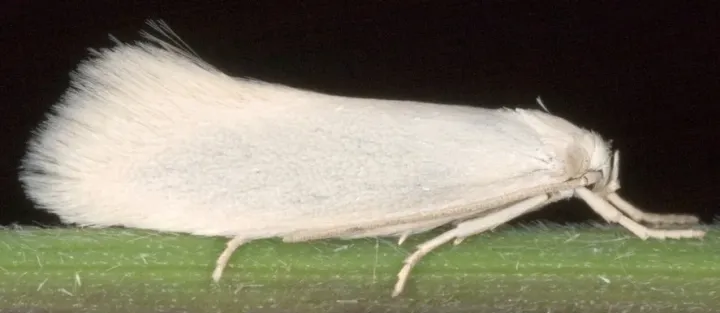
The genus Elachista, commonly known as grass moths, belongs to the family Elachistidae. These are tiny, inconspicuous moths with narrow, lance-shaped wings, often featuring light or metallic patterns that camouflage them perfectly on plant stems.
Adult moths are typically only a few millimeters in length, with wingspans rarely exceeding 10 millimeters. At rest, they hold their wings tightly against their bodies, assuming a thin, needle-like shape that helps them evade detection by predators.
The larvae, or caterpillars, are specialized internal feeders. Their bodies are flattened to navigate the narrow space between the upper and lower epidermis of the leaf, where they consume the plant tissue from the inside.
Identification of specific Elachista species is challenging in the field due to their uniform appearance. Entomologists often rely on the analysis of genitalia structure in adults for accurate species-level classification.
Larvae possess chewing mouthparts specifically evolved to consume the parenchymal tissue of grass leaves while keeping the protective outer leaf layers intact, which creates unique visual patterns known as mines.
What it damages
Elachista species primarily target various cereal crops, including wheat, barley, rye, and oats. They are also known to infest a wide range of wild grasses, which act as secondary hosts throughout the season.
The damage occurs when larvae create mines inside the leaf blades. By consuming the photosynthetic tissue, they significantly weaken the plant, reducing its ability to produce energy and inhibiting healthy growth.
In cases of high infestation, the damage can lead to premature leaf death, stunted stem development, and reduced grain yield. This is particularly problematic during the early vegetative stages of the crop.
The loss of leaf surface area can severely impact grain filling and overall crop quality. Severe outbreaks can cause significant economic losses, especially if the infestation remains undetected until the crop shows signs of chlorosis.
Beyond cereal production, these pests can impact forage grasses in pastures and meadows, reducing the biomass and nutritional quality available for livestock grazing.
When it appears
Adult Elachista moths are typically active during the spring and summer months. The timing of their appearance is closely linked to local temperature patterns and the phenological development of the host grasses.
Eggs are laid on the surface of the leaf. Upon hatching, the larvae immediately tunnel into the leaf tissue, where they remain protected for the duration of their development, safe from environmental stresses.
The number of generations per season varies based on regional climate, with warmer climates allowing for multiple rapid life cycles. This can lead to persistent pressure on crops throughout the growing season.
The species typically overwinters in the larval or pupal stage, hidden within plant debris, soil, or at the base of stems. As temperatures rise in spring, the cycle restarts, and larvae begin feeding on new sprouts.
Effective monitoring requires regular scouting in the early morning or late evening. Entomological sweeps and visual inspections of foliage for signs of mining are essential for timely detection.
Signs of infestation
The primary sign of Elachista infestation is the presence of mines — distinct light, transparent, or blotchy patches on the leaves. These patterns are created by larvae feeding within the leaf structure.
When inspecting the mines, one can often find dark, granular excrement left by the larvae. This is a key diagnostic feature that helps distinguish Elachista damage from bacterial or fungal plant diseases.
Affected leaves eventually yellow, curl, and die as the structural damage from the mining progress. Fields heavily infested with these pests may show large areas of chlorosis, appearing patchy and unhealthy.
Hold the leaf up to the light to see the larvae inside the mine. The clear visibility of the mine's internal pathway is a definitive method to confirm the presence of this specific pest.
Identifying these mines early is crucial for effective intervention. A high density of mines on a single plant serves as a clear alert for the farmer to initiate pest management protocols.
Control measures
Crop rotation is the most effective cultural practice to manage Elachista. By avoiding continuous planting of cereal crops, farmers can break the life cycle of the pest and starve the localized population.
Agronomic practices, such as deep plowing after harvest, are highly effective at burying crop residues and destroying overwintering pupae, thereby significantly reducing the potential population for the next season.
Controlling weed populations around the field margins is essential, as wild grasses often serve as reservoirs for the pest. Eliminating these alternative hosts helps limit the moth's ability to colonize primary crops.
In scenarios where population levels exceed the economic threshold, systemic insecticides are the preferred choice. These chemicals are absorbed by the plant, providing effective control against larvae hidden within the leaf mines.
Biological control, including the use of parasitic wasps that target Elachista larvae, offers an environmentally friendly alternative to chemical pesticides and helps maintain long-term balance in the field ecosystem.
Taxonomy
- Latin name
- Elachista
- Order
- Lepidoptera (butterflies)
- Family
- Elachistidae
- EPPO code
- ELCHSP
Discussion
No discussions yet — be the first.