
Cosmiotes
Cosmiotes
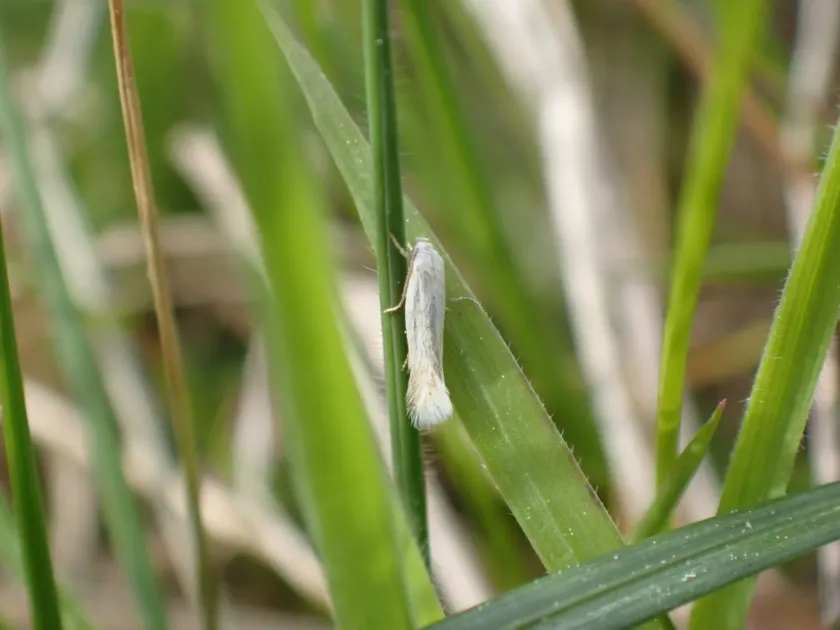
Description
How to identify
The genus Cosmiotes belongs to the family Elachistidae, commonly known as grass leaf miners. These are small moths characterized by narrow wings with long fringes, typical for this group of microlepidoptera.
Adult moths are generally nocturnal or crepuscular, making them difficult to detect in the field without using light or pheromone traps. Their bodies are covered in fine scales, often displaying cryptic coloration such as grey or brown shades to blend with their environment.
Larval identification is best achieved by inspecting leaf blades, as they live internally. A key identifying feature is the shape of the mine they create, as they consume the leaf parenchyma between the upper and lower epidermis.
The larvae possess a flattened body shape, which is an evolutionary adaptation for movement within the narrow spaces of grass leaves. Throughout their development, they pass through several larval instars, increasing their food consumption at each stage.
Accurate species identification within the Cosmiotes genus often requires genital examination, as morphological similarities among related species can be significant.
What it damages
This pest primarily affects wild and cultivated grasses, including wheat, barley, and oats. The larvae are responsible for the damage, as they feed on the internal tissues of the leaf blade while leaving the surface epidermis intact.
Such feeding behavior disrupts the plant's photosynthetic capacity in the affected areas. In cases of high infestation, this significantly reduces the overall productivity of the crop and impacts total grain yield.
Heavily damaged leaves exhibit yellowing and necrosis, often starting from the tip or the site where the mine was initiated. This weakens the plant, particularly under drought conditions or during sensitive growth stages.
Beyond direct tissue destruction, the mines create potential entry points for secondary fungal and bacterial pathogens. This reduces both the quality of the crop and its storage potential.
The economic significance of Cosmiotes is increasing in areas with dense cereal monocultures. Consistent population monitoring is crucial to prevent localized outbreaks and mitigate economic loss.
When it appears
The life cycle of the moth is closely synchronized with the phenology of cereal crops. Adult flight typically occurs during the tillering or stem elongation phases of early cereal development.
Females oviposit directly onto the surface of the grass leaves. Upon hatching, the larvae immediately tunnel into the leaf tissue, where they complete their entire development until pupation.
Depending on the climatic region, this species can produce one or two generations per season. Pupation often occurs either within the leaf mines or on the surface of the leaves inside a protective cocoon.
Overwintering typically occurs in the pupal stage, buried in soil or protected by plant debris. This makes post-harvest residue management a vital agricultural practice for pest control.
Temperature and humidity during the spring are the primary drivers of adult activity. Favorable weather conditions can lead to rapid population spikes if not controlled in time.
Signs of infestation
The earliest sign of infestation is the appearance of light, discolored streaks or patches on the leaves, known as mines. These are highly visible against the healthy green background of the foliage.
The mines often appear as elongated corridors following the leaf veins. A careful inspection inside the mine reveals the presence of frass (larval excrement) appearing as dark, granular deposits.
As damage progresses, the leaves may curl and die prematurely. In the field, this is often visible as scattered patches of yellowing plants within the otherwise healthy crop canopy.
Stunted growth and reduced tillering are indirect signs, indicating significant physiological stress caused by the mining activity on the plant's photosynthetic system.
- Discolored leaf streaks or mines.
- Presence of granular frass inside the leaf tissue.
- Premature yellowing and leaf necrosis.
- Reduced shoot vigor in localized infestation patches.
Control measures
Crop rotation is a fundamental management practice that prevents the build-up of this pest in the soil. Avoiding continuous cereal cropping is essential for breaking the life cycle of the moth.
Deep autumn plowing helps bury crop residues where pupae overwinter, significantly reducing the initial population pressure for the following spring.
Effective weed management, especially the removal of wild grasses, is critical as these plants act as reservoirs for the pest during the off-season.
The use of insecticides is recommended only when economic thresholds are exceeded. Systemic insecticides are generally more effective because they penetrate the leaf tissue where the larvae feed.
Biological control methods, such as encouraging natural parasitoid wasps, can help suppress population levels and maintain them below the economic damage threshold.
Taxonomy
- Latin name
- Cosmiotes
- Order
- Lepidoptera (butterflies)
- Family
- Elachistidae
- EPPO code
- CSMTSP
Discussion
No discussions yet — be the first.