
Cereal leaf miner moth
Biselachista cinereopunctella
Description
How to identify
The cereal leaf miner moth (Biselachista cinereopunctella) is a member of the Elachistidae family within the order Lepidoptera. It is a specialized pest that targets various grass species and cereal crops.
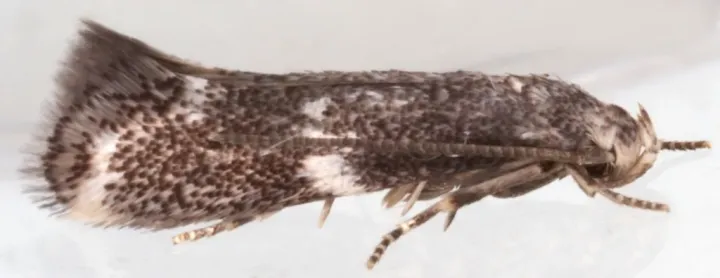
The adult moth is small with narrow, fringed wings, which is typical for leaf miner moths. Their nocturnal activity and camouflage make them difficult to spot during routine field inspections.
The larval stage, the caterpillar, is responsible for the damage. These larvae are specifically adapted to live within the mesophyll layer of a leaf, feeding on plant tissues while remaining protected by the outer epidermis.
The life cycle encompasses four stages: egg, larva, pupa, and adult. The duration of these stages is highly dependent on environmental variables such as temperature and humidity, which dictate the number of generations per year.
This moth shows a strong preference for specific host plants within the Poaceae family. Their ability to colonize cereal fields depends on the availability of suitable grass hosts and favorable microclimatic conditions.
What it damages
Damage is caused by larvae that mine the leaf blades, creating narrow, tunnel-like passages. This feeding process destroys the photosynthetic tissue, causing direct injury to the plant's energy-producing organs.
Common hosts include wheat, barley, and various forage grasses. In cases of high infestation, the total leaf area is significantly reduced, which directly impacts the plant's ability to fill grains or produce green biomass.
The economic impact of the pest is greatest during the tillering and stem elongation stages. Loss of leaf functionality at these critical moments can lead to stunted growth and reduced crop yields.
Besides immediate tissue loss, the tunnels created by the larvae provide entry points for secondary pathogens, potentially leading to fungal or bacterial infections in the leaf tissue.
Severe infestations often result in chlorosis, drying of leaves, and, in extreme cases, the premature death of the entire plant or significant portions of the crop canopy.
When it appears
The cereal leaf miner moth is active throughout the growing season, starting in early spring. The emergence of adults often coincides with the initial growth phases of cereal crops.
During the spring, the first generation begins its cycle, and subsequent generations follow throughout the summer months. The population size is usually regulated by ambient temperatures and the presence of natural predators.
Autumn weather conditions can influence the survival of the final generation and the number of pupae that overwinter. Warm and extended autumns can sometimes lead to increased pressure on winter cereal varieties.
Monitoring for signs of larval activity should be conducted regularly, starting as soon as the crops emerge. Identifying the first appearance of mines is crucial for timing effective control measures.
Climate patterns significantly influence the severity of the pest outbreaks. Agronomists monitor local weather data to predict potential peak activity periods for each generation of the moth.
Signs of infestation
The most distinctive symptom is the appearance of narrow, meandering white or pale lines on the leaves, known as mines. These tracks are clearly visible against the green leaf tissue when inspected closely.
Over time, the affected areas become thin, papery, and eventually turn brown as the plant tissue dries out. Leaves may curl or wither prematurely, giving the field a patchy, yellowed appearance.
Close observation of a mine often reveals the larva inside or its dark fecal pellets. These pellets are a clear sign of active feeding and differentiate the mines from other types of leaf damage.
Symptoms often appear first on the lower leaves. As the infestation progresses, larvae may move to younger leaves, leading to more widespread damage across the crop.
- Pale, winding tunnels on the leaf surface.
- Browning and necrosis of damaged leaf tissues.
- Premature leaf senescence and curling.
- Visible dark fecal deposits within the mines.
- Reduced plant vigor and stunted growth in affected patches.
Control measures
Integrated pest management (IPM) is the most effective approach for controlling Biselachista cinereopunctella. This involves combining cultural practices with targeted chemical interventions when necessary.
Cultural control strategies include deep plowing after harvest to destroy pupae overwintering in the soil or crop residue, as well as the removal of wild grasses that serve as alternative hosts.
Chemical control should be applied based on economic threshold levels. Systemic insecticides are generally preferred as they can penetrate the leaf tissue to reach the larvae protected within the mines.
Biological control methods, such as encouraging the presence of natural predators and parasitoid wasps, play an essential role in keeping moth populations below the damage threshold.
Using pheromone traps is an effective monitoring tool to track adult flight patterns, which helps agronomists time insecticide applications precisely to achieve the highest efficacy and minimal environmental impact.
Taxonomy
- Latin name
- Biselachista cinereopunctella
- Order
- Lepidoptera (butterflies)
- Family
- Elachistidae
- EPPO code
- BISKCI
Discussion
No discussions yet — be the first.