
Biselachista
Biselachista
Description
How to identify
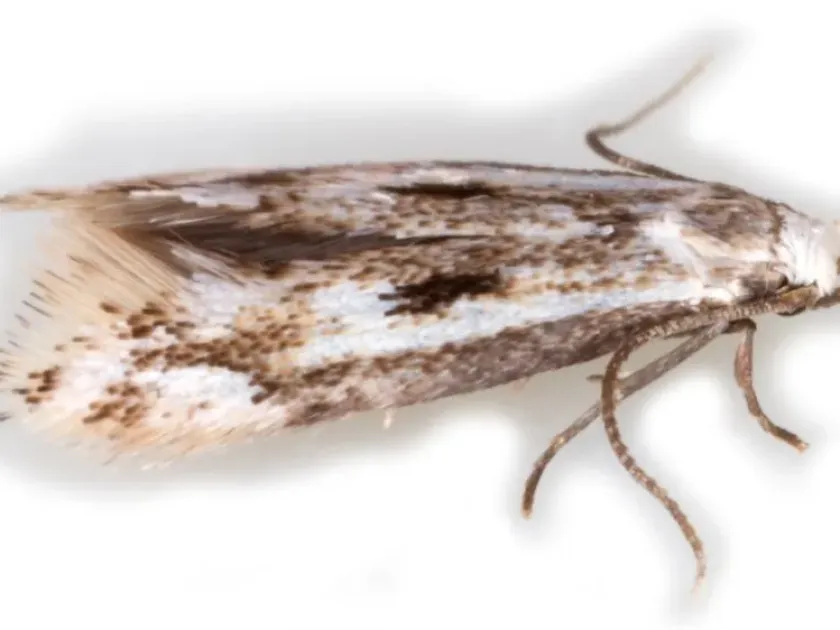
The genus Biselachista belongs to the Elachistidae family, commonly known as grass moths. These are small moths with a wingspan typically under 10 millimeters, featuring narrow wings that often exhibit a subtle metallic or grayish pattern.
The larvae are specialized miners that live within the leaf tissue of host plants. They possess a yellowish or whitish body and a darker head, which distinguishes them from other leaf-mining larvae found in grain crops.
Adult moths are primarily nocturnal or crepuscular, making them difficult to spot in the field without the use of light traps or pheromone monitoring. Identification to the species level usually requires detailed microscopic examination.
Their population development is highly sensitive to environmental factors like temperature and humidity. Understanding these variables is crucial for predicting potential outbreaks in cereal production systems.
Scientific studies emphasize that these insects are highly specialized, often targeting specific grass species, which makes them significant subjects for monitoring in diversified agro-ecosystems.
What it damages
The primary damage is caused by larvae, which feed on the internal leaf tissue (parenchyma) while leaving the epidermis intact. This results in the formation of tunnels or mines that disrupt the plant's physiological functions.
Host crops include various cereals such as wheat, barley, and oats, as well as several forage grasses. The level of damage is particularly high during periods of drought or plant stress, which limits the crop's ability to recover.
Photosynthetic efficiency is significantly reduced due to the destruction of green leaf area. Severely infested leaves may turn yellow, wither, and die prematurely, directly affecting yield potential.
Early-season infestation can lead to stunted growth and reduced tillering in young cereal crops. This can result in localized patches of thin stands, ultimately affecting the overall field uniformity.
Furthermore, the physical damage to the leaf tissue facilitates the entry of secondary pathogens, including fungi and bacteria, which can cause subsequent disease outbreaks in the field.
When it appears
The life cycle of Biselachista is synchronized with the phenology of their host plants. Depending on the geographical region, they may complete one or multiple generations per growing season.
They typically overwinter as larvae or pupae among plant debris, in the soil, or at the base of grasses. Activity resumes in the spring as soon as temperatures exceed the developmental threshold.
The flight period of adult moths often coincides with the tillering or stem elongation phases of cereals. This period represents the primary window for monitoring and management interventions.
Summer generations tend to develop faster than spring ones due to warmer conditions, leading to more rapid population growth. Natural enemies often regulate their numbers unless environmental conditions favor the pest.
Autumn generations may develop on winter crops or volunteer grasses, ensuring the survival of the population and setting the stage for the following season's infestation.
Signs of infestation
The first sign of infestation is the appearance of whitish or discolored lines and blotches on the leaves. These mines are often elongated and run parallel to the veins, a diagnostic feature of the genus.
By holding an affected leaf up to the light, you can clearly see the larva inside the mine, along with small dark pellets of frass (excrement), which confirms active infestation.
In cases of high infestation, the leaves become twisted, dry, and brown. This damage is sometimes misdiagnosed as nutrient deficiency or drought stress by inexperienced observers.
The presence of adult moths during dusk or dawn, flushed out from the grass by movement, indicates an active population. Frequent observation is necessary to determine the intensity of the pest.
Patches of "burnt" or yellowing crops in a field are indicators that infestation has progressed significantly. Regular scouting is essential to identify these early warning signs before major damage occurs.
Control measures
Effective management begins with agronomic practices, including deep plowing after harvest to destroy overwintering sites. Eliminating volunteer grains and grassy weeds is vital to reduce local refugia.
Crop rotation serves as a powerful tool to break the pest's life cycle. Choosing cereal varieties with high vigor can also help the plant compensate for minor leaf area loss.
Biological control relies on naturally occurring parasitoids, such as ichneumonid wasps, which play a crucial role in regulating populations. Preserving these beneficial insects is a priority in IPM.
Chemical control should be employed only when monitoring reveals that populations exceed economic thresholds. Systemic insecticides are generally required to target the larvae effectively within the leaf tissue.
- Deployment of pheromone traps for monitoring.
- Targeted insecticide applications during the adult flight peak.
- Thorough cleanup of crop residues post-harvest.
- Maintenance of balanced nutrient levels to support plant recovery.
Taxonomy
- Latin name
- Biselachista
- Order
- Lepidoptera (butterflies)
- Family
- Elachistidae
- EPPO code
- BISKSP
Discussion
No discussions yet — be the first.