
Song sparrow
Melospiza melodia
Description
How to identify
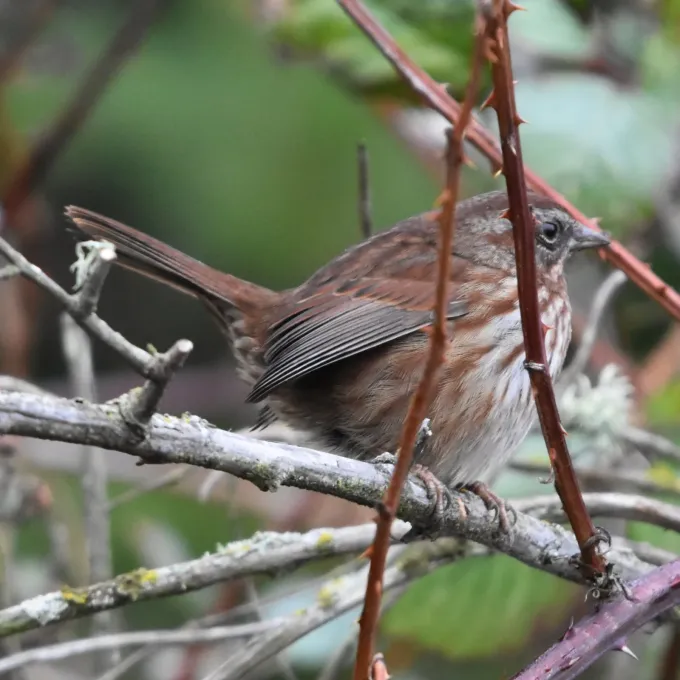
The song sparrow (Melospiza melodia) is a small passerine bird from the Passerellidae family. Measuring about 14–17 cm in length, it is easily identified by its brownish plumage with streaks on the chest and sides.
The most distinctive feature of the song sparrow is a large, dark central spot on its breast. Its stout, conical bill is specifically evolved for seed cracking, which makes this species a significant visitor to agricultural fields.
Taxonomically, it belongs to the Passeriformes order. While often considered beneficial for insect control in forest areas, in agricultural landscapes, they can aggregate into large flocks and damage crops.
The bird displays a characteristic flight pattern with quick wing beats and an often elevated tail. Their plumage provides excellent camouflage within dense thickets and high-stemmed crops like wheat or tall grasses.
Nesting sites are typically situated near the ground or in dense vegetation at field edges, allowing birds to quickly transition from sheltered areas to foraging grounds in the fields.
What it damages
The song sparrow primary targets grain crops such as wheat, barley, oats, and millet. They feed directly on the seeds in the spikelets during the milk and dough ripening stages.
Beyond consuming the grain, these birds damage the plants by breaking stalks to reach the spikes, which leads to lodging and substantial harvest losses, particularly near field boundaries.
In sunflower-growing regions, song sparrows can damage the developing seed heads. By pecking at the seeds, they create wounds that predispose the crop to fungal infections and rot.
Vegetable crops are also at risk, as sparrows frequently feed on newly germinated seeds and seedlings, often requiring farmers to re-seed affected areas and increasing production costs.
In orchards, during periods of winter food scarcity, song sparrows may consume fruit tree buds. This damage reduces the potential for future fruit production, causing direct economic impact.
When it appears
Peak activity occurs from late spring through autumn. The period of grain ripening is the most critical time for monitoring and implementing protective measures against bird damage.
In early spring, after snowmelt, birds often target early-sown seeds. During this time, they rely on leftover seeds from the previous season and budding tree tissues for sustenance.
The summer season is marked by intensive foraging on grain spikes. The mobility of these flocks increases during this time, posing a constant threat to high-value grain crops.
Autumn foraging on harvest residues is common. While this might seem harmless, large congregations of birds can contaminate fields and contribute to weed spread through their droppings.
During winter, birds often gather near farm infrastructure and grain storage facilities. Proper hygiene and storage protection are essential to prevent damage to stored supplies.
Signs of infestation
The primary sign of infestation is the appearance of shredded or empty spikelets, where seeds have been extracted in an uneven, destructive manner by the birds.
Small heaps of hulls and broken seed parts under the plants are clear evidence that a flock has been feeding on that specific portion of the crop.
Stalks bent toward the ground or broken at the base are common indicators, as the birds often force the plant down to gain easier access to the spike.
Accumulations of bird droppings on leaves and soil along the edges of the field indicate frequent usage of the area by foraging flocks.
Direct observation of song sparrow activity in the field during the early morning and late evening confirms their role in crop loss on the affected plot.
Control measures
Acoustic deterrents that broadcast predator calls are highly effective in creating a hazardous environment for the sparrows, encouraging them to leave the crop area.
The use of reflective streamers, kites, and automated scarecrows helps maintain a constant state of alert, reducing the time birds spend foraging in the fields.
Agronomic control includes clearing weeds from fence lines and windbreaks to eliminate nesting sites and cover for the birds, making the area less attractive for foraging.
Timely harvesting immediately after the crop reaches full maturity is crucial to reducing the window of opportunity for birds to cause significant economic damage.
- Implement bio-acoustic repelling systems.
- Control weeds at field margins to reduce shelter.
- Use protective netting for high-value vegetable plots.
Taxonomy
- Latin name
- Melospiza melodia
- Family
- Emberizidae
- EPPO code
- MLOZME
Discussion
No discussions yet — be the first.