
Song sparrows
Melospiza
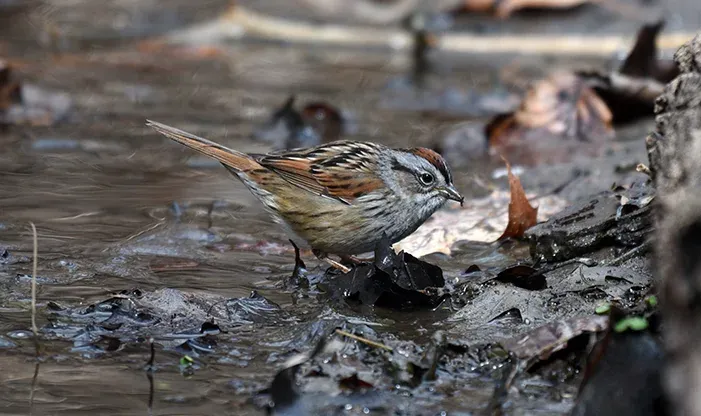
Description
How to identify
Song sparrows (genus Melospiza) are small passerine birds belonging to the Emberizidae family.
They are characterized by a streaked brown and grey plumage and a distinctive dark central spot on the chest area.
Typically measuring between 12 and 17 centimeters in length, they are well-adapted to brushy habitats and open fields.
The name comes from their complex and varied songs, which are used by males to establish and defend their territories.
While often appreciated for their vocalizations, their presence in large numbers near agricultural sites can cause notable economic losses.
What it damages
Song sparrows cause primary damage by consuming seeds of various agricultural crops, particularly cereals and vegetables.
They are known to feed on wheat, barley, and millet kernels during the milk-to-dough stage of crop development.
In garden settings, they can cause significant damage to young seedlings, such as lettuce, kale, and other leafy vegetables.
Berries and small fruit crops are also vulnerable, as these birds can peck at fruit, reducing both yield and commercial quality.
Although they consume insects during part of the year, their impact on crop production is largely negative during harvest periods.
When it appears
These birds are most active during the spring and summer breeding season, when they require high-energy food for their chicks.
The risk to field crops is highest during the ripening stage, when grain is easily accessible and nutrient-dense.
During the autumn, flocks congregate before migration, which significantly increases the pressure on remaining late-harvest crops.
Seasonal patterns of migration and breeding dictate the times when birds are most likely to infiltrate agricultural zones.
Monitoring these periods allows farmers to implement protective strategies just before the most critical damage is likely to occur.
Signs of infestation
Key signs of infestation include partially eaten heads of cereal crops where grains have been picked out from the husks.
Sparse seedling emergence or signs of pulled-up sprouts in garden beds often indicate feeding activity by these small birds.
The distinctive, complex songs of the males on field perimeters serve as an audible indicator of their nearby nesting sites.
Droppings left on foliage and plant stems, along with crushed vegetation, provide physical evidence of a bird presence.
Frequent movement of birds between field edges and crop centers, especially during early morning hours, is a classic behavioral sign.
Control measures
Visual deterrents, including reflective tape, mirrors, and hawk-shaped kites, can be effective in reducing bird landing frequency.
Bioacoustic devices that play alarm calls or predator sounds are useful for keeping flocks away from larger field areas.
Physical exclusion using netting is the most reliable method for protecting high-value vegetable and small fruit crops.
Good agricultural practices, such as prompt harvesting and removing nearby brushy cover, help to reduce the attractiveness of the field.
- Deploying bioacoustic deterrent systems.
- Installing visual repellents like reflectors.
- Using exclusion netting for small crops.
- Managing field edges to reduce nesting habitat.
Taxonomy
- Latin name
- Melospiza
- Family
- Emberizidae
- EPPO code
- MLOZSP
Discussion
No discussions yet — be the first.