
Crimson Checkerspot
Melitaea didyma
Description
How to identify
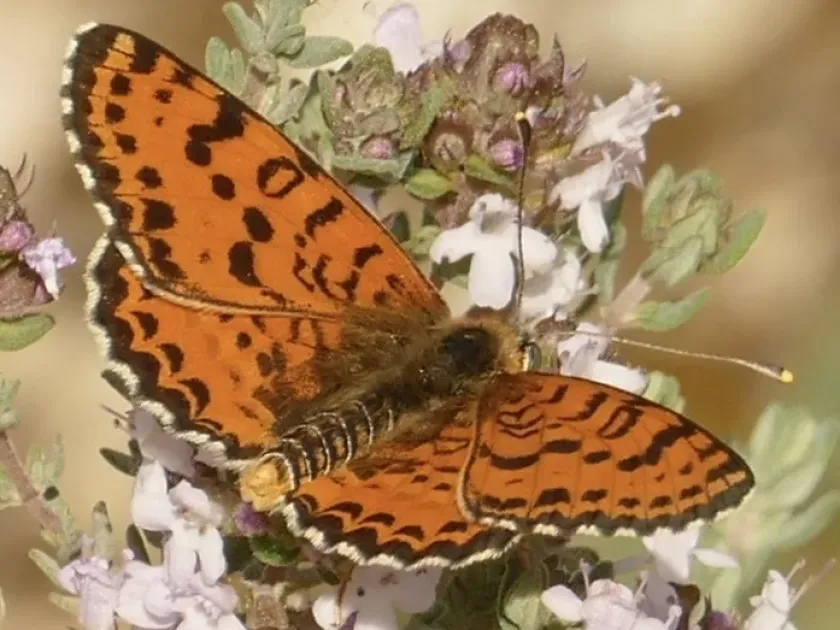
The Crimson Checkerspot (latin: Melitaea didyma) is a butterfly species belonging to the Nymphalidae family. Adult butterflies typically have a wingspan ranging from 35 to 50 mm, featuring a striking orange-red background with distinctive black spots.
The larvae, or caterpillars, of this species grow up to 30 mm in length. They are characterized by a grayish or brownish coloration, speckled with small white dots and covered in dark, small spines.
Pupae of the Crimson Checkerspot are often found attached to the stems of host plants. They appear light-colored with dark markings, providing effective camouflage against the dried plant debris in their habitat.
The lifecycle follows a complete metamorphosis: eggs, larvae, pupae, and adults. The species typically overwinters as young larvae residing in silk nests, which protects them from cold temperatures.
Reproduction involves the female laying eggs in clusters on the undersides of leaves, ensuring that the emerging larvae have an immediate food source once they hatch.
What it damages
The primary economic damage is caused by the caterpillars, which are highly active feeders. They can consume large portions of leaf blades, often skeletonizing the foliage and leaving only the veins intact.
While primarily found on wild flora, these caterpillars can transition to agricultural crops if the infestation is severe or if the host plants are located in close proximity to cultivated fields.
Commonly affected plants include species from the Plantaginaceae and Lamiaceae families, as well as certain legumes that may be grown for forage or in small-scale garden plots.
Extensive foliage consumption significantly reduces the plant's photosynthetic capacity, leading to weakened growth, decreased biomass, and potentially lower yields in infested crops.
In cases of heavy infestation on young seedlings, the larvae can cause total defoliation, which may result in the death of the plant if not managed during the early stages of the growing season.
When it appears
Adult butterflies are typically active from May through August. In warmer climates, the species may produce two generations per year, which significantly increases the pressure on vegetation.
The first generation usually emerges in late spring, while the second generation becomes active during mid-summer, overlapping with the period of rapid crop development.
The overwintering larvae remain in diapause, allowing them to survive winter conditions and resume feeding on weeds as soon as temperatures rise in early spring.
Pupation generally occurs in early summer, and after a short pupal period of two to three weeks, the next generation of butterflies emerges to continue the reproductive cycle.
Agronomists should prioritize field inspections during June, as this is when larval populations typically peak and can cause the most noticeable damage to surrounding greenery.
Signs of infestation
The primary symptom of an infestation is the presence of eaten leaf margins and holes within the foliage. The larvae themselves are often visible on the undersides of the leaves where they congregate.
Silk nests created by the caterpillars are a key indicator of their presence. These nests serve as a refuge from weather conditions and predators, often located near the tips of stems.
Frass, or caterpillar droppings, accumulating on the lower leaves or on the ground beneath the plants is a distinct sign that a significant population of larvae is feeding nearby.
Distorted or wilting leaves may also signal that the plants have suffered sufficient tissue damage to disrupt the internal transport of water and nutrients throughout the stem.
Sightings of adult Crimson Checkerspot butterflies flying in the vicinity are a clear warning sign to begin monitoring for egg clusters and early-stage caterpillar activity.
Control measures
Cultural control is the most effective preventative strategy. This includes maintaining weed-free fields and boundaries to eliminate the natural host plants that support larval development.
Manual collection of caterpillars is feasible for small-scale gardens or early-stage infestations, effectively reducing the population without the need for synthetic chemical applications.
If populations reach economic threshold levels, localized application of registered insecticides is recommended. Always follow the product label instructions for timing and dosage.
Biological control agents, such as microbial insecticides containing Bacillus thuringiensis, are highly effective against lepidopteran larvae while remaining safe for beneficial insects.
Implementing pheromone traps can assist in tracking adult flight activity, allowing growers to make informed decisions about when to apply protective measures against the next generation.
Taxonomy
- Latin name
- Melitaea didyma
- Order
- Lepidoptera (butterflies)
- Family
- Nymphalidae
- EPPO code
- MLITDI
Discussion
No discussions yet — be the first.