
False Heath Fritillary
Melitaea diamina
Description
How to identify
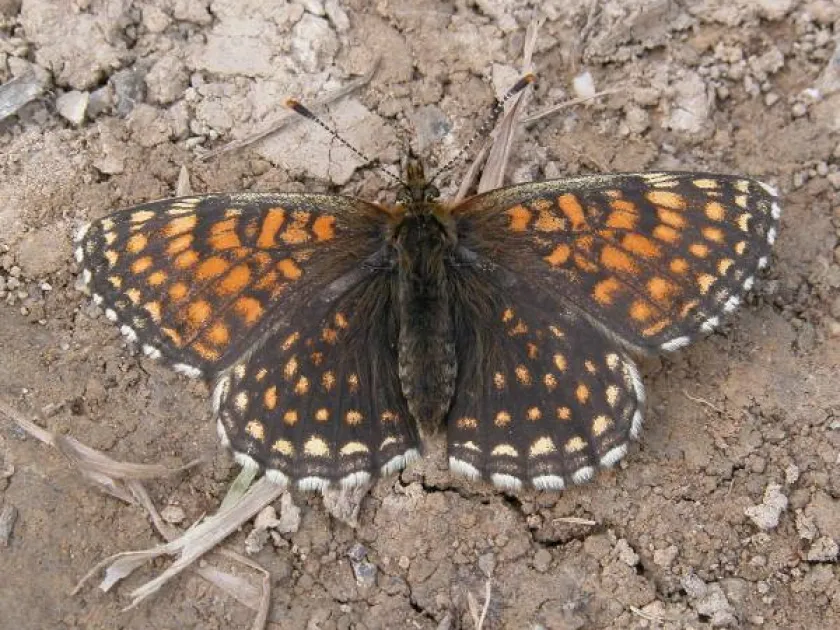
The False Heath Fritillary (Melitaea diamina) is a butterfly species within the Nymphalidae family. Adult butterflies typically have a wingspan ranging from 35 to 45 mm, featuring dark brown wings with a complex pattern of orange and pale spots.
The caterpillars are generally dark in color and covered in short, bristly hairs. As they mature, they become more robust, and their pigmentation may shift to provide better camouflage against the host plants they consume.
This species follows a complete metamorphosis life cycle: egg, larva, pupa, and adult. In most geographical ranges, it completes one generation per year, making it a specialized visitor in meadows and forest edges.
The pupae are typically found attached to stems or within the dense cover of host plants. Their cryptic coloration allows them to blend in with withered vegetation, providing protection during the vulnerable transformation stage.
While the adults are mobile pollinators, the larval stage is the primary focus for agronomists, as the caterpillars have specific host preferences that can overlap with cultivated or medicinal herb gardens.
What it damages
The damage is caused by larvae feeding on the foliage of various herbaceous plants. They show a strong preference for members of the Valerianaceae and Plantaginaceae families, which are often targets in herbal gardens.
Caterpillars skeletonize the leaves, consuming the soft tissue while leaving the veins intact. In cases of high larval density, this feeding behavior can lead to significant defoliation of the host plants.
Defoliation hinders the plant's ability to photosynthesize effectively, leading to stunted growth, reduced vigor, and a decline in the quality of the harvested aerial parts, which is especially detrimental for medicinal herbs.
The species is rarely considered a major agricultural pest due to its habitat requirements, but it can cause localized economic damage in small-scale nurseries or private garden plots.
Young plants are particularly susceptible to damage. Without intervention, a group of caterpillars can strip a small plant of its leaves in a relatively short period, compromising its recovery for the next season.
When it appears
The flight period for adult butterflies typically occurs from June to July. During this time, they locate suitable host plants to deposit their eggs, usually in clusters on the underside of the leaves.
The larval stage spans through the summer and autumn. As temperatures begin to drop, the caterpillars prepare for overwintering, seeking refuge in dry foliage or near the soil surface among dense plant debris.
Spring activity resumes once temperatures rise and host plants begin their new growth cycle. This period is the most critical for monitoring, as larvae emerge from hibernation with a high demand for nutrients.
Pupation occurs in late spring or early summer, completing the development before the next generation of adults emerges. The timing of this cycle is highly dependent on local weather conditions.
Understanding the synchronization of the larval emergence with plant development is key for implementing effective control strategies before major foliage damage occurs.
Signs of infestation
The most common sign of an infestation is the appearance of skeletonized leaves on susceptible plants like valerian. Larvae are often found in groups, leaving distinct patches of damaged tissue.
The presence of larval frass (droppings) on the leaves or at the base of the plant is a clear indication that caterpillars are actively feeding nearby. Silk webbing may also be observed, used by larvae for shelter.
Yellowing, wilting, or drying of leaf margins can indicate that the plant is struggling due to significant leaf area loss, affecting its overall health and resilience against environmental stress.
Adult butterfly sightings in June should prompt gardeners to inspect the underside of leaves for egg clusters, allowing for early intervention before the caterpillars hatch and start feeding.
Monitoring the plant foliage in late spring for small, dark caterpillars is essential, as early detection significantly increases the success rate of control efforts.
Control measures
Mechanical control, such as hand-picking the larvae or pruning heavily infested plant parts, is highly effective for small gardens and prevents the need for chemical intervention.
Biological insecticides containing Bacillus thuringiensis are a sustainable option for larger areas, as they target the caterpillars specifically while remaining safe for beneficial insects and pollinators.
Maintaining a clean garden by removing weeds and wild host plants from the immediate vicinity can help disrupt the life cycle and reduce the local population of the pest.
Providing physical barriers like row covers for sensitive medicinal herbs during the peak egg-laying period can effectively prevent the moths from establishing their larvae on the crop.
- Conduct regular inspections of host plants
- Encourage natural predators like birds and parasitic wasps
- Remove plant debris after the growing season
- Utilize localized biological treatments if necessary
Taxonomy
- Latin name
- Melitaea diamina
- Order
- Lepidoptera (butterflies)
- Family
- Nymphalidae
- EPPO code
- MLITDM
Discussion
No discussions yet — be the first.