
Glanville fritillary
Melitaea cinxia
Description
How to identify
The Glanville fritillary (Melitaea cinxia) is a butterfly belonging to the Nymphalidae family, recognizable by its distinct wing pattern.
The wings feature an orange-brown base with a complex, checkerboard-like network of dark spots, which gives the butterfly its common name.
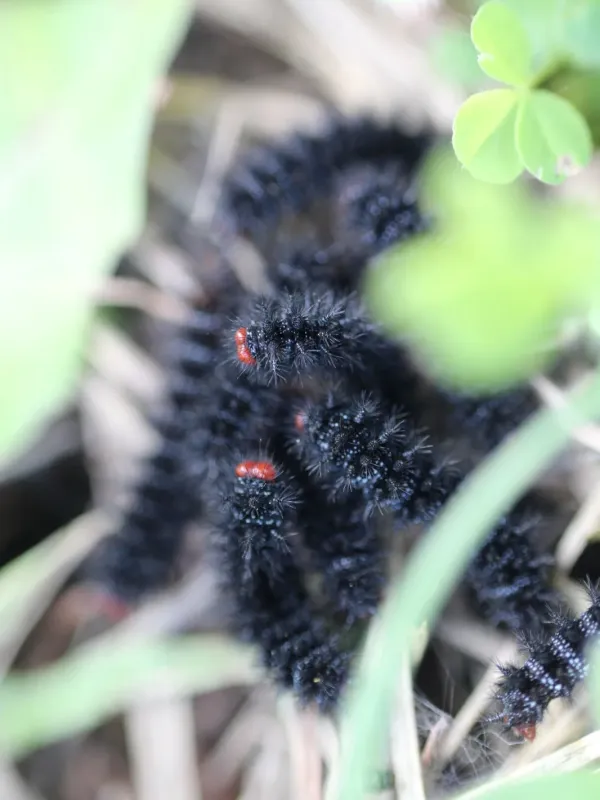
The larvae are blackish-grey with small white spots and covered in stiff hairs, while their heads are typically a dark reddish-brown color.
When mature, the caterpillars can grow up to 30 millimeters in length and are often found in groups during their early developmental stages.
The pupae are light-colored with orange markings and are typically found attached to the underside of leaves or plant stems.
What it damages
The primary food source for the larvae of the Glanville fritillary consists of various plantain species, especially ribwort plantain.
The larvae may also feed on other herbaceous plants such as speedwells, depending on the availability of preferred hosts in the habitat.
Feeding damage occurs primarily on the leaves, where larvae consume the tissue, often leaving behind only the veins of the plant.
This feeding behavior reduces the plant's photosynthetic capacity, causing stunted growth and a general decline in the health of the host plant.
In commercial nurseries or herb gardens where plantains are cultivated for medicinal use, this pest can cause significant economic losses.
When it appears
Adult butterflies typically emerge and are active during a single generation period, usually occurring between May and June each year.
The species overwinters as larvae, which create silken webs or "tents" on host plants to survive the winter temperatures safely.
In early spring, the larvae break their dormancy and resume active feeding, growing rapidly to reach the final larval instar.
The pupal stage lasts approximately two to three weeks, depending on ambient temperatures and environmental moisture levels.
The timing of the emergence is highly dependent on climate, with warmer springs often leading to earlier larval development cycles.
Signs of infestation
The presence of silken web nests on the leaves or stems of host plants is the most reliable sign of a Glanville fritillary infestation.
Visible leaf damage, characterized by ragged edges or entirely skeletonized foliage, indicates active larval feeding in the vicinity.
Small dark droppings (frass) left on the leaves below the larvae are clear indicators of their feeding activity and presence on the plant.
Aggregations of dark, hairy larvae visible on the host plant during daytime are clear signs of a potential colony buildup.
Deformation of the plant structure caused by excessive foliage consumption is a late-stage indicator that the infestation has reached critical levels.
Control measures
Manual removal of the larval webs in early spring is the most effective and eco-friendly method for managing populations on small plots.
Biological control agents, specifically microbial insecticides containing Bacillus thuringiensis, are effective against larvae without harming other insects.
Cultural control involves managing weeds around the plot, as removing primary host plants like wild plantain can reduce local populations.
Chemical insecticides should be considered a last resort and used only when the infestation threatens the viability of the entire crop.
Encouraging natural predators, such as wasps and parasitic flies, can help keep the butterfly population in natural balance without human intervention.
Taxonomy
- Latin name
- Melitaea cinxia
- Order
- Lepidoptera (butterflies)
- Family
- Nymphalidae
- EPPO code
- MLITCI
Discussion
No discussions yet — be the first.