
Turkey
Meleagris
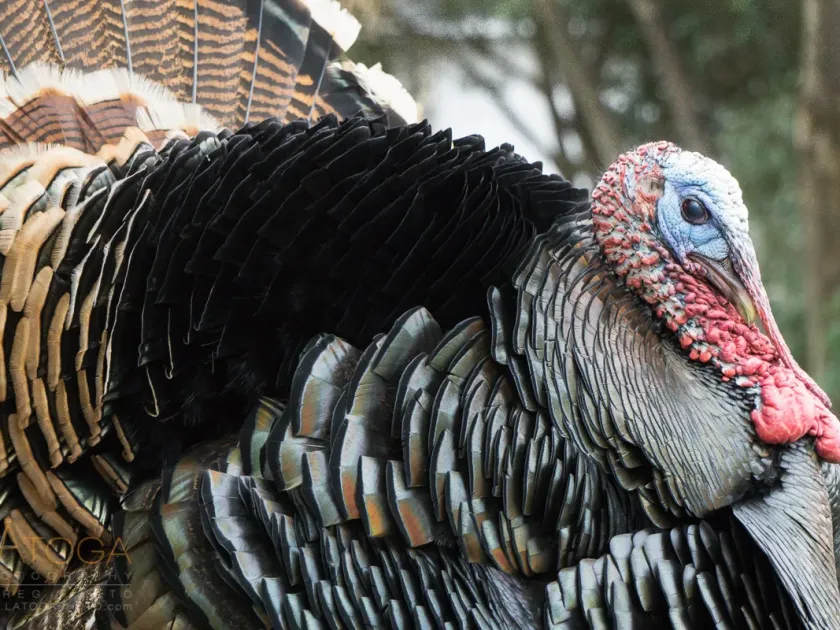
Description
How to identify
The domestic turkey (Meleagris gallopavo) is a large bird species belonging to the order Galliformes and the family Phasianidae.
In agronomy, while typically a livestock animal, the turkey acts as a significant pest when it gains unauthorized access to cultivated fields and vegetable gardens.
These birds possess large, powerful feet equipped with sharp claws, which they use for scratching the soil to uncover seeds, roots, and subterranean insects.
Their high metabolic rate requires a constant supply of food, often leading them to consume large quantities of green plant tissue in a short period.
Socially organized into flocks, their foraging behavior can result in uniform and extensive destruction of plant populations within a target area.
What it damages
Turkeys are opportunistic omnivores, showing a marked preference for fresh, succulent vegetation including cabbage, lettuce, and various young vegetable crops.
Mechanical damage is the primary cause of plant death, as birds pluck leaves, tear off terminal buds, and trample young seedlings during their foraging activity.
In grain fields, turkeys can cause substantial yield losses by consuming seed heads during the milky and dough stages of cereal development.
They contribute to soil compaction by frequent walking across fields, which restricts root aeration and nutrient uptake in sensitive vegetable varieties.
Root crops are also vulnerable, as turkeys often dig up the soil surrounding the plant base, exposing roots to the air and leading to rapid drying and decay.
When it appears
The highest risk of turkey-induced damage occurs during the peak growth season, from late spring through to the final harvest in autumn.
Spring is critical, as newly emerged seedlings lack the toughness to withstand even minor disturbances, leading to total crop loss in affected patches.
As summer progresses, the birds shift their focus toward maturing fruits and vegetables, causing significant economic damage to market gardens and orchards.
In the autumn, late-season harvest crops and root vegetables left in the ground are targets for foraging flocks looking for caloric energy.
The severity of the damage is directly linked to the availability of natural forage in the surrounding environment and the density of the turkey population.
Signs of infestation
Identifying signs of turkey presence include large, distinct three-toed tracks left in moist soil or dusty areas within the field.
Damage symptoms on plants appear as ragged leaf edges and the total disappearance of central growth points on young cabbage or leafy green vegetables.
One common visual indicator is the presence of small, excavated pits around plants where the birds have scratched the soil surface to reach roots.
The damage usually manifests in linear paths or patches, reflecting the movement pattern of a foraging flock through a specific field segment.
Field droppings and visible trampling marks surrounding destroyed or stripped plants provide clear evidence of a large avian presence.
Control measures
Physical exclusion is the most reliable control method, which includes fencing areas with sturdy mesh netting to prevent bird access to sensitive crops.
Visual and auditory deterrents, such as shiny reflective tapes, motion-activated sprinklers, or predator-mimicking sound systems, can discourage birds.
Good agricultural practices, such as maintaining well-defined pasture boundaries and keeping livestock enclosed, are essential for preventing field damage.
Applying taste-aversion agents or herbal repellents like capsaicin sprays can make plant tissue less palatable, reducing the birds' tendency to feed.
- Install high-tensile poultry fencing around garden perimeters
- Utilize motion-activated water sprayers for instant deterrence
- Employ guardian dogs to monitor and patrol agricultural plots
- Use reflective visual deterrents to create a hostile environment
- Maintain strict enclosure of domestic flocks away from crops
Taxonomy
- Latin name
- Meleagris
- Family
- Phasianidae
- EPPO code
- MLEASP
Discussion
No discussions yet — be the first.