
Megalonotus bug
Megalonotus
Description
How to identify
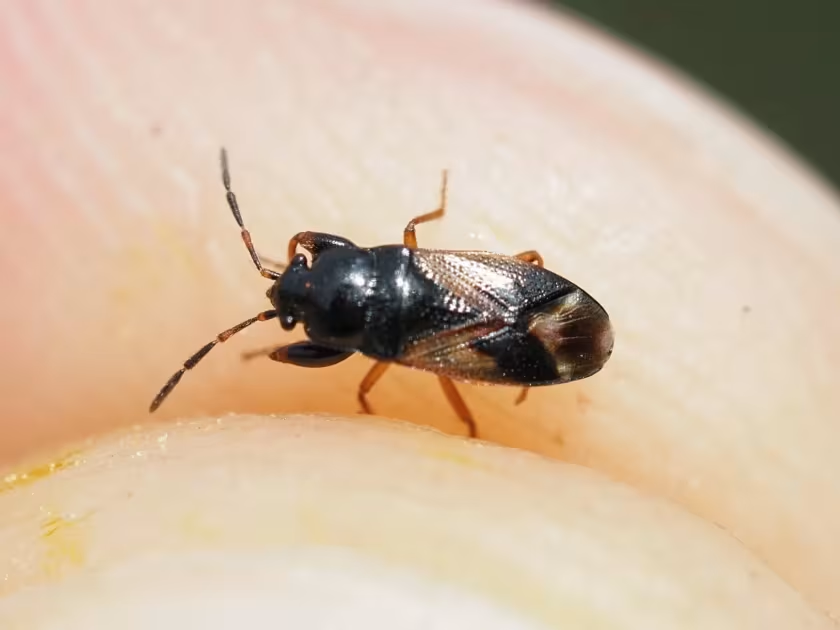
The ground bug Megalonotus belongs to the family Rhyparochromidae. These small insects typically measure between 4 to 7 mm in length and possess a robust, oval-shaped body, often displaying dark brown or black pigmentation.
They feature a broad pronotum with distinct punctures, which serves as a key morphological characteristic for distinguishing them from other soil-dwelling bugs. Their antennae are four-segmented and well-developed.
While many adults are flightless in specific conditions, most Megalonotus species are capable of short-distance flight, allowing them to relocate to suitable habitats or overwintering sites.
Nymphs share a similar appearance to adults but lack fully developed wings and are generally smaller. They are cryptic by nature and primarily inhabit the soil surface or leaf litter.
As members of the order Hemiptera, these bugs are well-adapted to varied environments, often preferring dry and sun-exposed soil surfaces within agro-ecosystems.
What it damages
Megalonotus bugs are predominantly phytophagous, specifically feeding on the seeds of various plant species. In agricultural settings, they pose a significant threat to grain and legume crops.
The damage occurs when the bug pierces the seed coat with its stylet, sucking out the internal contents. This process renders the seeds non-viable and reduces both the yield and quality of the harvest.
Besides seed damage, these bugs can cause mechanical injury to stems during drought periods as they seek hydration from plant tissues, weakening the overall plant health.
The economic impact is particularly high when dealing with seed production fields, as even a small population can significantly reduce the germination rate of the crop.
Secondary damage often arises as the puncture sites created by the bugs become entry points for various bacterial and fungal pathogens, further compromising the plant's yield potential.
When it appears
The lifecycle of the Megalonotus bug is heavily influenced by soil temperature. Adults overwinter in protected areas, such as under plant debris, leaf litter, or within the loose topsoil layer.
Activity resumes in early spring once soil temperatures reach a threshold of approximately 10–12 degrees Celsius. During this time, they emerge and begin colonizing cultivated fields.
Reproduction occurs throughout the warmer months. Females typically lay eggs in the soil or at the base of host plants, ensuring that nymphs have immediate access to food upon hatching.
The peak of their activity usually coincides with the mid-summer maturation of crops, providing an abundant food source for the growing population of these bugs.
As temperatures drop in autumn, the insects cease feeding and migrate towards their overwintering quarters to prepare for the dormant season.
Signs of infestation
One of the most obvious signs of infestation is the presence of hollowed-out seeds scattered on the soil surface or left within the plant heads during the harvest phase.
Close inspection of seeds may reveal minute puncture marks. Over time, these spots can become discolored or necrotic due to the bug's enzymatic saliva.
General crop stress symptoms, such as premature drying or uneven maturation of the grain, can often indicate a localized infestation of these ground bugs.
Observing the base of the stems during the cooler hours of the morning may reveal clusters of adults resting or actively moving in search of moisture.
A heavy presence of weeds within the field often correlates with high bug populations, as these plants provide essential shelter and alternative food sources.
Control measures
Integrated pest management (IPM) for Megalonotus begins with strict weed control. Removing alternative host plants reduces the bug's breeding ground and overall population pressure.
Deep autumn plowing is a recommended cultural practice. This physically disturbs the soil, destroys overwintering sites, and exposes the insects to lethal temperature fluctuations.
Crop rotation serves as a fundamental method to break the insect's life cycle by consistently removing their preferred host plants from a specific field location.
When populations reach economic damage thresholds, chemical control using registered insecticides is required to prevent widespread loss of crop quality.
Applications should ideally be timed during the active periods of the bugs, usually in the early morning or late evening, to ensure the most effective coverage and contact.
Taxonomy
- Latin name
- Megalonotus
- Order
- Hemiptera (bugs, aphids, leafhoppers)
- Family
- Lygaeidae
- EPPO code
- MGLNSP
Discussion
No discussions yet — be the first.