
Megacyllene crinicornis
Megacyllene crinicornis
Description
How to identify
Megacyllene crinicornis is a species of longhorn beetle (Cerambycidae) known for its distinct morphological characteristics that allow entomologists to distinguish it from other wood-boring species.
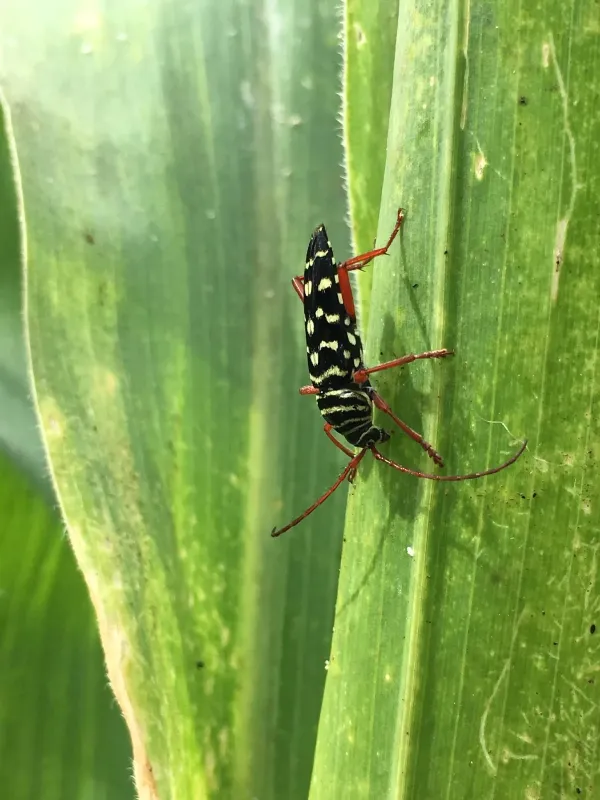
The adult beetle has a body covered in dense hairs, which inspired its specific name, and typically displays vibrant transverse yellow and black stripes, a pattern that mimics stinging insects such as wasps.
Their antennae are well-developed and of moderate length, a common trait for the subfamily Cerambycinae, with females generally exhibiting a slightly larger and sturdier body structure compared to males.
The larvae are typical longhorn beetle grubs: legless, white to yellowish in color, and equipped with a powerful mandibular apparatus capable of boring through dense wood tissues.
The life cycle involves complete metamorphosis, where each developmental stage is strictly adapted to the conditions found within the woody host plants, ensuring the survival of the species.
What it damages
This pest is primarily known for attacking various hardwood species, significantly affecting their physiological health and decreasing the overall vitality and aesthetic value of the trees.
The primary damage is caused by the larvae, which tunnel through the cambium and the sapwood, systematically destroying the vascular tissues responsible for transporting water and nutrients.
As the vascular system is disrupted, the tree struggles to maintain its health, leading to the gradual dieback of individual branches and potentially the entire tree if the infestation is severe.
While the beetle prefers stressed or diseased trees, high population densities allow it to colonize healthy individuals, making it a significant threat in forestry and horticultural environments.
Furthermore, the physical tunnels created by larvae provide entry points for opportunistic pathogens, including fungi and bacteria, which can accelerate the wood rot process significantly.
When it appears
Adult beetles are typically active during the warmer months, as they emerge for mating and searching for suitable trees to deposit their eggs on the bark.
The female deposits eggs into cracks or existing mechanical wounds on the tree bark, where the larvae begin their development immediately upon hatching by boring into the underlying wood.
Larval development duration is variable, often lasting between one to several years, heavily depending on the moisture content of the wood and the prevailing ambient temperatures.
The emergence of adults is often synchronized with flowering periods, as they frequently visit blossoms to feed on nectar, which provides the energy needed for reproduction.
Environmental factors such as prolonged drought or extreme heat can alter the developmental rate, often influencing the population dynamics and survival rates of the species each year.
Signs of infestation
A primary indicator of an infestation is the appearance of exit holes on the bark surface, which are created by adults as they emerge from the pupation site inside the tree.
The presence of frass — a mixture of wood dust and larval excrement — collecting at the base of the tree or within bark crevices is a reliable sign of active internal boring.
Tree owners may notice premature yellowing or wilting of specific branches, a clear symptom of disrupted nutrient flow within the affected parts of the wood.
Patches of loose or peeling bark often indicate that larval feeding activity has compromised the bond between the bark and the wood, frequently accompanying fungal growth.
In quiet environments, a faint but audible scratching or gnawing sound may sometimes be heard coming from the trunk, signaling the presence of a significant larval population.
Control measures
Cultural control is the most effective approach: maintaining tree vigor through proper irrigation and pruning, and removing any dead or heavily infested wood to reduce breeding sites.
Mechanical control includes sealing any bark wounds with appropriate wound dressings to prevent adult females from accessing the inner layers of the bark to lay their eggs.
Chemical control can involve applying systemic insecticides to the trunks during the peak adult flight period, which helps target the beetles before they establish new larval galleries.
Biological control, including the conservation of natural enemies such as woodpeckers or predatory insects, can help maintain population levels below the damage threshold.
Regular monitoring and rapid response to the first signs of infestation are crucial for preserving tree health and preventing the spread of the beetle to healthy neighboring trees.
Taxonomy
- Latin name
- Megacyllene crinicornis
- Order
- Coleoptera (beetles)
- Family
- Cerambycidae
- EPPO code
- MEGLCR
Discussion
No discussions yet — be the first.