
Megabiston plumosaria
Megabiston plumosaria
Description
How to identify
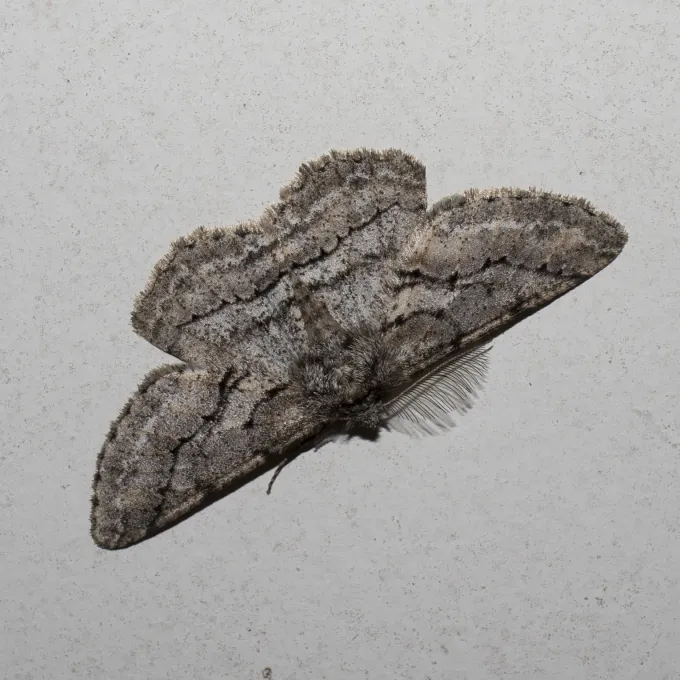
Megabiston plumosaria is a species of moth belonging to the Geometridae family, order Lepidoptera. The adults are nocturnal insects with cryptic coloration, designed to blend perfectly with tree bark to avoid detection during the day.
The larvae, commonly known as inchworms or loopers, possess the characteristic locomotion style of the Geometridae family. They move by bringing their hind segments towards the thoracic segments, arching their bodies into a loop shape.
Larval coloration is typically camouflage-oriented, resembling twigs, leaf stems, or bark. This visual mimicry provides essential protection from avian predators and parasitic wasps in the orchard environment.
Adult moths are rarely seen during daylight hours as they remain dormant in protected areas. Their presence is primarily detected through nighttime monitoring using light traps or pheromone attractants.
Identification of this species requires close observation of larval morphology or, in complex cases, taxonomic analysis of adult wing patterns and reproductive structures in specialized laboratories.
What it damages
This pest primarily attacks deciduous fruit trees and shrubs. Major host plants include common orchard species like apple, pear, and various stone fruits, which are highly susceptible to defoliation.
In early spring, larvae feed on swelling buds, which is the most destructive phase of their life cycle. This behavior can result in the total loss of buds before they have a chance to bloom, directly impacting yield.
As the season progresses, the larvae consume leaves and young shoots. Heavy infestations lead to widespread defoliation, significantly reducing the tree's photosynthetic capacity and stored energy reserves.
The resulting stress makes the trees more susceptible to secondary pathogens, including various wood-rotting fungi and bacterial diseases that enter through feeding wounds.
In ornamental settings, the primary concern is the loss of aesthetic value due to tattered leaves and weakened branches caused by the high density of larval feeding.
##season##The life cycle of Megabiston plumosaria is highly synchronized with the phenology of its host plants. Egg hatching generally coincides with the bud-burst stage of fruit trees, ensuring a ready supply of food.
The period of peak larval activity typically occurs during April and May. During these months, the caterpillars undergo rapid development, transitioning through several instars before reaching maturity.
Pupation usually takes place in the soil or within crevices in the tree bark. The pupa serves as the overwintering stage, where the insect remains in diapause until the following spring.
Adult emergence and subsequent mating occur in the spring, marking the beginning of the annual cycle. This single-generation structure allows for predictable timing of monitoring efforts.
Integrated pest management protocols rely on monitoring temperature thresholds and local climate data to accurately predict the start of the egg-hatching period for timely intervention.
Signs of infestation
Early symptoms of an infestation include damaged or hollowed-out buds that fail to open during the spring. Careful inspection of these buds often reveals the presence of small larvae.
Leaf damage appears as irregular holes or ragged edges on the leaves. In many instances, caterpillars use silk threads to bind leaves together, creating shelters or nests to protect themselves from harsh weather.
A significant amount of frass, or larval excrement, accumulating on leaves or on the branches below the feeding site is a clear indicator of a high pest population density.
Stunted growth of new shoots and the premature drop of fruitlets can be secondary indicators of a severe infestation that has already significantly impacted tree health.
Visible defoliation of sections of the tree crown serves as a late-stage warning that immediate control measures are required to prevent long-term damage to the plant.
Control measures
Cultural control is the first line of defense, including the removal of dead or loose bark from trunks, where pupae often overwinter, and proper soil cultivation in the root zones.
Biological control agents, such as formulations containing Bacillus thuringiensis, are highly effective against young larvae while preserving the populations of beneficial predatory insects.
Chemical control is employed when the economic injury level is reached. Targeted applications of systemic insecticides should be timed carefully to avoid harming pollinators during the flowering stage.
Mechanical control techniques, such as the use of sticky barrier bands around the tree trunks, can prevent the movement of larvae and simplify the task of manual removal.
- Encouraging natural bird populations in the orchard to provide biological pest control.
- Using light or pheromone traps for monitoring and reducing adult population density.
- Implementing regular pruning to improve airflow and facilitate easier inspection of the canopy.
Taxonomy
- Latin name
- Megabiston plumosaria
- Order
- Lepidoptera (butterflies)
- Family
- Geometridae
- EPPO code
- MEGIPL
Discussion
No discussions yet — be the first.