
Megabiston moth
Megabiston
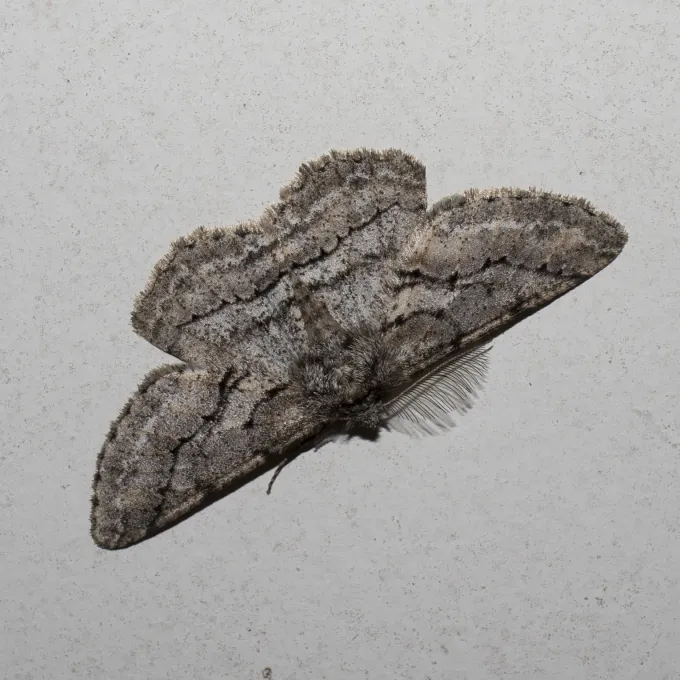
Description
How to identify
The Megabiston moth belongs to the family Geometridae, order Lepidoptera. These moths are characterized by their cryptic coloration, which provides excellent camouflage against tree bark, making them difficult to detect during daylight hours.
The larvae, known as loopers or inchworms, have a distinct way of moving by looping their bodies. This is due to the reduction of prolegs, leaving them only at the posterior end of the abdomen.
The life cycle involves complete metamorphosis: egg, larva, pupa, and adult. Each stage is strictly regulated by seasonal environmental cues, primarily temperature and photoperiod.
Larval morphology often mimics twigs or petioles, which is a primary survival strategy against avian predators. Colors typically range from earth tones to muted greens.
Accurate species identification usually requires expert analysis of adult wing venation or genitalic structure, especially in regions where multiple geometrid species coexist.
What it damages
The primary damage is caused by larvae that feed on the foliage of various woody plants and shrubs. They are generalists and can severely impact both forest ecosystems and horticultural crops.
Feeding typically begins in early spring, coinciding with the opening of buds. The larvae consume young leaves and developing inflorescences, often leading to total defoliation of branches.
Severe infestations weaken the host plant, making it more susceptible to secondary diseases and environmental stressors like drought. Growth rates are significantly impacted during heavy outbreaks.
In ornamental and fruit trees, the loss of photosynthetic surface area limits the plant's ability to store energy, which directly reduces the quality and quantity of fruit production.
Young shoots are particularly vulnerable. The caterpillars may strip the epidermis of tender branches, causing structural deformity and stunted growth in young nursery stock.
When it appears
The seasonal development is aligned with the phenology of host trees. Overwintering occurs either as eggs or pupae, depending on the specific species strategy within the genus.
Larval activity peaks during late spring and early summer. This period demands intensive monitoring and timely intervention to prevent significant damage to the plant canopy.
Pupation occurs in the soil or protected crevices of the bark. The pupal stage duration is highly dependent on humidity and soil temperature, which determines the timing of adult emergence.
Adult moths are nocturnal and are highly attracted to artificial light sources. This behavior is widely used in trapping protocols to monitor population density throughout the season.
Depending on the latitude and climate, the Megabiston moth may complete one or several generations annually, with late-season generations often causing less severe damage than the spring cohort.
Signs of infestation
The presence of the pest is first indicated by irregular holes in leaves, often referred to as window-feeding. As the larvae grow, they consume more leaf tissue, eventually leaving only the midribs.
- Presence of small, dark, granular frass on leaves or at the base of trees.
- Silk webbing connecting leaf clusters or binding leaves to branches.
- Sparse canopy appearance due to excessive defoliation in specific crown sections.
- Visible presence of inchworm-like larvae when shaking branches over a white sheet.
- Reduced vitality and stunted growth in affected tree specimens.
A sudden increase in insectivorous bird activity within the orchard or garden can often serve as an early biological indicator of a caterpillar infestation.
Detailed inspections should focus on the undersides of leaves and the junction between petioles and twigs, where larvae often hide during the heat of the day.
In cases of high density, the sound of falling frass or chewing may even be audible in quiet settings, particularly during the peak of the larval stage.
Control measures
Integrated Pest Management (IPM) is the recommended strategy for managing Megabiston populations, prioritizing minimal environmental impact while maximizing efficacy.
Cultural control measures, such as soil cultivation under the canopy, can significantly disrupt the pupal stage, leading to a reduction in the emerging adult population.
Biological control using microbial insecticides like Bacillus thuringiensis (Bt) is highly effective against young larvae and preserves beneficial predator insects.
Chemical control should be applied strictly when the economic threshold is reached. Selective insecticides with low toxicity to pollinators are preferred to minimize collateral damage.
Strategic use of pheromone or light traps provides crucial data for timing control applications. By targeting the most vulnerable life stages, growers can significantly increase the success rate of their protective programs.
Taxonomy
- Latin name
- Megabiston
- Order
- Lepidoptera (butterflies)
- Family
- Geometridae
- EPPO code
- MEGISP
Discussion
No discussions yet — be the first.