
Medeterus flavipes
Medeterus flavipes
Description
How to identify
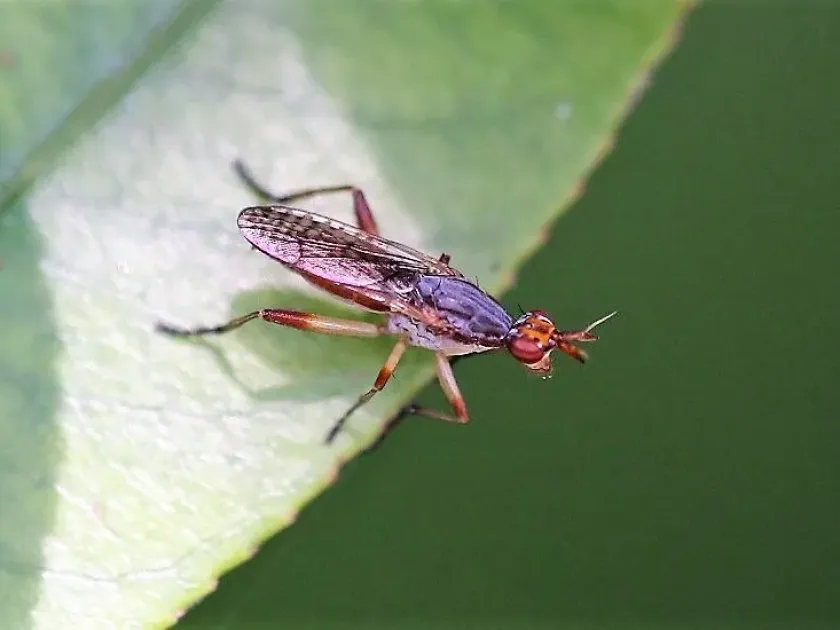
Medeterus flavipes is a small fly belonging to the family Dolichopodidae (long-legged flies). Adults are recognizable by their metallic green or bluish-tinged bodies, which reflect light and give them a distinctive appearance on tree bark.
As the scientific name implies, these flies are characterized by their yellowish legs, which are relatively long and thin. They possess clear, transparent wings with a venation pattern typical for the Dolichopodidae family.
The larvae of this species are legless, white or yellowish in color, and have a segmented, cylindrical body structure. They are adapted to life in the narrow, restricted spaces under the bark of trees.
The life cycle of Medeterus flavipes includes egg, larval, pupal, and adult stages. The larvae typically grow to approximately 5–7 millimeters in length, passing through several instars before pupation.
Adult flies are highly active and predatory. They can be frequently seen crawling rapidly on the trunks of trees, searching for smaller prey or suitable sites to lay their eggs, often near existing pest infestations.
What it damages
In agronomy and forestry, Medeterus flavipes is categorized as a beneficial predator rather than a primary pest. Its larvae inhabit the galleries created by bark beetles and other wood-boring insects.
These flies are commonly found on a variety of tree species, including spruce, pine, birch, and aspen. While they are found on weakened trees, they do not cause the initial damage themselves.
The primary impact of the larvae is their consumption of the immature stages (larvae and pupae) of wood-boring beetles. By doing so, they act as natural biocontrol agents, reducing the population pressure of harmful xylophagous insects.
Some minor damage can occur when larvae enlarge existing tunnels made by bark beetles, which might occasionally create entry points for secondary fungal infections or moisture in the wood.
They are generally considered indicators of bark beetle activity. Their presence signifies that a tree is already under attack by primary wood-boring pests, rather than being the source of the tree's decline.
When it appears
Adult activity of Medeterus flavipes typically begins in late spring, around May, and persists throughout the summer months until the arrival of cooler autumn weather.
The flies are most visible on sunny days when they move across well-lit areas of tree bark. During this peak activity period, mating occurs, and females deposit their eggs in crevices or bark fissures.
The larvae are synchronized with the life cycles of their prey (bark beetles). They generally overwinter under the bark or in the leaf litter at the base of the trunk, which provides protection from extreme winter temperatures.
As temperatures rise in the spring, the larvae resume feeding and eventually undergo pupation. Pupation frequently occurs inside the tunnels of the prey species, ensuring that emerging adults are immediately near a food source.
Depending on geographical location and climate, one or two generations may occur per year. A warm autumn can extend the feeding window for the larvae, potentially increasing their impact on pest populations.
Signs of infestation
Detecting these insects is difficult due to their cryptic nature beneath the tree bark. The primary sign of their presence is the existence of bark beetle galleries that show evidence of previous predatory activity.
On the outer bark, you may observe adult flies resting with their wings folded, often stationary for long periods. A high concentration of these flies on a trunk is usually a strong indicator that the tree is currently infested with wood-boring beetles.
Peeling away a small section of bark on a suspect tree may reveal the white, segmented larvae with dark head capsules. They are typically found in the vicinity of bark beetle galleries or empty pupal chambers.
The presence of fine wood dust, known as "frass," ejected from beetle holes can indicate active galleries. The remains of devoured prey exoskeletons are often found within these tunnels, left behind by the developing larvae.
If a tree shows rapid loss of vigor and investigation reveals a high number of dolichopodid larvae under the bark, it confirms a biological struggle between the wood-boring pest and its natural predator.
Control measures
Because Medeterus flavipes is a beneficial predator, chemical control is not recommended. Indiscriminate use of insecticides can kill these natural enemies, leading to an increase in the harmful bark beetle population.
The most effective management strategy is to maintain tree health through proper silviculture and garden maintenance. Healthy trees are better able to defend themselves through resin production, deterring primary beetle infestations.
Prompt removal and proper disposal of dying or infested trees are crucial. By eliminating the primary habitat for bark beetles, the need for predatory larvae is reduced, and the spread of pests is contained.
Using pheromone traps to monitor and reduce primary wood-boring beetle populations is a targeted approach that does not harm predatory fly species. This helps balance the ecosystem without resorting to broad-spectrum chemicals.
If chemical intervention is absolutely necessary due to a severe infestation, use systemic insecticides sparingly and according to the manufacturer’s instructions, keeping in mind the impact on the local ecosystem and beneficial insect populations.
Taxonomy
- Latin name
- Medeterus flavipes
- Order
- Diptera (flies)
- Family
- Dolichopodidae
- EPPO code
- MEDTFL
Discussion
No discussions yet — be the first.