
Malthinus
Malthinus
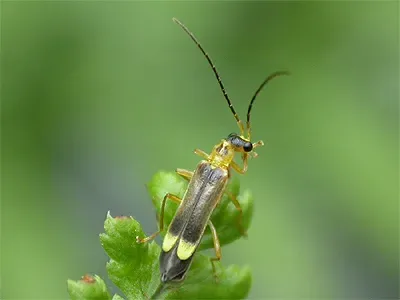
Description
How to identify
The genus Malthinus belongs to the soldier beetle family (Cantharidae). These are small insects that often go unnoticed in agricultural ecosystems.
Adult beetles have an elongated, soft body structure, which is characteristic of members of this family. Their coloration typically varies from brown to yellowish with dark spots.
A key morphological feature of the genus is the specific appendages on the last abdominal segment of males, which can be observed under magnification.
Malthinus larvae show distinct segmentation and are covered with fine hairs, allowing them to move efficiently in soil or under plant debris.
Adult individuals are active during daylight hours and are frequently found on the blossoms of various herbaceous and woody plants.
What it damages
It is important to note that many members of the genus Malthinus are facultative predators rather than specialized pests.
They may damage young plant tissues by feeding on the epidermis or soft leaf parts when animal-based food sources are scarce in their habitat.
The primary damage manifests as reduced aesthetic value in ornamental crops or minor injury to fruit and berry crops during mass colonization.
Infestation damage includes necrotic spots and small holes on leaf blades, which may serve as entry points for secondary infections.
Significant damage is rarely observed; however, at high population densities, they can damage flower buds, potentially affecting the overall yield.
When it appears
The life cycle of Malthinus is closely linked to the seasonal rhythms of temperate climates.
Adults emerge in late spring when average daily temperatures consistently exceed 15 degrees Celsius.
Peak activity for the beetles occurs in early to mid-summer, coinciding with the active vegetative growth phase of most agricultural crops.
These insects overwinter primarily in the larval stage, residing in the topsoil layer or beneath dense forest litter.
Pupation occurs during the spring season, after which the new generation of adults emerges to the surface.
Signs of infestation
A visual sign of their presence is the mass aggregation of beetles on the surface of leaves or flowers on sunny days.
The presence of specific damage, such as random holes on young leaves, often indicates adult beetles feeding on soft tissues.
Damaged areas eventually turn brown and may dry out, which negatively impacts the photosynthetic activity of the plant.
One can often find the beetles themselves on inflorescences, where they display characteristic quick movements when disturbed.
The absence of typical spider-like webs or larvae frass distinguishes the damage caused by soldier beetles from that caused by lepidopteran pests.
Control measures
In most cases, the use of chemical insecticides against Malthinus is unnecessary due to their moderate level of harm.
An effective agrotechnical method is the removal of weeds in inter-row spaces, which serve as temporary shelters for the pest.
If population reduction is required, biological agents based on bacteria can be applied to target the larval stage.
Natural enemies such as birds and predatory insects play a significant role in limiting population growth and should be conserved.
In greenhouse conditions, it is recommended to use yellow sticky traps, which effectively catch adult beetles during their migration periods.
Taxonomy
- Latin name
- Malthinus
- Order
- Coleoptera (beetles)
- Family
- Cantharidae
- EPPO code
- MALTSP
Discussion
No discussions yet — be the first.