
Malachius bipustulatus
Malachius bipustulatus
Description
How to identify
Malachius bipustulatus, commonly known as the malachite beetle, is a species of soft-winged flower beetle (family Malachiidae).
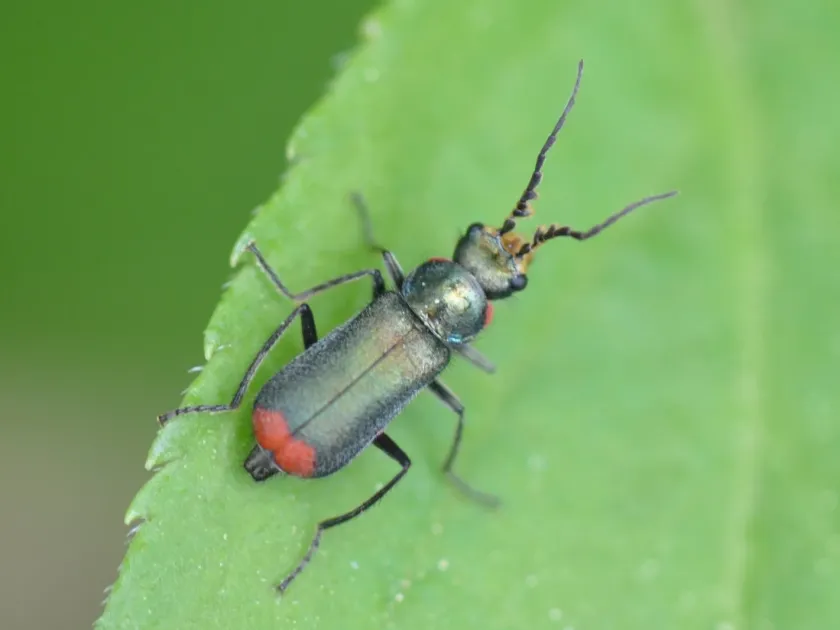
Adult beetles are relatively small, measuring about 5 to 7 mm in length, and possess a metallic green or bluish-green sheen on their elytra.
The name bipustulatus refers to the two distinct red spots located at the apex of the elytra, which serve as the primary diagnostic feature.
The larvae are predatory and typically have a flattened, elongated body shape, often found in soil or beneath the bark of trees.
These insects exhibit sexual dimorphism, particularly in the structure of the antennae, which are adapted for complex mating behaviors observed in early summer.
What it damages
While the larvae are beneficial predators that feed on other small insects, the adult beetles are known to feed on pollen and floral organs.
They can cause damage to various agricultural crops, including cereals, oilseed rape, and fruit trees, by consuming petals and reproductive parts.
The physical destruction of stamens and pistils can interfere with pollination, leading to a reduction in seed set or fruit development.
However, the severity of this damage is generally moderate, as significant crop loss is only observed when the beetle population density is exceptionally high.
In most commercial settings, the role of these beetles as predators of other pest eggs and larvae often offsets the minor floral damage they cause.
When it appears
This species follows a univoltine life cycle, meaning it completes one generation per year through a process of complete metamorphosis.
Adult beetles become active in spring, typically from May to June, coinciding with the flowering phase of their host plants.
Winter is usually spent in a dormant stage, either as larvae or adults, hidden in plant debris, dead wood, or the top layer of soil.
The larvae develop throughout the summer, actively hunting small prey, before transitioning into the pupal stage later in the season.
Peak flight activity is highly dependent on ambient temperature, with the highest levels of movement recorded on warm, sunny days.
Signs of infestation
Evidence of a beetle infestation includes the presence of adults on flowers, often visible due to their bright, metallic coloration.
Signs of feeding damage include ragged edges on petals, damaged pollen sacs, and premature shedding of flower buds.
In cereal crops, observing beetles on the developing ears and finding fragments of floral structures are clear indicators of their presence.
The proximity of the fields to natural hedgerows or wild shrubbery often correlates with higher local populations of the beetle.
Mass swarming or frequent sightings on foliage are rarely reported unless environmental conditions are exceptionally favorable for the species.
Control measures
Pest management for Malachius bipustulatus is rarely prioritized due to the predatory habits of the larval stage, which helps suppress other pests.
If intervention is necessary, chemical control should be applied using selective insecticides that minimize harm to pollinators and beneficial insects.
Good agricultural practices, such as controlling weeds in field margins, can reduce the refuge areas available for the beetles to overwinter.
Tillage practices implemented in autumn can disrupt the life cycle of overwintering larvae, further limiting the potential population for the next season.
Regular monitoring of bloom development and insect population levels is essential to avoid unnecessary chemical applications that could harm the ecosystem.
Taxonomy
- Latin name
- Malachius bipustulatus
- Order
- Coleoptera (beetles)
- Family
- Melyridae
- EPPO code
- MALCBI
Discussion
No discussions yet — be the first.