
Red-legged malachite beetle
Anthocomus coccineus
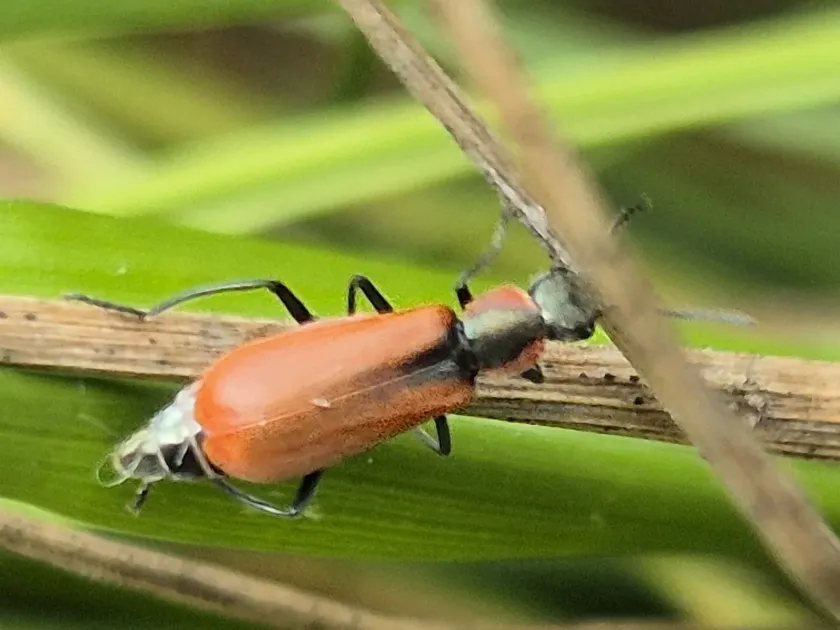
Description
How to identify
The red-legged malachite beetle (Anthocomus coccineus) is a member of the Melyridae family, belonging to the order Coleoptera. It is a small beetle, typically measuring 3-4 mm, characterized by its distinctive bright reddish-orange elytra often marked with black spots.
The adult insect has a slightly flattened body covered with fine setae. Its head and pronotum are usually dark or black, often displaying a subtle metallic luster. These beetles are highly mobile and are commonly found on the flowers of various agricultural and wild plants.
What it damages
This beetle is considered an occasional pest that targets the reproductive parts of plants. Both adults and, to some extent, larvae can inflict damage by feeding on pollen, anthers, and the delicate tissues of developing ovaries.
Major host crops include cereals, legumes, and certain technical crops. When the population density is high, the damage can lead to reduced fertilization and significant losses in grain yield due to impaired flower development.
When it appears
The life cycle of Anthocomus coccineus is closely synchronized with the flowering phenology of its host plants. Adults typically emerge in late spring and early summer, actively seeking flowering crops to feed on.
The larval stage occurs in soil or plant debris, where they act as generalist feeders, often consuming small invertebrates or decaying organic matter. The synchronization between adult emergence and the crop flowering phase determines the severity of the damage to the harvest.
Signs of infestation
Infestation is usually identified by direct observation of the beetles on the flower heads or spikes. Damage is characterized by visible injury to the anthers and ovaries, leading to incomplete grain formation.
- Presence of beetles on blossoms or spikes during flowering.
- Visible damage to anthers and pollen-producing organs.
- Reduced grain set or empty spikes due to flower destruction.
- Foliage and bloom wounds caused by the feeding activity of the adults.
Control measures
Effective management starts with good cultural practices, such as proper crop rotation and the destruction of weed reservoirs that harbor the beetles. Deep tillage can help disturb the soil where the larvae develop.
Chemical control should be implemented only when scouting reports indicate that the economic threshold has been surpassed. Applications must be timed to avoid peak pollinator activity, and systemic or selective insecticides are preferred to manage populations effectively.
Taxonomy
- Latin name
- Anthocomus coccineus
- Order
- Coleoptera (beetles)
- Family
- Melyridae
- EPPO code
- ANTMCO
Discussion
No discussions yet — be the first.