
Astylus atromaculatus
Astylus atromaculatus
Description
How to identify
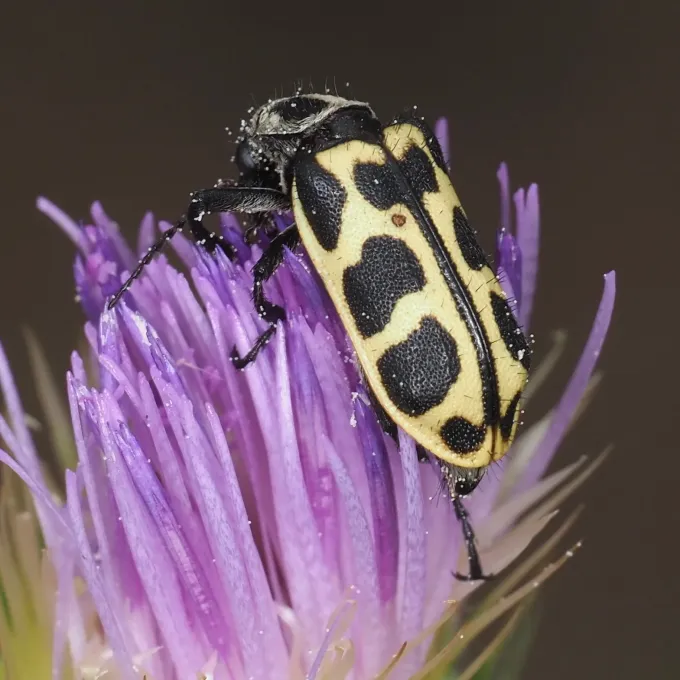
Astylus atromaculatus, commonly known as the spotted maize beetle, belongs to the Melyridae family within the Coleoptera order.
The adult beetle is approximately 8–10 mm long, featuring a distinct orange-yellow color with clearly defined black spots on its elytra.
Its head and pronotum are typically black, and the entire body is covered in fine, dense hairs, providing a unique look to the species.
The life cycle encompasses eggs, larvae, pupae, and adults. The larval stage primarily resides in the soil, feeding on organic debris.
Adults are highly mobile and capable of significant dispersal, often congregating in large numbers on flowering crops during the summer months.
What it damages
Adult beetles are polyphagous, causing substantial economic damage by feeding on the reproductive organs of various agricultural plants.
In maize, the most severe damage occurs when beetles feed on the silks, which prevents proper pollination and leads to significant grain yield loss.
The pest also targets sorghum, sunflowers, and various legumes, feeding on pollen and floral structures, thereby compromising plant reproductive success.
While larvae are mainly saprophagous, they may occasionally damage young seedling roots when organic matter in the soil is scarce.
Massive infestations can result in complete crop failure in specific sections of a field due to the total consumption of floral components.
When it appears
Peak adult activity typically coincides with the flowering period of major cereal crops, usually occurring during the mid-summer months.
Warm and dry weather conditions act as catalysts for the beetle's activity, increasing their movement and feeding rate on host plants.
Monitoring programs should be established early in the season to track the emergence of adults before they cause extensive damage to crop flowers.
The infestation period tapers off as the crop reaches maturity or when weather conditions become unfavorable for the insect's activity.
Understanding the synchronization between beetle emergence and crop development is crucial for timely field inspections.
Signs of infestation
The primary sign of an infestation is the visible presence of brightly colored beetles on the tassels or silks of maize and other crop heads.
Evidence of mechanical damage, such as chewed or missing silk tips and damaged anthers, confirms the presence of active feeding.
Empty or poorly filled ears at harvest time serve as a major indicator of past heavy infestations that occurred during the pollination window.
Damaged floral tissues often act as entry points for fungal pathogens, resulting in secondary ear rot or similar plant diseases.
Early morning scouting is the most effective way to detect the insects, as they are more sluggish and visible on the plant structures before the heat of the day.
Control measures
Effective management of Astylus atromaculatus relies on integrated pest management (IPM) practices, combining cultural and chemical controls.
Cultural methods, such as deep plowing, can help disturb the soil environment, reducing the survival rate of developing larvae in the ground.
Chemical control involves the application of appropriate insecticides when the population threshold for potential economic damage is exceeded.
- Monitoring fields using insect traps to assess population density.
- Implementing crop rotation to break the beetle's lifecycle in specific areas.
- Applying insecticides responsibly to minimize harm to non-target beneficial pollinators.
The timing of insecticide application is critical; it must be executed when the majority of the population is active to ensure the best possible protection of the crop.
Taxonomy
- Latin name
- Astylus atromaculatus
- Order
- Coleoptera (beetles)
- Family
- Melyridae
- EPPO code
- ASTYAT
Discussion
No discussions yet — be the first.