
Anthocomus fasciatus
Anthocomus fasciatus
Description
How to identify
Anthocomus fasciatus is a species of beetle belonging to the family Malachiidae (often grouped with soft-winged flower beetles). These insects are commonly found in gardens and orchards.
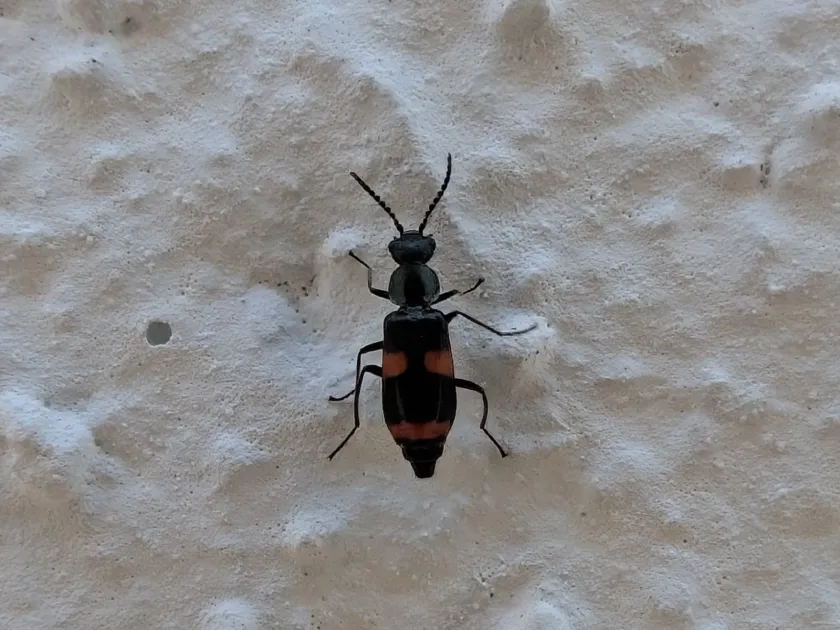
The adult beetle is small, typically measuring 3–4 mm in length. Its distinctive appearance includes black elytra marked with two prominent red transverse bands.
The head and pronotum are also generally black, sometimes exhibiting a slight metallic luster, making it distinct from other similar-sized beetles.
Larvae are elongated and often live in concealed environments, such as under tree bark or in organic debris within the soil layer.
These beetles are highly mobile and are frequently observed moving rapidly across foliage and flowers during warm, sunny days.
What it damages
This beetle primarily affects fruit trees and various ornamental plants. It is known to concentrate on flowers during the spring blooming season.
The adults feed on pollen, anthers, and stigmas, causing direct mechanical damage that disrupts the pollination process and reduces fruit set.
In cases of high infestation, the beetle can cause significant damage to young buds and developing shoots, potentially weakening the plant's growth.
Damage to the reproductive parts of flowers can lead to premature flower drop and a subsequent decrease in overall orchard productivity.
While not a primary forest pest, its presence in large numbers can cause economic losses by degrading the quality and quantity of fruit yields.
When it appears
Anthocomus fasciatus appears in gardens during late spring, aligning with the peak flowering period of most orchard fruit trees.
Adult activity is most intense from May through June. During this window, beetles are frequently found mating and feeding on the nectar and pollen of host plants.
The life cycle is typically univoltine, meaning one generation per year. The overwintering stage usually consists of larvae or pupae tucked away in sheltered locations.
As temperatures rise in the spring, the pupae transform into adults, which emerge and migrate to host plants to begin their feeding cycle.
Adult lifespan is relatively short, usually lasting a few weeks, but this period is critical as it coincides with the vulnerable developmental stage of many fruits.
Signs of infestation
The most obvious sign of infestation is the presence of small, vibrant black-and-red beetles on the blossoms of fruit trees.
Premature abscission (dropping) of flowers and buds is a strong indicator of pest pressure if other environmental factors are ruled out.
Visual inspection of blossoms may reveal damaged anthers and shredded flower tissues, which are classic signs of feeding by adult beetles.
Frass (insect excrement) may be visible on the surface of petals, occasionally leading to localized necrotic spots that result in flower wilting.
Clusters of these beetles can often be spotted on branches or floral clusters during the morning or late afternoon when they are actively seeking sustenance.
Control measures
Management of Anthocomus fasciatus typically involves a combination of cultural practices and targeted pesticide applications when threshold levels are reached.
Maintaining good orchard hygiene, including the removal of dead wood and leaf litter, helps to eliminate potential overwintering sites for the larvae.
- Applying contact insecticides during the pre-bloom stage to reduce adult populations before they cause flower damage.
- Using sticky traps or light traps for monitoring and reducing the density of adult beetles.
- Encouraging natural predators such as birds and parasitic wasps to help maintain natural population balance.
It is crucial to avoid spraying insecticides during full bloom to ensure the safety of honeybees and other vital pollinators present in the orchard.
Regular monitoring of pest populations allows for timely intervention, ensuring that control measures are applied only when necessary to protect the harvest.
Taxonomy
- Latin name
- Anthocomus fasciatus
- Order
- Coleoptera (beetles)
- Family
- Melyridae
- EPPO code
- ANTMFA
Discussion
No discussions yet — be the first.