
Periodical cicada
Magicicada septemdecim
Description
How to identify
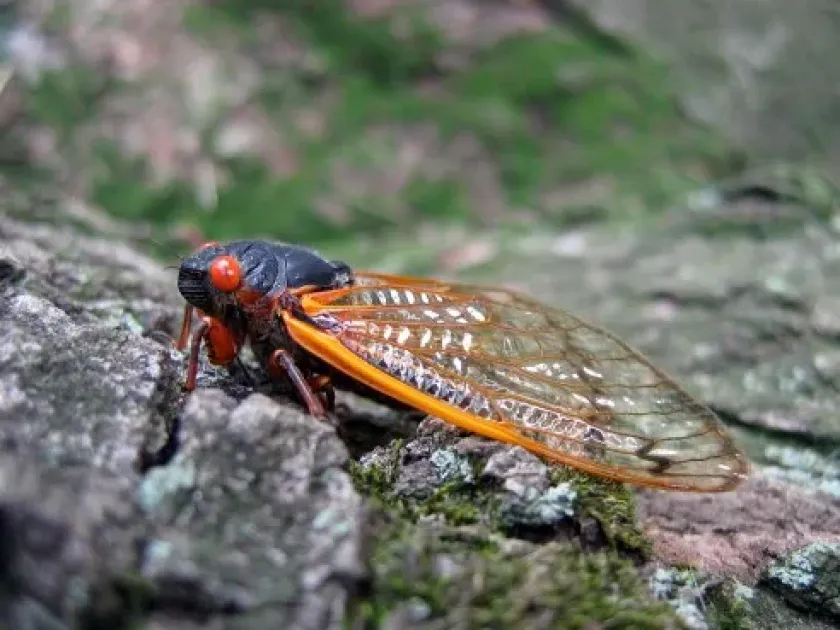
The periodical cicada, scientifically known as Magicicada septemdecim, is a distinctive insect belonging to the order Hemiptera and the family Cicadidae. Adults are recognized by their black bodies, reddish eyes, and transparent wings with orange-red veins.
The life cycle of this species is one of the most remarkable in the entomological world. The insect spends the vast majority of its life as a nymph feeding on xylem sap from the roots of woody plants underground.
These nymphs remain underground for a period of either 13 or 17 years, depending on the specific brood. Their emergence is highly synchronized, resulting in a sudden, massive appearance of millions of insects.
During the short adult phase, they move into the canopy of trees to mate. This period is famous for the extremely loud, chorus-like sound produced by males to attract females.
Once the adult stage ends after several weeks, the female leaves eggs in tree bark, and the newly hatched nymphs immediately burrow into the soil to begin their long subterranean development.
What it damages
The primary damage caused by these insects is not from feeding, but from the oviposition process. Females possess a saw-like organ that they use to cut slits in branches for egg placement.
These deep incisions weaken the wood, leading to "flagging," where the tips of branches turn brown, die, and frequently break off under stress from wind or weight.
A wide range of orchard crops, including apples, pears, peaches, and cherries, are highly susceptible to damage. Ornamental trees are also commonly targeted by the cicadas.
For young trees in nurseries or newly established orchards, the damage can be catastrophic, often resulting in the stunting or death of the entire plant due to severe structural injury.
- Mechanical injury to stems reduces the overall growth of young trees.
- Broken branches decrease the potential fruit yield for the current season.
- The wounds in the bark create entry points for secondary pathogens and wood-rotting fungi.
When it appears
The emergence of the periodical cicada is strictly periodical and localized. Each specific brood follows a fixed 13 or 17-year timeline, making their appearance highly predictable.
The emergence usually begins in late spring, triggered primarily by soil temperature reaching approximately 64 degrees Fahrenheit (18 Celsius) at a depth of several inches.
The peak activity period for adult cicadas lasts from late May through June. During this time, the population density reaches its maximum, and mating activity is at its highest.
By mid-summer, all adult cicadas have completed their biological purpose, and the population disappears completely, not to be seen again until the next cycle emerges.
The offspring (nymphs) enter the soil almost immediately after hatching, where they will reside, largely undetected, until they emerge as adults in over a decade.
Control measures
Exclusion is the most effective method for protecting young or valuable trees. Wrapping trees with fine-mesh netting during the emergence period prevents females from accessing branches for oviposition.
Orchard managers are advised to avoid planting new trees during years of expected massive emergence, as the damage to tender saplings is difficult to mitigate.
While chemical control with insecticides is possible, it is often ineffective against the sheer volume of emerging adults and requires precise timing to coincide with the brief adult window.
Removing and destroying damaged twigs shortly after the oviposition period can help reduce the number of nymphs entering the soil, though it does not eliminate the immediate damage.
Encouraging natural predators such as birds, small mammals, and predatory insects can help manage the population, as they consume large numbers of cicadas during the emergence phase.
Taxonomy
- Latin name
- Magicicada septemdecim
- Order
- Hemiptera (bugs, aphids, leafhoppers)
- Family
- Cicadidae
- EPPO code
- TIBCSE
Discussion
No discussions yet — be the first.