
Alcon blue
Maculinea alcon
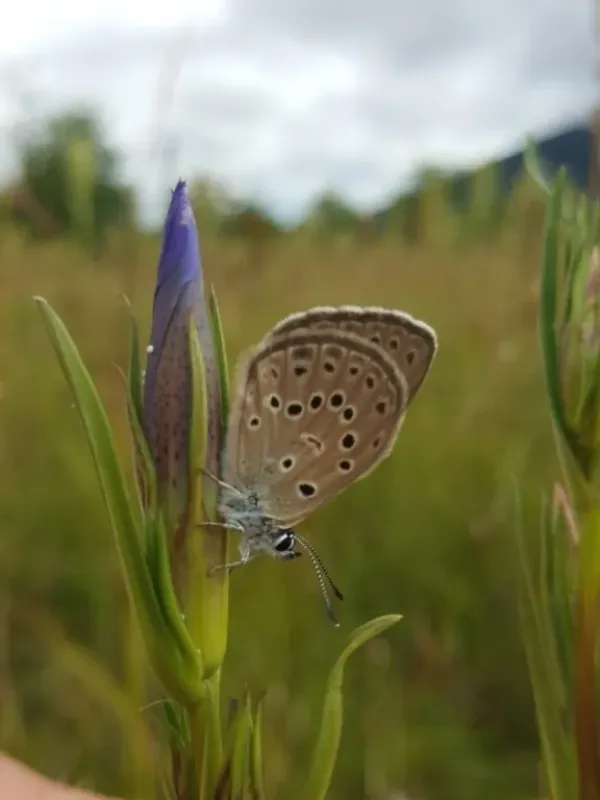
Description
How to identify
The Alcon blue (Maculinea alcon) is a species of butterfly in the Lycaenidae family, widely recognized for its striking blue wings.
The species is known for its complex life cycle, which involves a parasitic relationship with specific ant colonies.
Adults are medium-sized butterflies that are primarily active during sunny days in mid-summer.
The larvae undergo significant changes, evolving from plant-feeders to social parasites within ant nests.
It is classified as a vulnerable species in many parts of its range, requiring specific environmental conditions to survive.
What it damages
The Alcon blue does not pose any threat to agricultural crops and is not considered a pest in any capacity.
Its interaction with the environment is limited to feeding on Gentiana plants and using ant colonies for larval development.
There are no economic losses associated with this butterfly, as it does not feed on commercial produce.
In fact, its presence indicates a healthy, undisturbed ecosystem, as it is highly sensitive to habitat degradation.
Consequently, no pest control measures are required, as the species is essentially harmless to human activities.
When it appears
The flight period for adults typically occurs during July and early August, depending on local climate conditions.
Eggs are laid on the flower buds of marsh gentian or other related Gentiana species.
Larvae develop on the plants before descending to the ground to be carried into ant nests by workers.
The larvae spend the winter inside the ant nest, feeding on ant larvae throughout the following year.
Pupation occurs within the ant nest, and the adult butterfly emerges in the following summer.
Signs of infestation
The primary sign of the species' presence is the observation of adults near host plants like Gentiana.
Damaged flower buds on host plants can indicate recent egg-laying or larval feeding activity.
The presence of specific Myrmica ant species is a prerequisite for the survival of the Alcon blue population.
Ecological surveys often use sightings of these butterflies to assess the biological richness of wet meadow habitats.
Monitoring the butterfly population helps in understanding the status of its associated ant hosts.
Control measures
No control measures are implemented, as the Alcon blue is an ecologically important and protected species.
Conservation efforts should focus on preserving wet meadows and ensuring the health of Gentiana plant populations.
Sustainable land management practices, such as late-season mowing, can help protect the butterfly's life cycle.
Avoiding the drainage of wetlands is critical to preventing the loss of both the butterfly and its ant host.
Protecting the natural habitat is the only recommended action for this unique and fascinating insect species.
Taxonomy
- Latin name
- Maculinea alcon
- Order
- Lepidoptera (butterflies)
- Family
- Lycaenidae
- EPPO code
- MCLAAL
Discussion
No discussions yet — be the first.