
Macropes
Macropes
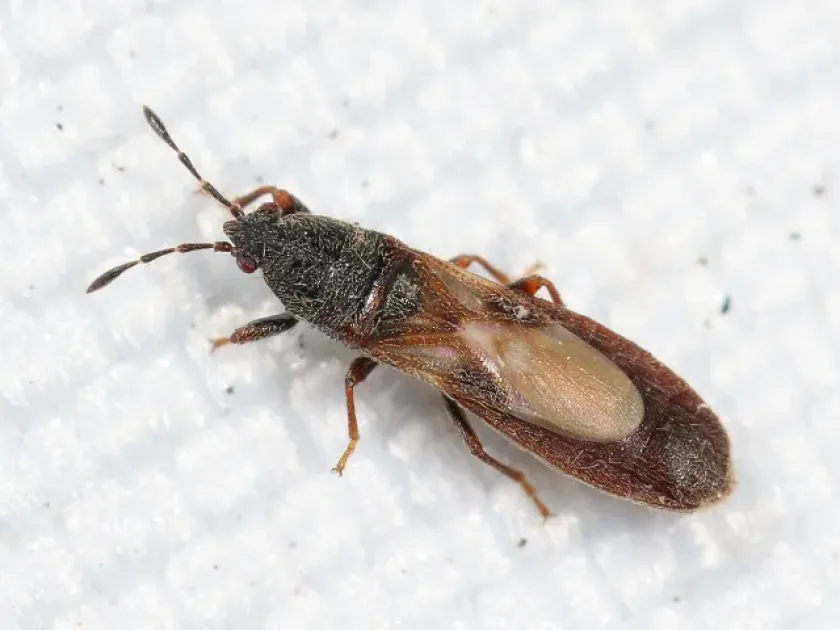
Description
How to identify
Macropes is a genus of insects belonging to the family Blissidae (order Hemiptera). These small, elusive bugs are well-adapted for life in restricted spaces, such as the leaf sheaths of various grass species.
The adults are typically dark brown or black in color, which serves as effective camouflage against the soil or the base of stems. Their bodies are flattened, allowing them to remain hidden within the dense structure of a cereal plant.
Nymphs are morphologically similar to adults but are smaller in size and lack fully developed wings. They undergo several instars during their development, gradually acquiring the characteristics of mature insects.
The mouthparts of Macropes are specialized for piercing and sucking. They are capable of penetrating the tough tissues of grasses to access the plant fluids that form their primary diet.
Due to their secretive behavior, detection often requires physical inspection of the leaf sheaths near the soil surface, where these insects tend to aggregate during the day.
What it damages
These pests primarily target cereal crops, including rice, wheat, barley, and corn. Their presence is a significant concern in both intensive and traditional agricultural systems worldwide.
They cause damage by feeding on the sap in the basal part of the plant stem. This feeding process deprives the crop of vital nutrients and water, leading to physiological stress.
Beyond simple nutrient loss, the bugs inject enzymes during feeding that can cause tissue necrosis. This weakens the structural integrity of the plant and leaves it susceptible to secondary infections.
Severe infestations often result in stunted growth, yellowing of the leaves, and significantly reduced grain fill. In extreme cases, the entire plant may die before maturity, leading to yield loss.
The impact is particularly devastating during the early stages of plant development, where even minor damage can prevent the crop from reaching its full potential yield.
When it appears
The life cycle of Macropes is synchronized with the phenology of their host plants. Activity usually begins in the spring, coinciding with the germination and early growth of cereals.
Adult bugs overwinter in protected areas, including plant debris, soil crevices, and near perennial grasses. When temperatures rise, they emerge to seek out suitable host crops.
Peak populations are generally observed during the tillering and stem elongation phases of the crop. These periods provide ideal conditions for mating and the rapid development of nymphal stages.
Multiple generations can occur throughout a single growing season if weather conditions are favorable. This overlapping of generations means that control measures must be maintained over an extended period.
As the crops reach maturity and harden, the bug population begins to decline or migrates towards overwintering sites, where they remain dormant until the following growing season.
Signs of infestation
Early symptoms of infestation include the yellowing of leaf tips, which gradually spreads downwards. This condition is often mistaken for nutrient deficiency by inexperienced growers.
Upon closer inspection, the presence of these bugs can be confirmed by peeling back the lower leaf sheaths. You will often find clusters of insects and their dark excrement within these hiding spots.
Stems damaged by Macropes may appear twisted or deformed. The presence of dark feeding lesions or indentations at the base of the plant is a clear indication of their active feeding.
- Chlorotic or yellowing leaves.
- Reduced plant height compared to healthy areas.
- Presence of bug colonies in leaf sheaths.
- Poor development of grain heads.
- Withered or dead tillers.
Persistent attacks lead to visible patches of dying or struggling plants in the field. If left unmanaged, these patches can expand rapidly, covering large portions of the crop area.
Control measures
Effective management begins with robust crop rotation practices. Disrupting the presence of a host plant for successive seasons significantly reduces the local population of the pest.
Sanitation is essential; removing crop residues and controlling volunteer grasses in and around fields prevents the bugs from finding suitable overwintering sites.
Deep plowing after harvest is a traditional and effective method to bury or destroy bugs that are seeking shelter, thereby reducing the survival rate of the overwintering population.
Chemical control should be employed based on economic thresholds. Systemic insecticides are generally the most effective, as they target the bugs hidden within the leaf sheaths.
Monitoring is crucial. Farmers should use sticky traps or perform regular field walks to identify early outbreaks, allowing for targeted control rather than blanket applications of pesticides.
Taxonomy
- Latin name
- Macropes
- Order
- Hemiptera (bugs, aphids, leafhoppers)
- Family
- Lygaeidae
- EPPO code
- MACESP
Discussion
No discussions yet — be the first.