
V-moth
Macaria wauaria
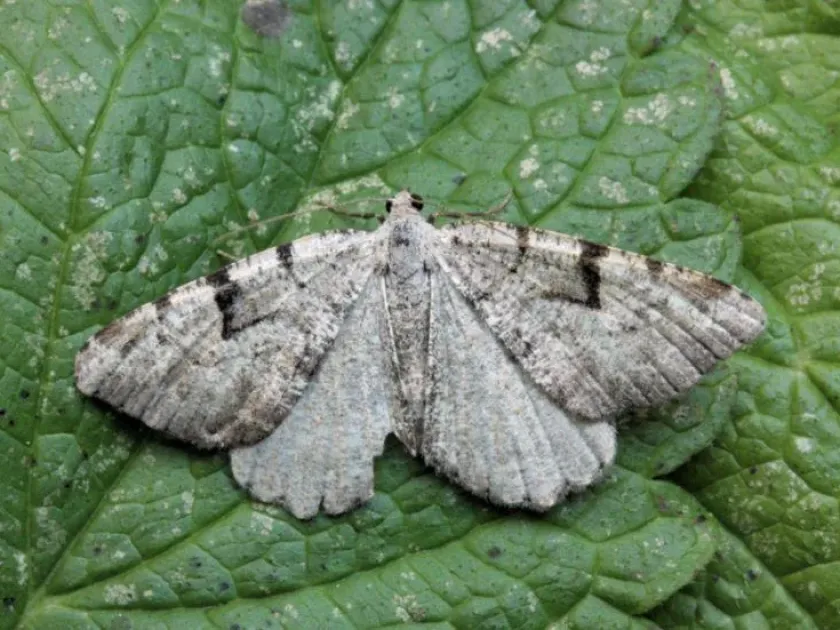
Description
How to identify
The V-moth (Macaria wauaria) is a species of moth belonging to the Geometridae family. The adult moth has a wingspan of approximately 30-35 mm and is characterized by a greyish or bluish-brown colouration with a distinctive V-shaped mark on the forewings.
The larvae, known as caterpillars, can grow up to 30 mm in length. They display a greyish-green or yellowish-brown hue, featuring five lighter longitudinal stripes running along the body, along with small dark warts.
The pupal stage occurs in the soil, where the moth constructs a loose silk cocoon. The pupa itself is dark brown, glossy, and serves as the protective stage during which the insect completes its transformation.
Taxonomically, the V-moth is part of the Macaria genus. It is widely distributed across temperate regions where currants and gooseberries are cultivated, making it a well-known pest in many home gardens.
Adult moths are primarily nocturnal, meaning they are active at night and tend to remain inactive or hidden under leaves during the daylight hours, making direct observation difficult.
What it damages
The primary hosts of the V-moth are species within the Ribes genus, specifically black, red, and white currants, as well as gooseberries. These plants provide the essential nutrition for larval development.
Caterpillars are aggressive defoliators. They begin by creating small holes in the foliage, but as they grow, they consume almost the entire leaf blade, leaving only the primary veins behind.
Severe infestations can lead to complete defoliation of bushes, which significantly stresses the plant and interrupts the critical process of photosynthesis during the peak growth season.
The loss of foliage negatively impacts the plant's ability to store energy for the winter, leading to reduced vigor and an increased susceptibility to frost damage in the following year.
Economic damage is most pronounced in commercial and home orchards where yield loss is caused by the plant's inability to support berry development due to insufficient leaf area.
When it appears
The V-moth overwinters in the egg stage. Eggs are typically laid by the females during late summer, usually on the bark of one-year-old shoots close to the buds, ensuring survival through winter.
Larvae emerge in the spring, coinciding with the timing of bud burst and early leaf development, which usually occurs between April and May depending on the local climate.
The feeding period of the larvae lasts for 4 to 6 weeks. During this time, they undergo several stages of growth, becoming increasingly voracious as they approach the pupation phase.
Pupation takes place in the soil in June. The insect remains in the pupal stage throughout most of the summer, undergoing metamorphosis in the soil layer beneath the host bushes.
The adult flight period generally occurs in June and July. After emergence and mating, the cycle begins anew as females search for suitable sites to deposit eggs for the next generation.
Signs of infestation
One of the earliest signs of a V-moth infestation is the appearance of small, irregular holes on the fresh foliage shortly after the buds have opened in spring.
The caterpillars are easily identifiable by their 'looping' movement, a characteristic feature of the Geometridae family, which helps distinguish them from other leaf-eating pests.
If you suspect an infestation, gently shaking the branches may cause the caterpillars to drop or hang on silk threads, revealing their presence in the canopy.
Accumulated frass, visible as small black pellets on the leaves directly beneath the caterpillar's feeding site, is a common indicator of their recent activity.
Advanced stages of infestation are marked by significant skeletonization, where the bushes appear thin and stripped, with only the skeletonized veins of the leaves remaining.
Control measures
Agricultural control methods include shallow soil cultivation beneath the bushes, which disrupts the pupae and exposes them to predators or harsh environmental conditions.
Manual removal of caterpillars is a feasible and effective strategy for smaller garden areas, especially during the early morning hours when the insects are less mobile.
Biological treatments, such as those utilizing Bacillus thuringiensis, provide an effective and environmentally friendly way to control the larvae without disrupting beneficial insect populations.
Chemical control should be reserved for cases of severe infestation, and it is crucial to follow local regulations and harvest intervals to ensure the safety of the fruit.
- Monitoring with pheromone traps to time treatments correctly.
- Encouraging natural predators, such as insectivorous birds and predatory beetles.
- Removing weeds around the base of bushes to reduce favorable microclimates for the pest.
Taxonomy
- Latin name
- Macaria wauaria
- Order
- Lepidoptera (butterflies)
- Family
- Geometridae
- EPPO code
- ITAMWA
Discussion
No discussions yet — be the first.