
Alder moth
Macaria pluviata
Description
How to identify
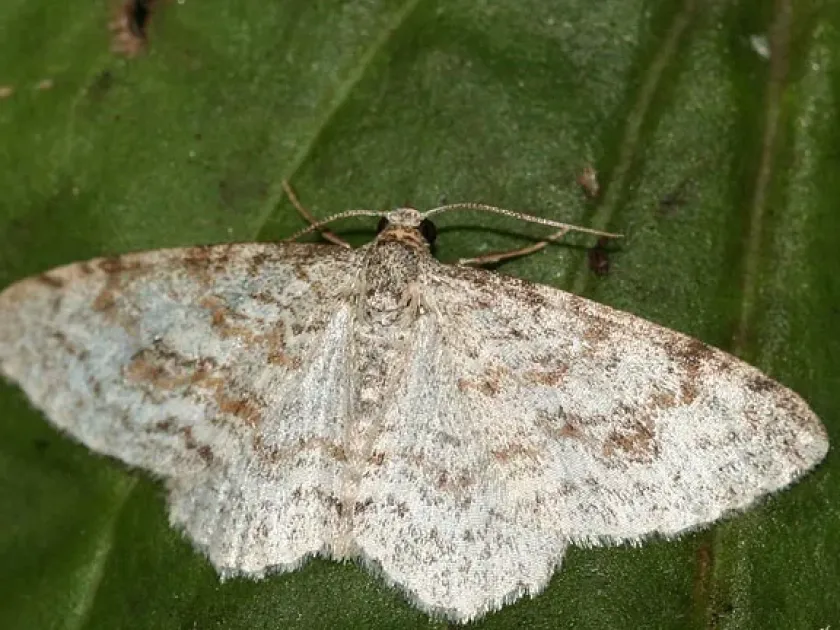
The Alder moth (Macaria pluviata) is a lepidopteran insect belonging to the Geometridae family. These moths are characterized by a delicate body and a wingspan typically ranging from 25 to 30 mm.
The wings exhibit a color palette of light grey to brownish tones, often featuring intricate dark cross-lines that provide camouflage against tree bark. Their resting posture is usually flat or roof-like.
The larvae, known as loopers, possess the distinctive locomotion style of the Geometridae family. They move by bringing their hind segments forward to meet their thorax, creating a characteristic loop.
The caterpillars are generally green, allowing them to blend perfectly with the alder foliage, which makes them difficult to spot during initial infestations.
Pupation occurs in the soil or leaf litter, where the insects remain as pupae throughout the winter months, protected from environmental stresses.
What it damages
The primary host for this pest is the Alder (genus Alnus). While they prefer these trees, they may occasionally migrate to other deciduous species during population spikes.
Larval feeding causes significant damage to the leaf tissue, leading to defoliation. This reduces the tree's photosynthetic capacity, which directly affects its growth rates and vigor.
Young trees and saplings are particularly vulnerable to severe defoliation, which can stunt their development and weaken their natural resistance to diseases.
In forest ecosystems, mass occurrences of Macaria pluviata can lead to widespread canopy thinning, negatively impacting the overall timber production and forest health.
For ornamental alder trees, even moderate infestation levels significantly degrade the aesthetic value of the planting, leading to sparse or damaged foliage.
When it appears
The life cycle of the Alder moth typically consists of a single generation per year, precisely tuned to the growing season of its host plants.
Adult moths emerge in late spring or early summer, following the warming of the soil and air, to begin their mating and oviposition phase.
Eggs are deposited on the leaves, and the larvae emerge in early summer, coinciding with the peak period of new leaf growth, ensuring an abundant food supply.
Larval feeding activity persists throughout June and July. By late summer, the larvae are fully grown and transition into the pupation stage in the ground.
The species survives the cold season as a dormant pupa, waiting for the spring signals to complete its metamorphosis and emerge as a new adult generation.
Signs of infestation
Detecting an infestation early is crucial for effective management. Signs usually become visible once larval activity increases in early summer.
- Irregular holes appearing on the leaf blades during the early summer months.
- Skeletonized leaves where only the primary veins remain untouched by the larvae.
- Presence of tiny droppings on the leaves below the area where the caterpillars are actively feeding.
- Observation of loopers on the undersides of leaves during nocturnal inspections.
- Premature yellowing and leaf drop in cases of heavy infestation throughout the tree crown.
A heavily infested tree will appear thin and ragged, with significant portions of the foliage damaged or entirely missing from the branch structure.
Control measures
Management of the Alder moth requires an integrated pest management (IPM) approach to minimize environmental impact while effectively protecting host trees.
Chemical control involving systemic or contact insecticides is effective if applied during the early larval stages, targeting the pest before significant damage occurs.
Biological control methods, such as the use of Bacillus thuringiensis sprays, are highly recommended as they specifically target lepidopteran larvae while sparing beneficial insects.
Cultural practices, including autumn soil cultivation, can help disrupt the life cycle by destroying the pupae overwintering in the soil and litter layer.
Promoting local biodiversity by encouraging bird populations can provide a natural check on the population, as many bird species prey on these caterpillars during their growth stage.
Taxonomy
- Latin name
- Macaria pluviata
- Order
- Lepidoptera (butterflies)
- Family
- Geometridae
- EPPO code
- SEMOPL
Discussion
No discussions yet — be the first.